

Receiving an IRS notice or realizing you owe back taxes can feel overwhelming. The letters pile up, the numbers grow, and the options seem unclear. This is exactly when tax resolution services become essential, professional assistance designed to help you negotiate with the IRS and find a path forward.
At Tax Experts of OC, we work with individuals and business owners across the country who face these exact situations. Our CPAs and Enrolled Agents handle IRS disputes, audits, and debt settlements daily, giving clients the representation they need to resolve complex tax problems.
This article explains what tax resolution services actually do, the specific situations where they make sense, and how to determine if you need professional help. Whether you're dealing with wage garnishments, unfiled returns, or mounting penalties, understanding your options is the first step toward regaining control.
Why tax resolution matters when you owe taxes
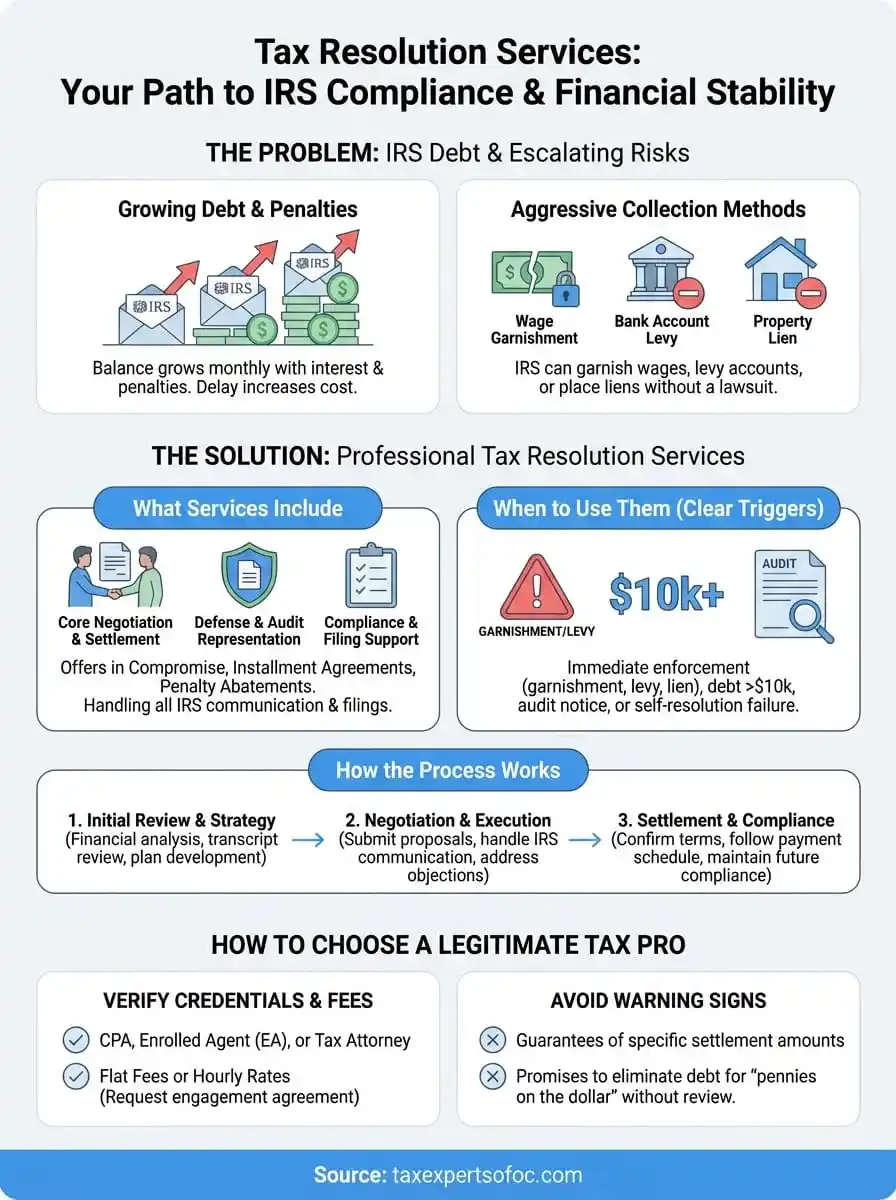
Ignoring tax debt does not make it disappear. The IRS has legal authority to collect what you owe through increasingly aggressive methods, and the agency will use those tools if you don't respond. Your balance grows every month with penalties and interest, turning a manageable debt into a financial crisis.
The real cost of delayed action
When you leave tax issues unresolved, the IRS can garnish your wages, levy your bank accounts, or place a lien on your property. These enforcement actions happen without a lawsuit or court order. Your employer receives a notice and starts withholding a significant portion of your paycheck, leaving you with barely enough to cover basic expenses.
The longer you wait to address tax debt, the fewer options you have and the more difficult resolution becomes.
Beyond the financial impact, unresolved tax problems affect your credit, prevent you from refinancing your home, and create stress that follows you through daily life. Business owners face additional risks when the IRS pursues personal assets or holds them personally liable for payroll tax debts.
How professional representation changes outcomes
Tax resolution services give you someone who speaks the IRS's language and understands which settlement options apply to your specific situation. A qualified representative can stop collection actions, negotiate payment plans you can afford, or help you qualify for programs that reduce what you actually owe. You gain protection from making costly mistakes during the negotiation process, and the IRS directs all communication to your representative instead of contacting you directly. This shift allows you to focus on moving forward while professionals handle the technical work.
What tax resolution services include
Tax resolution services cover the specific tasks required to settle your IRS debt and restore compliance. These professionals handle everything from initial analysis to final settlement, giving you representation throughout the entire process.

Core negotiation and settlement work
Your representative reviews your financial situation and determines which IRS programs you qualify for. They prepare and submit offers in compromise, negotiate installment agreements, and request penalty abatements when circumstances justify relief. Documentation preparation takes significant time because the IRS requires detailed financial statements, supporting records, and legal forms completed correctly.
Professional representatives know which settlement options actually work for your situation and how to present your case effectively.
Defense and compliance support
Tax resolution services also include audit representation, where your representative handles all communication with IRS agents and defends your positions. They file missing tax returns, address tax liens and levies, and request currently-not-collectible status when you cannot afford payments. Many firms provide ongoing compliance support to prevent future problems, including quarterly check-ins and tax planning advice that keeps you on track with filing and payment obligations.
When to use tax resolution services
You need professional tax resolution services when the IRS has moved beyond simple notices into active enforcement or when your debt exceeds what you can resolve on your own. The decision point comes when the stakes are high enough that mistakes could cost you significantly more than professional representation.
Clear triggers that signal you need help
Hire a tax professional immediately if the IRS has garnished your wages, levied your bank account, or filed a lien against your property. These enforcement actions require quick, strategic responses that most taxpayers cannot handle effectively alone. You also need representation when you owe more than $10,000, face criminal investigation, or received an audit notice for complex business returns.
Once the IRS takes enforcement action, you have limited time to negotiate better terms before financial damage becomes severe.
When self-resolution has failed
Consider professional help if you attempted to work with the IRS directly but made no progress toward a resolution. Many taxpayers reach out after submitting incomplete offers or setting up payment plans they cannot afford. Business owners dealing with payroll tax issues should seek help immediately because these debts carry personal liability and criminal penalties that individual income tax problems do not.
How the tax resolution process works
Tax resolution services follow a structured approach that moves from assessment to final settlement. Understanding these steps helps you know what to expect and how long resolution typically takes.

Initial review and strategy development
Your representative starts with a complete financial analysis to determine which settlement options the IRS will accept based on your income, assets, and expenses. They review your tax transcripts, identify compliance gaps, and calculate the minimum amount the IRS expects to collect. This groundwork determines whether you pursue an offer in compromise, installment agreement, or other resolution path.
The strategy phase prevents wasted time pursuing settlement options you don't qualify for.
Negotiation and settlement execution
Once your representative submits your proposal, the IRS assigns a case worker who reviews your financial documentation and may request additional information. Your representative handles all communication during this phase, responding to IRS requests and addressing objections to your proposed terms. The process typically takes three to six months for installment agreements and longer for offers in compromise. After acceptance, you receive written confirmation of your settlement terms and payment schedule, which you must follow exactly to maintain the agreement.
How to choose a legitimate tax pro
The tax resolution industry includes both qualified professionals and unscrupulous operators who make false promises. You protect yourself by verifying credentials, understanding how legitimate firms charge, and recognizing warning signs that signal potential fraud.
Check credentials and licensing
Work only with Certified Public Accountants (CPAs), Enrolled Agents (EAs), or tax attorneys who hold active licenses you can verify. The IRS maintains a directory of enrolled agents, and state boards publish CPA license information online. These credentials mean the professional passed rigorous exams and must follow ethical standards that protect you from misconduct.
Licensed professionals risk losing their ability to practice if they engage in unethical behavior, giving you legal recourse that unlicensed preparers cannot provide.
Verify fee structure and avoid guarantees
Legitimate tax resolution services charge flat fees or hourly rates based on your case complexity, never a percentage of the debt they resolve. Request a written engagement agreement that outlines exactly what work they will perform and what it costs. Walk away from any firm that guarantees specific settlement amounts before reviewing your financial situation or promises to eliminate your debt for pennies on the dollar without examining your records.
Where to go from here
Tax resolution services provide the professional representation you need when IRS debt threatens your financial stability. You've learned what these services include, when to use them, and how to identify qualified professionals who can negotiate on your behalf. The next step depends on your specific situation and how urgently you need to act.
If you face wage garnishment, bank levies, or significant tax debt, contact a licensed professional immediately. Time matters because enforcement actions escalate quickly, and early intervention gives you more settlement options. Start by gathering your IRS notices, recent tax returns, and financial statements so your representative can assess your case efficiently.
We offer a 30-minute free consultation at Tax Experts of OC where we review your situation and explain which resolution options apply to your circumstances. Our CPAs and Enrolled Agents work with clients nationwide to resolve IRS disputes and restore compliance. Schedule your free consultation to discuss your tax debt and learn what steps will move you toward resolution.