
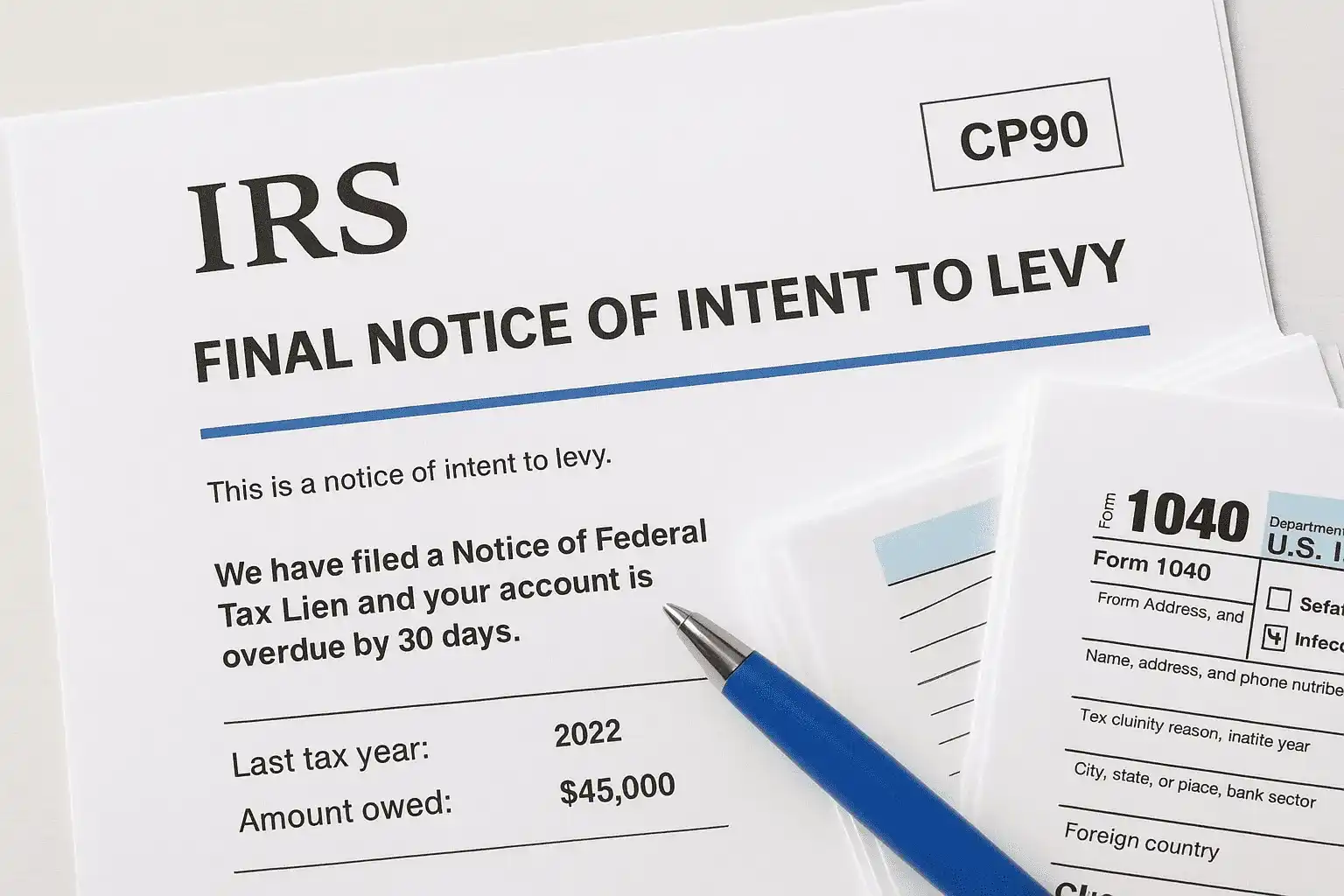
That certified letter in your mailbox just changed your timeline. An IRS final notice of intent to levy means the agency has finished waiting and is now legally cleared to take your wages, drain your bank accounts, or seize other assets you own. You typically have 30 days from the date on the notice before that authority kicks in, and the clock doesn't pause because you're confused or scared.
This notice, formally called a CP90 or Letter 1058, isn't a routine reminder. It's the last stop before enforced collection, and it comes with a specific legal right attached: your chance to request a Collection Due Process hearing. Miss that window and you lose your best shot at pausing the levy while you sort out payment options or dispute the debt.
Below, we break down exactly what triggers this notice, how to read the deadlines correctly, and the immediate steps that can stop a levy before it starts. We've helped Orange County clients and taxpayers nationwide respond to these notices under real deadline pressure, so we'll walk you through what actually works instead of generic advice that wastes your remaining days.
Why this notice demands your immediate attention
This document represents a different legal status than every prior notice you've received about the same tax debt. Once the IRS mails a final notice of intent to levy, it has satisfied its statutory obligation to warn you, and the next move is enforcement, not negotiation. The agency can now legally reach into your paycheck, your checking account, your Social Security benefits, and even accounts receivable if you run a business.
A final notice of intent to levy isn't a warning shot, it's the IRS telling you the warnings are over.
What the IRS can legally seize
Once this notice goes out, the IRS gains authority over a wide range of assets, not just one account. Understanding the scope helps you grasp why acting fast matters more than picking the "right" first move.

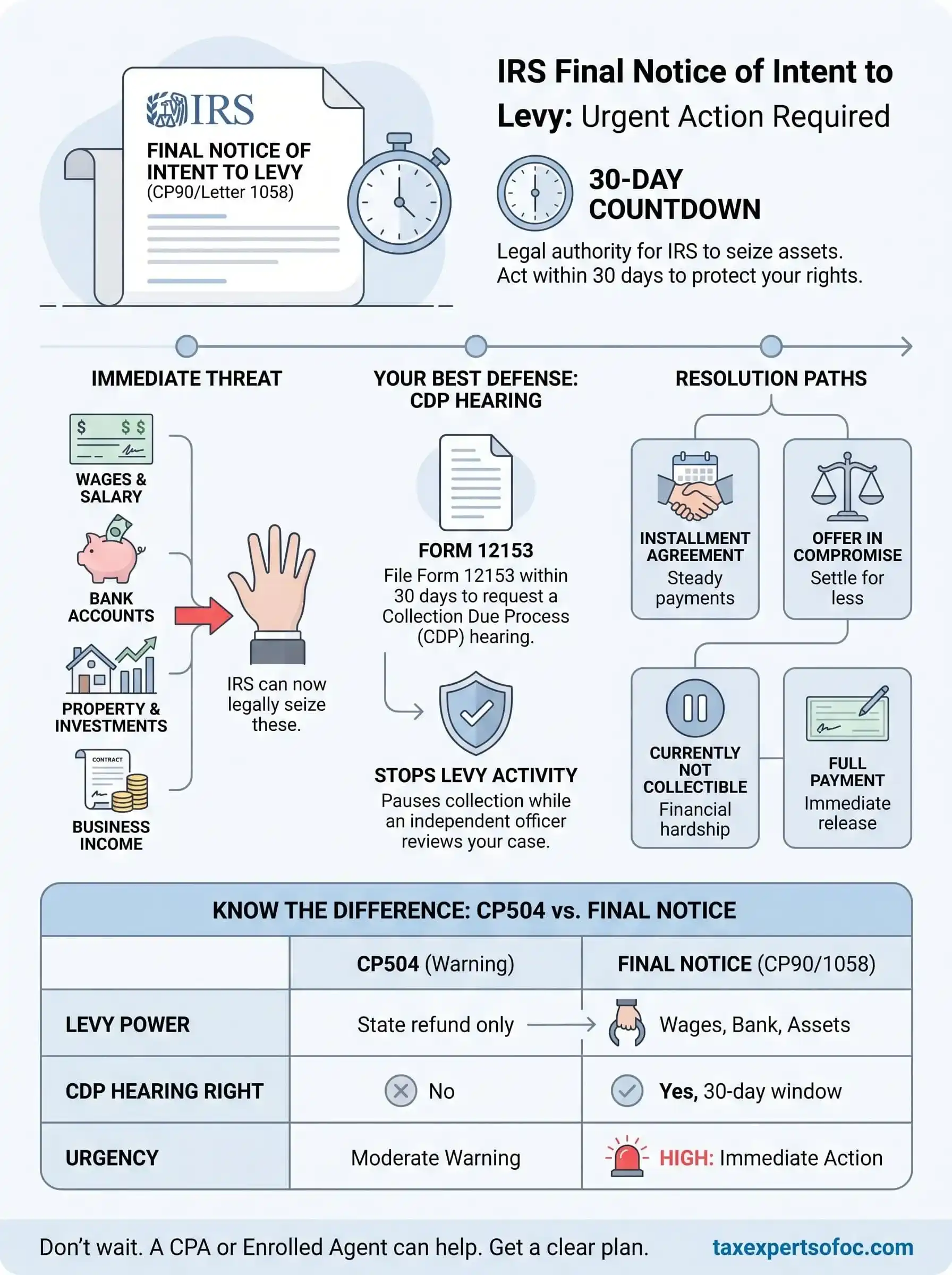
- Wages and salary: employers must comply with a continuous wage garnishment until released.
- Bank accounts: funds get frozen for 21 days, then sent to the IRS unless you intervene.
- 1099 income and receivables: freelancers and business owners can lose client payments.
- Property and investment accounts: in more aggressive cases, retirement funds and real estate become targets.
The real cost of delay
Every day you wait shrinks your options rather than preserving them. The 30-day deadline referenced on the notice isn't a soft suggestion, it's the window during which you retain the right to request a Collection Due Process hearing under IRS.gov guidance, a right that pauses collection while an independent officer reviews your case. Once that window closes, the IRS can levy without further notice, and reversing an active levy is far harder than preventing one. Clients who call us on day 25 have fewer paths available than those who call on day 3, which is why treating this notice as urgent, not just important, protects both your income and your leverage in whatever resolution comes next.
How to respond before the 30-day deadline expires
Start by verifying the notice is legitimate and accurate before you do anything else. Check the tax years listed, confirm the balance matches your own records, and look for the exact date printed on the letter, since your 30-day countdown starts there, not the day you opened the envelope. Scammers mimic IRS letters, so call the number on IRS.gov directly rather than any number printed only on the notice itself if something feels off.
File Form 12153 within the window
Requesting a Collection Due Process hearing is the single most protective move available to you right now. You do this by filing Form 12153 with the address shown on your notice, and once the IRS receives it, active levy action generally stops while an independent Appeals officer reviews your case.
File Form 12153 before day 30, and you buy yourself time the IRS can't take back once it's gone.
Gather your financial picture now
Parallel to filing, pull together the documents that will shape your resolution options later:
- Recent pay stubs and bank statements
- Prior year tax returns, filed and unfiled
- A list of monthly expenses and dependents
- Any prior IRS correspondence on this balance
Doing this early means you're not scrambling once negotiations begin, and it shortens the time between filing your hearing request and actually resolving the underlying debt.
Ways to stop or resolve an IRS levy
Requesting a hearing buys you time, but you still need a resolution that satisfies the IRS. Several paths exist depending on your income, assets, and how much you owe, and picking the wrong one wastes the breathing room you just secured.
Payment arrangements that release the levy
An installment agreement stops enforced collection once it's accepted, since the IRS generally won't levy accounts already covered by an active payment plan. If your finances are tight enough, Currently Not Collectible status halts collection entirely while you're unable to pay, though interest keeps accruing. For larger balances, an Offer in Compromise lets you settle for less than you owe, but the IRS scrutinizes your assets and income closely before approving one.
The fastest way to stop a levy is proving to the IRS you're already solving the problem, not fighting it.
Compare your main options
| Option | Best For | Levy Impact |
|---|---|---|
| Installment Agreement | Steady income, manageable balance | Stops levy once approved |
| Currently Not Collectible | No disposable income | Pauses collection activity |
| Offer in Compromise | Balance exceeds reasonable ability to pay | Stops levy during review |
| Full Payment | Available liquid funds | Immediately releases levy |
Each option requires documentation proving your financial condition matches what you're claiming, so the paperwork you gathered earlier becomes your leverage here. Choosing between them isn't guesswork, it's math based on your actual income, expenses, and equity, which is exactly why an Enrolled Agent or CPA reviewing your numbers before you submit anything to the IRS often changes which option gets approved.
CP504 vs. the final notice: know the difference
Confusion between these two notices costs people their best window to act. A CP504 notice warns that the IRS intends to levy your state tax refund and signals that enforcement is coming, but it does not yet give the agency authority to seize wages or bank accounts. The final notice of intent to levy, whether labeled CP90 or Letter 1058, is a different legal animal entirely. It confirms the IRS has satisfied its notice requirement and can now levy almost anything you own, and it's the only one of the two that opens your right to a Collection Due Process hearing.
Treating a CP504 like the final notice wastes urgency you don't have yet, but treating the final notice like a routine letter costs you the protections you do have.
Side-by-side comparison
Seeing the differences laid out makes the stakes clearer than reading each notice in isolation.
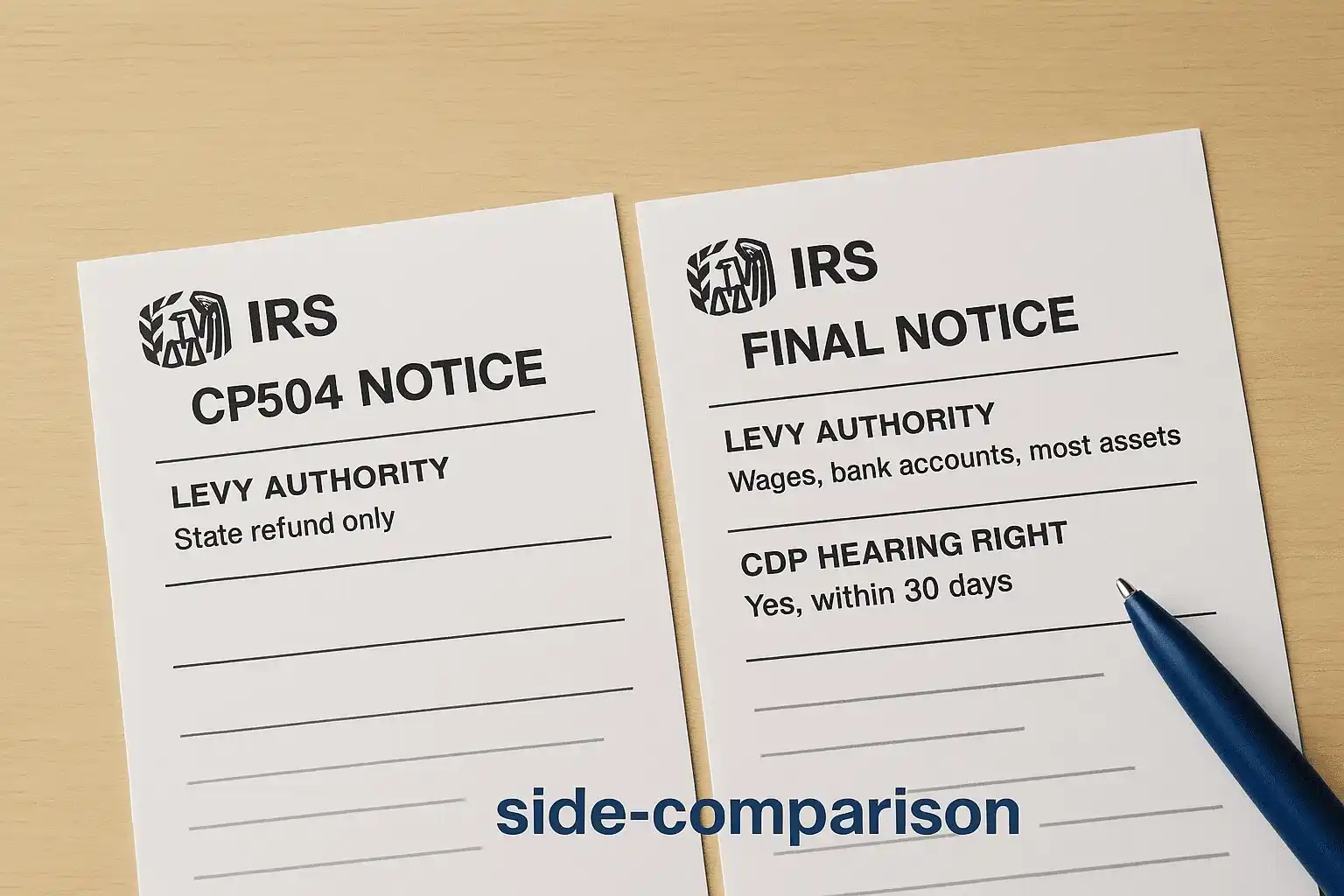
| Feature | CP504 | Final Notice (CP90/Letter 1058) |
|---|---|---|
| Levy Authority | State refund only | Wages, bank accounts, most assets |
| CDP Hearing Right | No | Yes, within 30 days |
| Legal Standing | Pre-levy warning | Final statutory notice |
| Urgency Level | Moderate | High, immediate action required |
Why the mix-up happens
Both letters arrive with threatening language and similar formatting, which leads many taxpayers to assume they already used their one warning when the CP504 showed up. That assumption is dangerous because it delays action on the notice that actually matters. If you're unsure which one you're holding, check for the phrase "Notice of Intent to Levy and Notice of Your Right to A Hearing," since its presence marks the document that starts your 30-day clock.
Taking control of your tax situation
Receiving an IRS final notice of intent to levy feels like the ground shifting under you, but the 30-day window still gives you room to act if you move now. Filing Form 12153 protects your right to a hearing, gathering your financial documents sets up the right resolution, and understanding which notice you're actually holding keeps you from wasting time on the wrong response. None of this requires you to figure it out alone or guess which option the IRS will accept.
Speed and accuracy matter more than confidence right now, and that's exactly where a CPA or Enrolled Agent earns their fee, catching mistakes that cost taxpayers their hearing rights or their best settlement terms. If that letter is sitting on your counter today, don't let day 30 arrive before you've made your move. Schedule your free consultation with Tax Experts of OC and get a clear plan before the deadline closes in.