

Filing your own taxes works fine, until it doesn't. Maybe you picked up a side business, sold property, owe back taxes, or just got a letter from the IRS that made your stomach drop. That's usually the moment people realize they need to hire a tax preparer who actually knows what they're doing. The problem? Not all tax professionals are equal, and choosing the wrong one can cost you more than the fee you paid.
Between credentialed CPAs, Enrolled Agents, seasonal preparers, and online services, figuring out who deserves your trust (and your financial data) takes some legwork. At Tax Experts of OC, we've seen firsthand what happens when clients come to us after working with unqualified preparers, missed deductions, rejected returns, and IRS problems that could have been avoided entirely. It's why we believe the hiring decision matters just as much as the filing itself.
This guide breaks down exactly how to evaluate, vet, and choose the right tax preparer for your situation in 2026, whether you're an individual with a complicated return or a business owner juggling multi-state filings. We'll cover credentials to look for, red flags to avoid, and when it makes sense to pay for professional help versus handling things on your own.
When hiring a tax preparer makes sense
Most people can handle a straightforward W-2 return using tax software without much trouble. But your tax situation can shift quickly, and when it does, the cost of a mistake often exceeds what you'd pay a professional. Knowing the right moment to hire a tax preparer saves you time, stress, and potentially thousands of dollars.
Your return has moved beyond the basics
Life events are usually the trigger. You got married, had a child, started freelancing, bought rental property, received an inheritance, or moved across state lines. Each of these changes introduces new forms, deductions, and filing requirements that software alone may not handle correctly. For example, a freelancer with a home office, a vehicle used for work, and a retirement contribution needs to navigate Schedule C, depreciation rules, and self-employment tax all at once.
Here are situations where professional help typically pays for itself:
- Self-employment income with business deductions
- Rental property with depreciation and expense tracking
- Stock sales, RSUs, or cryptocurrency transactions
- Multi-state income or a recent relocation
- Divorce, inheritance, or a significant financial gift
If your return involves more than one income source or a major life change, professional review is almost always worth the cost.
You're dealing with IRS notices or back taxes
Receiving IRS correspondence is a clear signal that you need professional help. Notices about unpaid balances, unfiled returns, or audit selections carry deadlines and legal weight that require precise responses. Ignoring or mishandling these notices can escalate a manageable issue into wage garnishments, liens, or levies.
A qualified Enrolled Agent or CPA can represent you directly before the IRS, negotiate payment plans, and communicate on your behalf so you don't make a costly mistake under pressure. Enrolled Agents in particular hold a federally authorized credential that grants them the same representation rights as attorneys before the IRS, making them a strong option for any dispute.
Step 1. List your tax situations and goals
Before you hire a tax preparer, you need a clear picture of your own financial situation. Without it, you risk hiring someone who lacks the right credentials for your specific needs, or paying for expertise you don't actually require. Take 15 minutes and write down everything relevant to your taxes this year, including income sources, major life events, and any open IRS issues.
A detailed personal tax inventory helps you ask sharper questions and compare preparers more accurately during your search.
Build your tax situation inventory
Use this template to document your income, assets, and goals before your first consultation with any preparer:
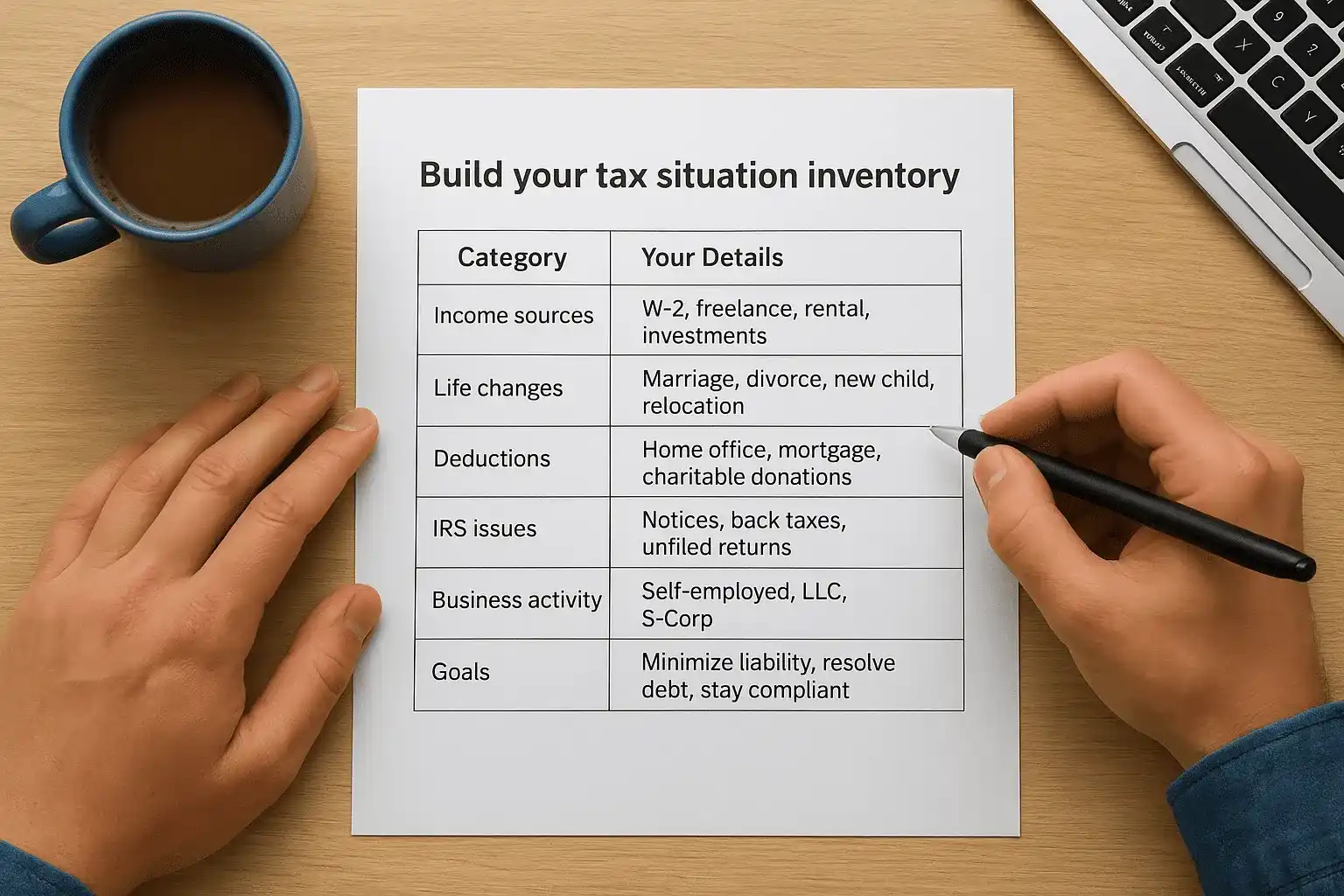
| Category | Your Details |
|---|---|
| Income sources | W-2, freelance, rental, investments |
| Life changes | Marriage, divorce, new child, relocation |
| Deductions | Home office, mortgage, charitable donations |
| IRS issues | Notices, back taxes, unfiled returns |
| Business activity | Self-employed, LLC, S-Corp |
| Goals | Minimize liability, resolve debt, stay compliant |
Once you fill this in, bring it to every consultation you schedule. It gives the preparer an immediate sense of your complexity and lets you quickly spot whether their experience actually matches your needs. If a preparer doesn't ask about your situation before quoting a fee, that itself is a warning sign.
Step 2. Choose the right credentialed pro
Once you have your tax inventory, match it to the right type of professional. Not every preparer holds the same credentials, and the distinction matters when you hire a tax preparer for a situation that goes beyond a basic return.
Match your complexity to the right credential
Three main credential types cover most situations. CPAs (Certified Public Accountants) handle complex returns, business accounting, and financial planning. Enrolled Agents (EAs) specialize in IRS representation and tax resolution, making them the strongest choice if you owe back taxes or received an IRS notice. Seasonal or non-credentialed preparers can handle simple W-2 returns but cannot represent you before the IRS.

If your situation involves IRS disputes, back taxes, or business filings, always choose a CPA or Enrolled Agent.
| Credential | Best For | IRS Representation |
|---|---|---|
| CPA | Complex returns, business, planning | Yes |
| Enrolled Agent | IRS issues, resolution, audits | Yes |
| Non-credentialed preparer | Simple W-2 returns | No |
Verifying credentials before you commit takes only a few minutes. The IRS provides a free PTIN directory where you can confirm your preparer holds an active Preparer Tax Identification Number, which is the minimum legal requirement to prepare federal returns for compensation.
Step 3. Check pricing, scope, and e-file
When you hire a tax preparer, the fee conversation often gets skipped until the end. That's a mistake. Pricing structure and included scope tell you a lot about how a preparer operates, and getting clarity upfront prevents surprises when the bill arrives.
Understand what the fee covers
Preparers typically charge by form complexity, hourly rate, or a flat fee per return. Ask specifically what's included. A low advertised price may not cover Schedule C, state returns, or amended filings. Before committing, confirm whether audit support and IRS correspondence are part of the service or billed separately.
Always get a written fee estimate that lists every form and service included before you agree to anything.
Confirm e-file and documentation requirements
The IRS requires most paid preparers to file your return electronically unless you request a paper filing in writing. If a preparer discourages e-filing without a clear reason, treat it as a concern worth addressing. You should also confirm what documents they need from you and how they handle secure file transfers. A qualified firm should offer encrypted uploads or a secure client portal, not unprotected email attachments carrying your sensitive financial records.
Step 4. Spot red flags and sign safely
Before you hire a tax preparer, know the warning signs that signal an unqualified or dishonest professional. Most problems surface before you ever see a completed return, and catching them early protects both your refund and your legal standing with the IRS.
Never work with a preparer who refuses to sign your return or bases their fee on the size of your refund.
Common red flags to watch for
Dishonest preparers often share specific patterns of behavior that legitimate professionals avoid. Watch for anyone who promises a large refund before reviewing your documents, encourages you to claim false deductions, or asks you to sign a blank return. These are not minor oversights; they signal serious compliance risks.
- Refuses to provide a PTIN or credentials
- Charges a fee based on your refund amount
- Discourages e-filing without explanation
- Will not sign the completed return
Review before you sign
You are legally responsible for every number on your return, even if a preparer made the error. Read through the completed return carefully and confirm your personal information and income figures are accurate before signing anything.
- Verify your name, SSN, and bank details
- Confirm all income sources are reported
- Check that your preparer's signature appears on the return
- Keep a copy of the signed return for your records
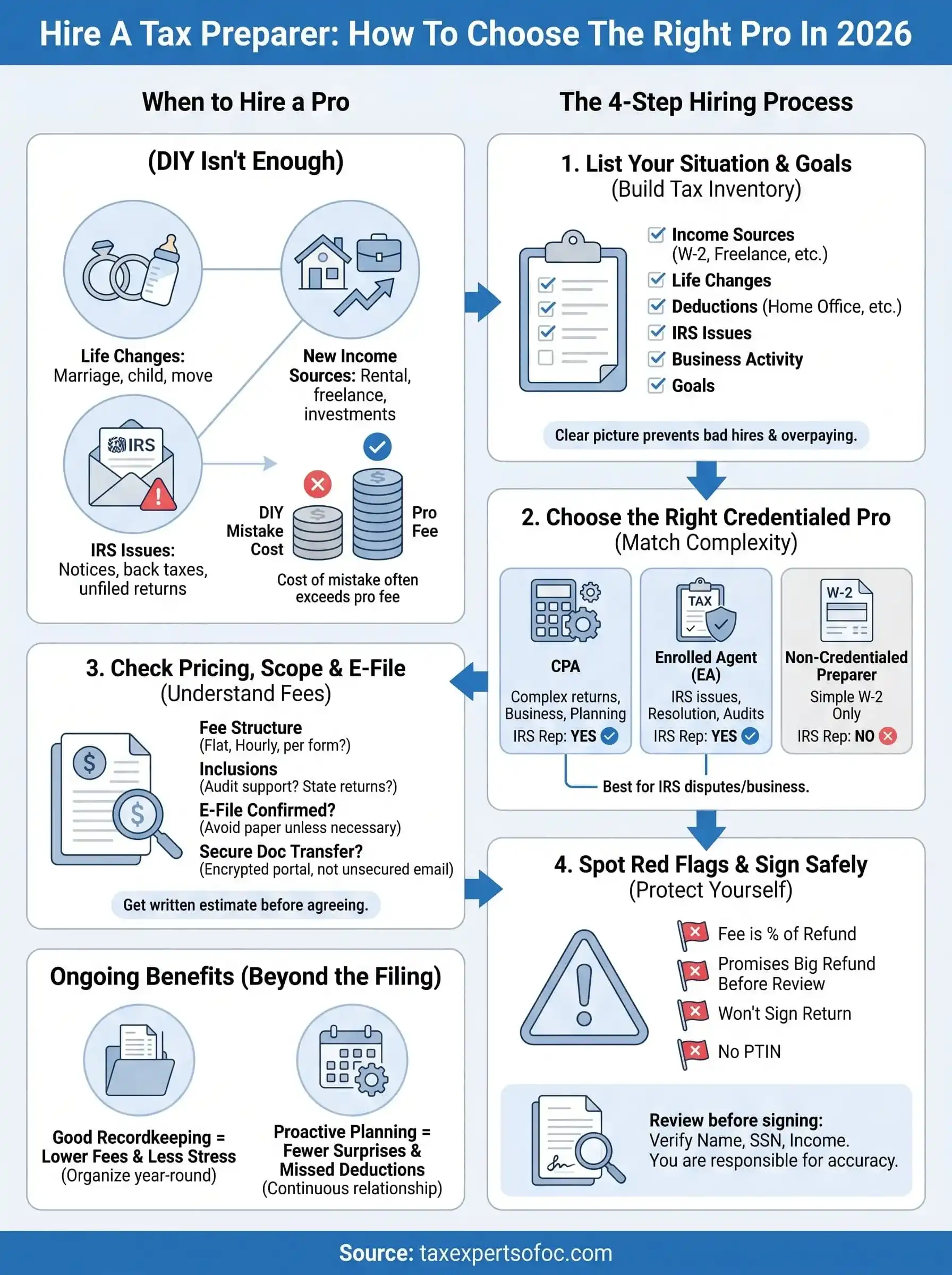
Keep your taxes simple next year
The decisions you make now directly affect how complicated your return looks next April. Good recordkeeping throughout the year reduces the time your preparer spends reconstructing figures, which often lowers your bill. Set up a dedicated folder for receipts, 1099s, and business expense documentation so you walk into your next consultation with everything organized instead of scrambling to find records at the last minute.
When you hire a tax preparer, the relationship works best as an ongoing one rather than a once-a-year transaction. Proactive tax planning between filings helps you avoid surprises, spot deductions you'd otherwise miss, and respond to IRS changes before they affect your return. If your situation involves business income, back taxes, or growing complexity, working with a qualified CPA or Enrolled Agent year-round consistently pays for itself.
Schedule a free consultation with Tax Experts of OC and find out exactly what it takes to get your tax situation under control.