
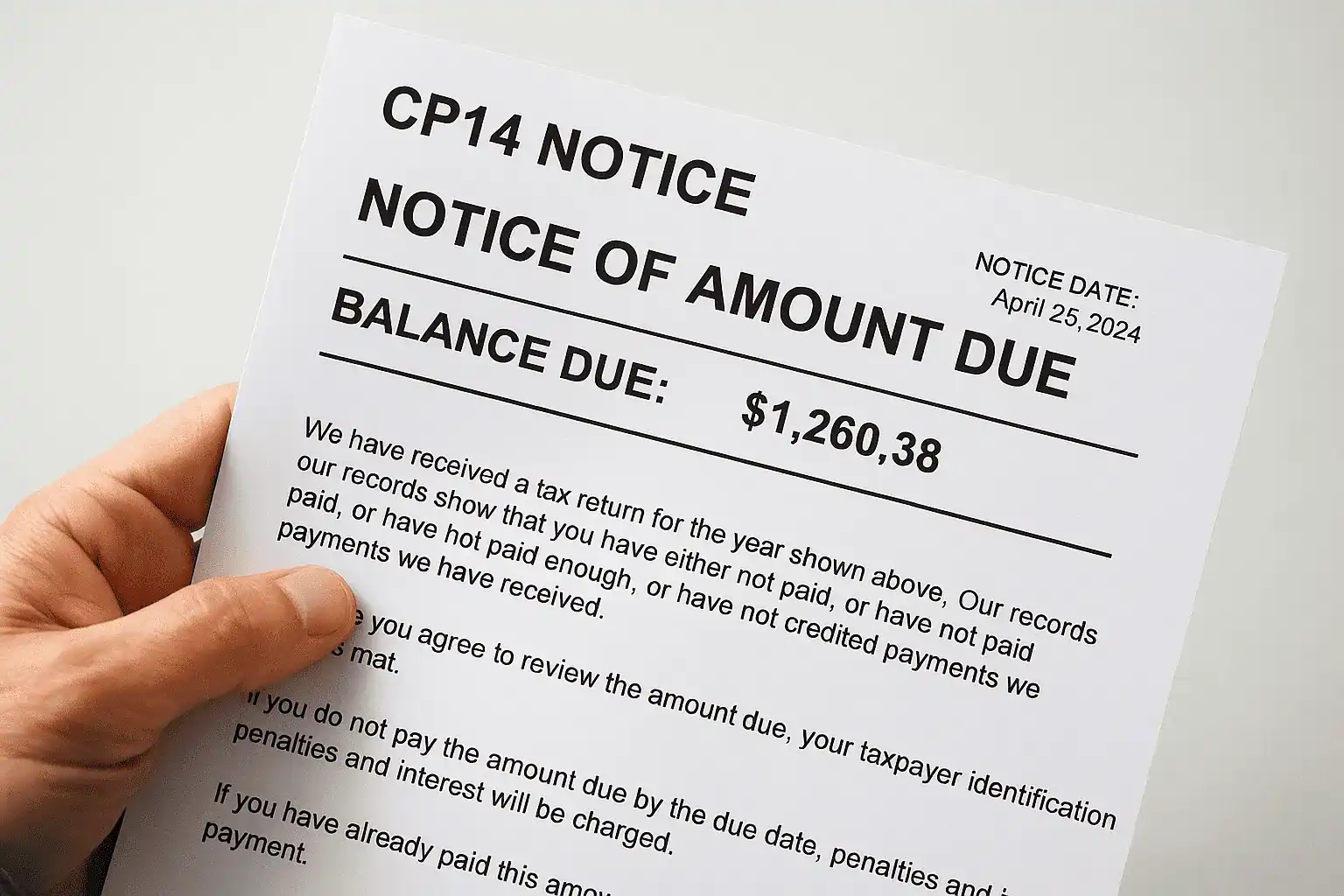
Opening your mailbox and finding a letter from the IRS is enough to spike anyone's blood pressure. If that letter is an IRS CP14 notice, you're not alone: it's the most common notice the agency sends, and it means the IRS believes you owe money on a filed return. The notice lists a balance due, a deadline, and interest that keeps growing until you act.
A CP14 isn't an audit and it isn't a final collection notice, but it also isn't something to set aside. It's the IRS's official first ask for payment, and ignoring it puts you on a path toward penalties, interest, and eventually liens or levies. If you've already paid the balance, or you think the number is wrong, you have specific windows and documentation requirements to fix it before it snowballs.
In this guide, we'll walk through exactly what triggers a CP14, how to read the numbers on the notice, and the fastest ways to resolve it, whether that means paying in full, setting up a payment plan, or disputing an error. We'll also cover what to do if you've already sent payment and the notice still shows a balance.
Why the IRS sent you a CP14 notice
The IRS generates a CP14 notice automatically whenever its system finishes processing a filed return and finds that the tax reported doesn't match what's been paid. This isn't a judgment call by an agent reading your file. It's a computer matching numbers: what you owed on line whatever of your 1040 or business return, against what was actually paid through withholding, estimated payments, or a check you sent with the return. When those two figures don't line up, the notice goes out, usually within a few weeks of the IRS accepting your return.
A CP14 is math, not an accusation, but the deadline on it is real and the interest clock doesn't wait for you to figure out why.
Several specific situations trigger this notice, and it helps to know which one applies to you before you call anyone or send money you don't owe.
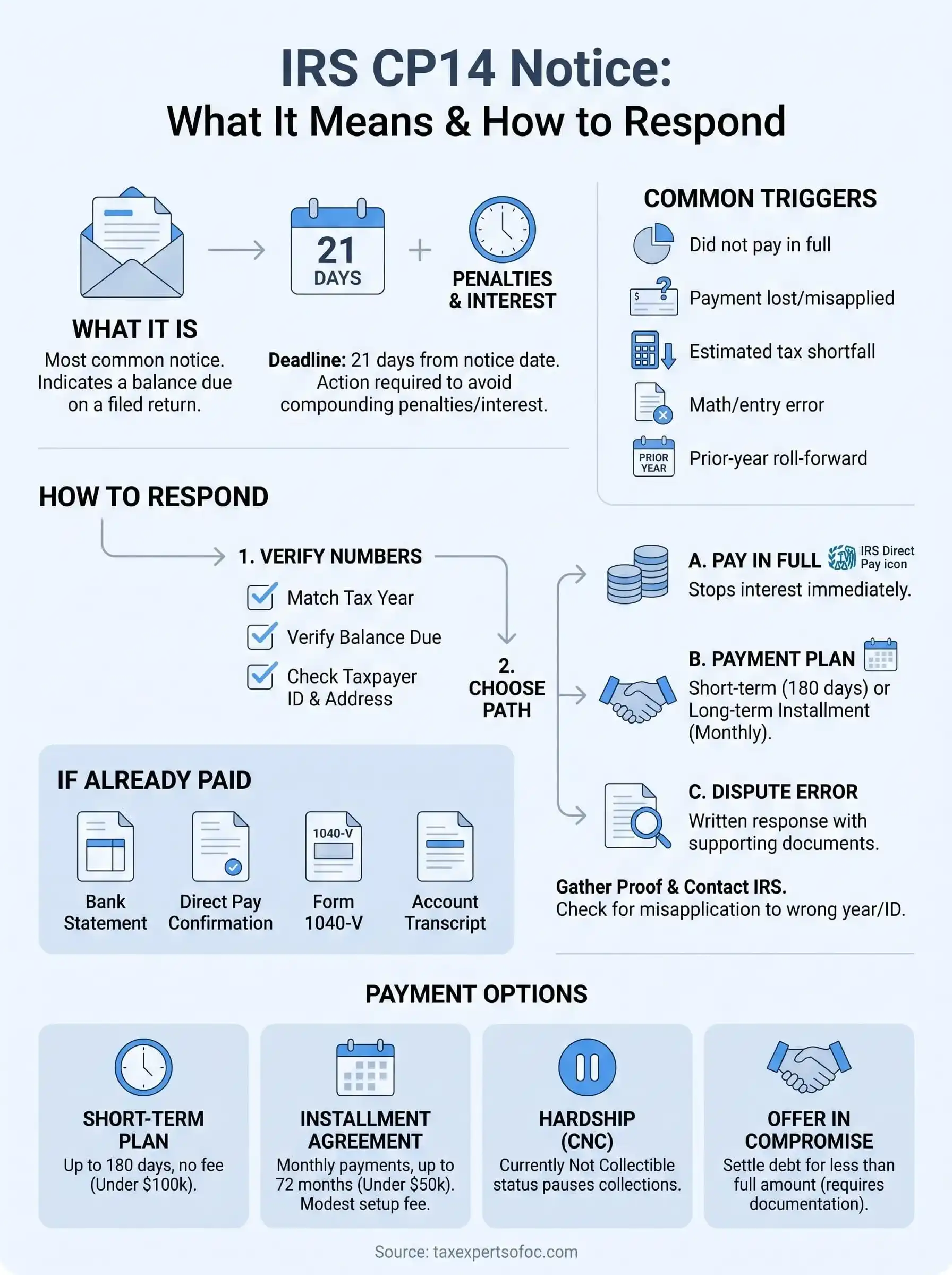
Common triggers behind the balance
- You filed but didn't pay in full. You calculated a balance due, filed the return, and either sent a partial payment or none at all.
- A payment got lost or misapplied. You mailed a check or scheduled an electronic payment, but it was applied to the wrong tax year, the wrong Social Security number, or never posted.
- Estimated tax payments fell short. If you're self-employed or have significant investment income, underpaying quarterly estimates through the year shows up as a shortfall at filing.
- A math or entry error on your return. A transposed number, a missed credit, or a miscalculated deduction can change your liability after the IRS reviews it.
- Prior-year interest or penalties rolled forward. Sometimes the
How to respond to a CP14 notice
Start by reading the notice line by line, because the CP14 deadline is only 21 days from the date printed at the top, not the day you open the envelope. Compare the balance shown against your own copy of the return: the amount owed, the tax year, and your Social Security number or EIN. If everything matches and you simply owe the money, your fastest option is to pay online at IRS.gov or set up a plan before interest compounds again.
The 21-day clock on a CP14 starts the day the IRS prints it, so don't wait for it to feel urgent.
Verify the numbers before you pay
Before sending a dime, confirm the notice reflects your actual filing. Check these details against your records:
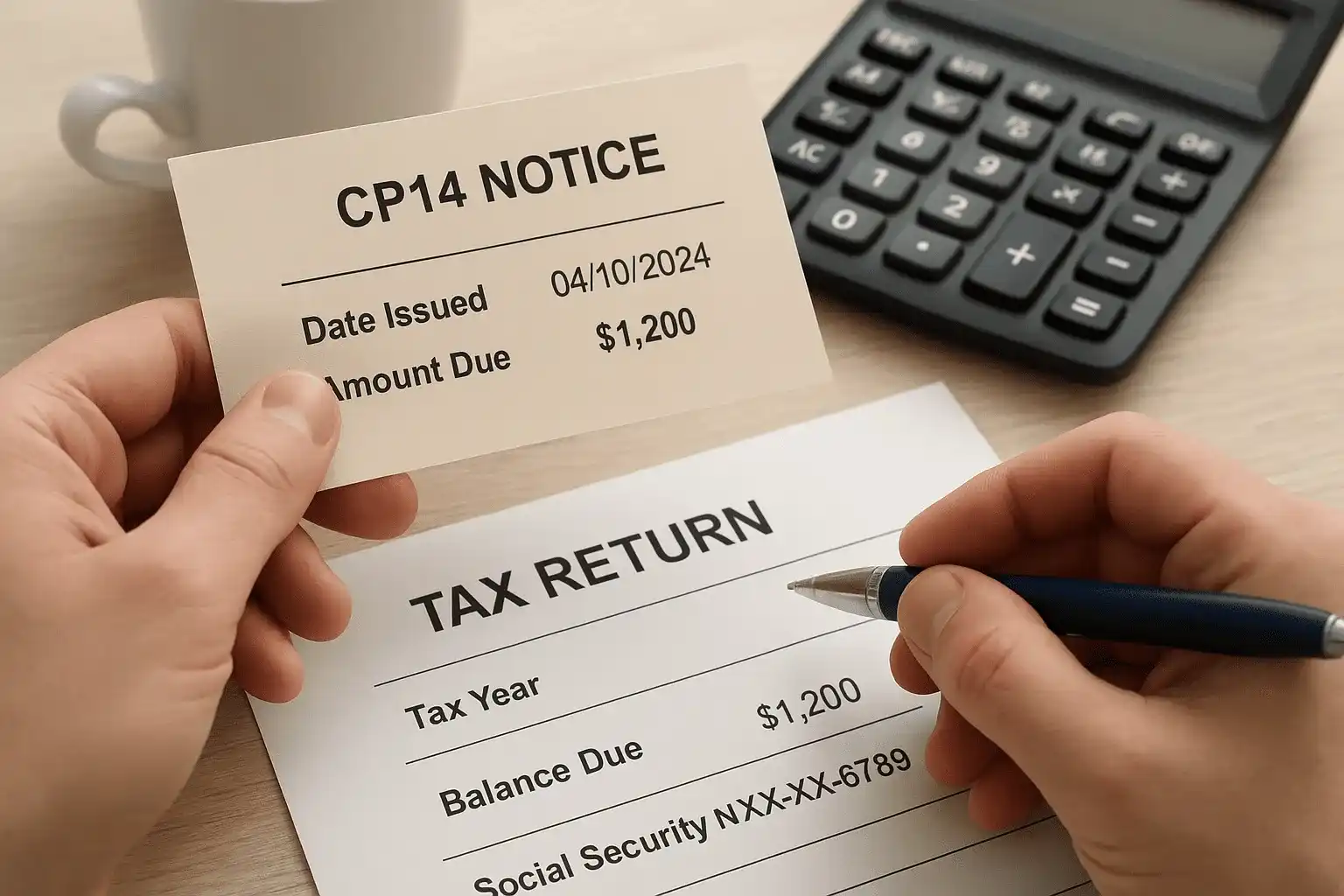
- The tax year listed matches the return in question.
- The balance due matches your calculated liability minus payments already made.
- Any penalties or interest are dated correctly and not duplicated from a prior notice.
- Your mailing address and taxpayer ID are accurate, since misapplied payments often trace back to a mismatched account.
Choose your response path
Once you've confirmed the balance, decide how to act. Paying in full through IRS Direct Pay stops interest immediately. Disputing an error requires a written response with supporting documents, sent to the address on the notice, ideally within the 21-day window so collection activity doesn't start. Setting up an installment agreement online works if you owe under $50,000 and need more time. Whichever path fits your situation, act before the deadline passes, since silence is treated as agreement with the balance.
What to do if you already paid the balance
Getting a CP14 after you've already paid feels maddening, but it happens more often than you'd think. Payments get misapplied to the wrong tax year, checks get lost in processing, or an electronic payment posts a few days after the notice was already printed and mailed. Before you panic or send a second payment, pull together your proof and confirm the timeline.
Never send a second payment out of fear; verify the mismatch first, or you'll spend months chasing a refund instead of a fix.
Gather your proof of payment
Start collecting documentation immediately, since the IRS will ask for it regardless of how the notice was resolved:
- Bank statement or canceled check showing the payment cleared, with the date and amount visible.
- IRS Direct Pay confirmation number if you paid online, along with the screenshot or email receipt.
- Form 1040-V voucher copy if you mailed a check with your return.
- Account transcript from IRS.gov showing how the payment was actually applied.
Contact the IRS with documentation in hand
Call the number on the notice rather than the general IRS line, since it routes you to the department handling your specific account. Explain that you have proof of payment and ask the representative to check whether it was applied to the correct tax year and taxpayer ID. If the agent confirms a misapplication, request written confirmation of the correction, and keep that letter with your tax records. Resolving this by phone usually takes one call, but always follow up in writing if the balance doesn't disappear within two billing cycles.
Options if you can't pay the full amount
Owing more than you can cover right now doesn't mean you're stuck. The IRS offers several structured ways to handle a CP14 balance without triggering liens or levies, as long as you set something up before the deadline passes. Waiting rarely helps your case, since penalties and interest keep accruing on whatever remains unpaid.
Payment plans and installment agreements
Most taxpayers qualify for a short-term or long-term payment plan through the IRS Online Payment Agreement tool. A short-term plan gives you up to 180 days to pay in full, while a long-term installment agreement spreads the balance over months or years with a modest setup fee.

| Plan Type | Balance Limit | Setup Fee | Term | |---|---|---| | Short-term plan | Under $100,000 | None | Up to 180 days | | Long-term installment agreement | Under $50,000 | $0-$130 | Monthly, up to 72 months |
A payment plan you can actually afford beats a full payment you can't sustain.
Hardship and reduced settlement options
If paying anything meaningful would leave you unable to cover rent or groceries, ask about Currently Not Collectible status, which pauses collections while you get back on your feet. Some taxpayers also qualify for an Offer in Compromise, settling the debt for less than the full amount owed based on income, expenses, and asset equity. Both options require documentation, so gather pay stubs, bank statements, and monthly expenses before applying.
Getting your account back on track
A CP14 notice feels alarming, but it's really just the IRS asking you to close a gap between what you owed and what you paid. Once you've verified the balance, chosen a payment path, or documented a mistake, the rest is follow-through: confirm your plan is active, keep every receipt, and check your transcript again in a few weeks to make sure the correction actually posted.
What trips people up isn't the notice itself, it's letting the deadline slide while they figure out what to do. Whether you're disputing an error, setting up an installment agreement, or proving a payment already cleared, moving fast protects you from penalties that compound quietly in the background.
If your CP14 involves a large balance, a payment that vanished, or numbers that don't match your return, don't guess your way through it. Talk to Tax Experts of OC for a free consultation and get a CPA or Enrolled Agent handling it directly with the IRS.