

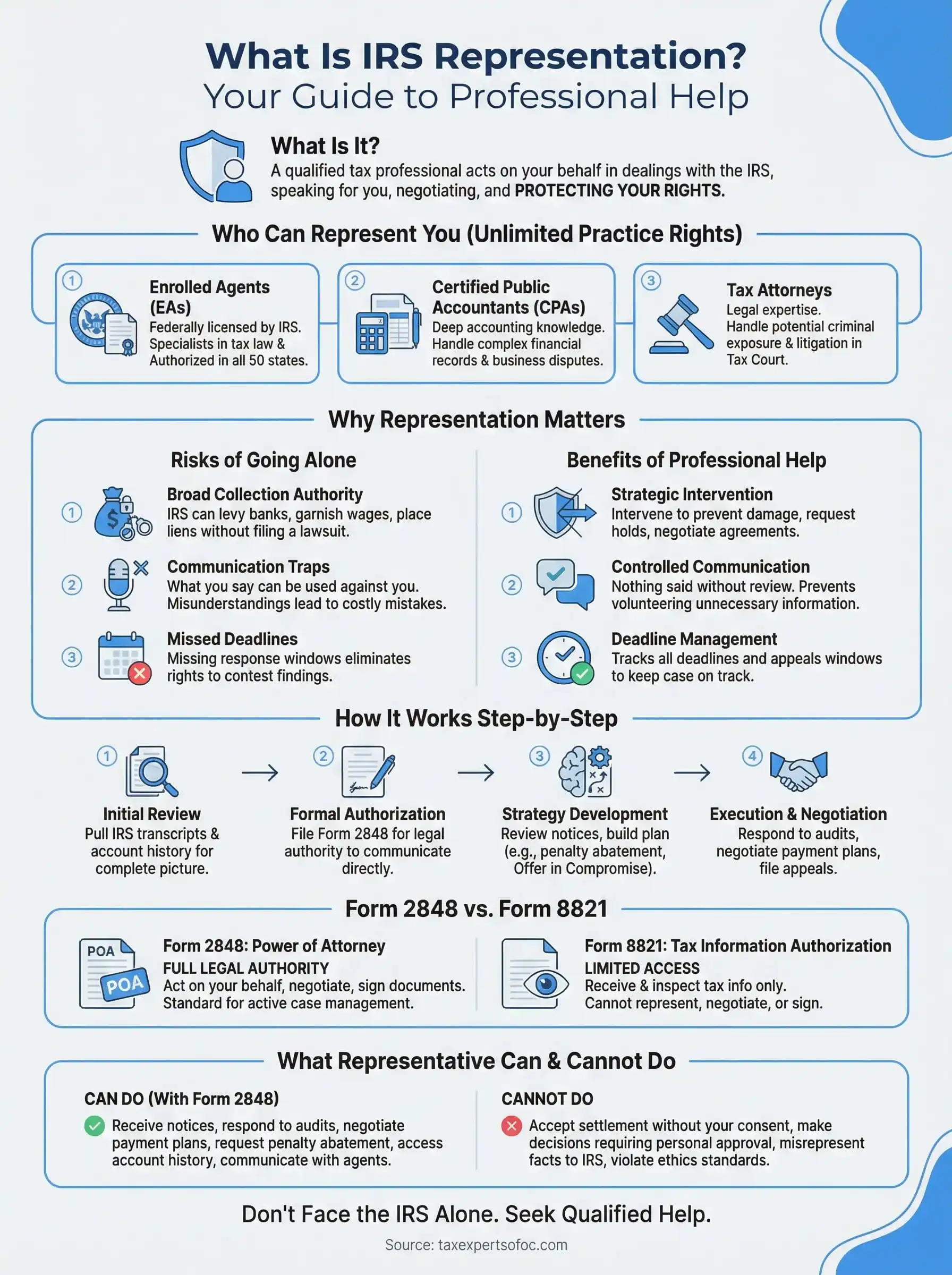
When the IRS contacts you, whether it's a notice about unpaid taxes, an audit letter, or a collections action, you don't have to face them alone. That's where understanding what is IRS representation matters. It refers to having a qualified tax professional act on your behalf in dealings with the IRS, speaking for you, negotiating for you, and protecting your rights throughout the process.
Not just anyone can represent you before the IRS. Federal law limits this authority to specific types of credentialed professionals, including CPAs, enrolled agents, and tax attorneys. Each brings different strengths depending on your situation, and choosing the right one can be the difference between a resolved case and a growing tax problem.
At Tax Experts of OC, our CPA and Enrolled Agent represent taxpayers nationwide in audits, collections, appeals, and other IRS matters. We handle these cases daily, so we understand the pressure you're under. This article breaks down exactly what IRS representation involves, who is authorized to provide it, and why having the right professional in your corner matters more than most people realize.
Why IRS representation matters
When you receive an IRS notice, the natural instinct is to respond quickly and handle it yourself. That instinct can lead to serious problems. Understanding what is IRS representation helps you see that professional involvement isn't a luxury. The IRS has trained agents, legal resources, and collection tools at its disposal, and going in unprepared puts you at a real disadvantage from the first contact.
The IRS has broad collection authority
The IRS can levy your bank accounts, garnish your wages, and place liens on your property without filing a lawsuit first. Most taxpayers don't realize this until the action has already been taken. A qualified representative knows how these processes work and can intervene at key points before damage is done, requesting holds on collections or negotiating installment agreements that keep your finances intact.
Once the IRS issues a levy or lien, reversing it takes more time, more documentation, and often more money than preventing it in the first place.
What you say to the IRS can be used against you
Every conversation you have with an IRS agent becomes part of your case record. Volunteering information you weren't asked for or misunderstanding a question can shift the direction of an audit or collections case in ways you won't immediately notice. A representative communicates on your behalf, which means nothing gets said without proper review. This alone prevents some of the most costly mistakes taxpayers make.
Your representative also tracks IRS deadlines and appeal windows that most people miss entirely. Missing a 30-day response window on an audit notice, for example, can eliminate your right to contest the IRS's findings before the case escalates further. Having someone in your corner who knows these timelines is often what keeps a manageable problem from becoming a much larger one.
Who can represent you before the IRS
Federal law limits IRS representation to a specific group of credentialed professionals. Understanding what is IRS representation also means knowing who actually has the legal authority to act on your behalf, because not every tax preparer or financial advisor qualifies.

Only three categories of professionals hold unlimited practice rights before the IRS: enrolled agents, CPAs, and tax attorneys.
Enrolled Agents
Enrolled agents are federally licensed by the IRS itself, which makes them specialists in tax law and IRS procedure. They pass a rigorous three-part exam covering individual taxes, business taxes, and representation, then maintain their credentials through continuing education requirements every three years. Three things set them apart:
- Licensed directly by the IRS
- Authorized to represent clients in all 50 states
- Focused exclusively on tax matters
CPAs and Tax Attorneys
CPAs bring deep knowledge of accounting principles alongside their tax expertise, which is valuable when your case involves complex financial records or business disputes. Tax attorneys are the right choice when your situation involves potential criminal exposure or requires litigation in Tax Court. Both hold unlimited practice rights before the IRS and can represent you through any stage of a dispute.
How IRS representation works step by step
Understanding what is IRS representation in practice means knowing how the process unfolds once you bring in a professional. Your representative starts by pulling your IRS transcripts and account history to get a complete picture of what the agency has on file. This step matters because it reveals the actual scope of your issue before anyone contacts the IRS.
Authorizing your representative
To act on your behalf, your representative needs formal written authorization from you. This happens through IRS Form 2848, which grants your representative the legal authority to communicate directly with the IRS on your behalf. Once that form is on file, IRS agents must contact your representative instead of reaching out to you directly.
Without this authorization on file, the IRS is not required to speak with anyone other than you.
Developing and executing a strategy
After authorization, your representative reviews any outstanding notices and deadlines, then builds a plan based on your financial situation. That plan might involve requesting penalty abatement, negotiating an installment agreement, or applying for an Offer in Compromise.
Your representative also tracks every response deadline and appeal window throughout the process, so nothing gets missed while your case moves forward.
Form 2848 vs Form 8821 and what to choose
Once you understand what is IRS representation, the next practical step is knowing which authorization form your situation requires. The IRS uses two separate forms for granting professional access to your account, and choosing the wrong one can seriously limit what your representative is allowed to do for you.

Form 2848: Power of Attorney
Form 2848 grants your representative full legal authority to act on your behalf before the IRS. This includes receiving notices, responding to audits, negotiating payment agreements, and signing documents. Any time you need someone to actively manage your case and communicate directly with the IRS, this is the form to file.
Form 2848 is the standard choice for any situation where you want your representative to take direct action with the IRS.
Form 8821: Tax Information Authorization
Form 8821 is a more limited option. It authorizes your representative to receive and inspect your tax information, but it does not allow them to represent you, negotiate on your behalf, or sign anything. This form works when you want a professional to review your IRS records for planning or informational purposes only, without granting full representation rights.
What your representative can and cannot do
When you understand what is IRS representation, you also need to know exactly where your representative's authority begins and ends. A qualified representative can act broadly on your behalf, but there are specific legal boundaries that define what they are and are not permitted to do.
What they can do
Your representative can receive IRS notices, respond to audits, and negotiate payment plans on your behalf. They can request penalty abatement, communicate directly with IRS agents, and access your full account history. In short, they handle every official interaction with the IRS so you don't have to respond to anything unprepared.
Your representative steps fully into your role during IRS proceedings, but only for the matters you specifically authorize on Form 2848.
Common actions your representative can take include:
- Responding to audit requests and submitting supporting documentation
- Negotiating installment agreements or an Offer in Compromise
- Filing appeals within required deadlines
- Requesting a hold on active collection actions
What they cannot do
There are limits your representative must respect regardless of credentials. They cannot accept a settlement or make any decision requiring your personal consent without your explicit approval first. They also cannot misrepresent facts to the IRS or take any action that violates professional ethics standards, as doing so would expose both you and them to serious legal consequences.
Next steps
Now that you understand what is IRS representation and how it works, the next move is deciding whether your current situation calls for professional help. If you have received an IRS notice, owe back taxes, or are facing an audit, waiting rarely makes the outcome better. The IRS moves on its own timeline, and unresolved issues tend to grow in complexity and cost.
Your first step is to gather any IRS notices or letters you have received and note the response deadline on each one. That deadline tells you how much time you have before your options narrow. If you are unsure what the notice means or what to do next, speaking with a qualified professional is the fastest way to get clarity.
Tax Experts of OC offers a free 30-minute consultation to review your situation and explain your options with no obligation. Talk to a CPA or Enrolled Agent today and find out exactly where you stand.