
A California tax lien release doesn't happen automatically just because you finally paid your balance. The Franchise Tax Board files a Notice of State Tax Lien with the county recorder, and that lien stays attached to your property and credit history until you take specific steps to get it lifted. If you've been searching for answers because a lender flagged the lien during a mortgage application or a title company stopped an escrow, you already know how urgent this gets.
Here's the short version: you need to satisfy the debt or negotiate a resolution with the FTB, then request a Release of Lien document and make sure it gets recorded with the county. The exact path depends on whether you're paying in full, settling through an offer in compromise, or proving the lien was filed in error.
This guide walks through the payment and documentation requirements, the timeline you should expect from the FTB, and what to do if the lien shows up on your credit report after it's already been paid. If your case involves back taxes, wage garnishments, or a dispute over the amount owed, we'll also cover when it makes sense to bring in a CPA or Enrolled Agent to speed up the release.
Understanding your California tax lien
A state tax lien in California starts when the Franchise Tax Board records a Notice of State Tax Lien with the county recorder in the county where you live or own property. Unlike a private debt, this filing becomes public record instantly, which is why it shows up on title searches and credit reports. The FTB can also file a lien for unpaid amounts owed to the Employment Development Department or the State Board of Equalization, so you may be dealing with more than one agency depending on your situation.
How it differs from an IRS lien
Many taxpayers confuse a California FTB lien with a federal IRS lien, but they're separate filings handled by different agencies with different release procedures.
| Feature | FTB State Tax Lien | IRS Federal Tax Lien |
|---|---|---|
| Filing agency | California Franchise Tax Board | Internal Revenue Service |
| Recorded with | County recorder | County recorder |
| Release request | FTB Release of Lien | IRS Certificate of Release |
| Typical processing time | 30-40 days | Up to 30 days |
Paying off your balance doesn't erase the lien from public record, you still have to request the release paperwork.
Why timing matters
Interest and penalties accrue daily until the FTB processes your payment, so the balance quoted on an old notice is almost never what you actually owe today.
Step 1. Confirm your lien details and current balance
Before you send a dollar to the FTB, pull the actual lien record and confirm the numbers match what you think you owe. Call the FTB Lien Program at the number listed on your Notice of State Tax Lien, or log into your MyFTB account to view the current balance, including accrued interest and penalties. Don't rely on an old notice you found in a drawer; balances change daily.
Never pay a tax lien based on an old notice; always confirm the current balance directly with the FTB first.
While you're at it, note the lien identification number and the county where it was recorded. If you own property in multiple counties, or moved since the lien was filed, there may be more than one recording to track down. Ask the FTB representative to confirm every county where a lien exists tied to your Social Security number or business EIN, so nothing gets missed later in the release process.
Step 2. Choose your payoff or resolution option
Once you know the real balance, decide how you'll clear it. Paying in full is the fastest route to a lien release, but it isn't the only option if you can't cut a check today. The FTB offers several paths, and each one changes how quickly the release paperwork gets processed.
- Pay in full: fastest release, typically triggers processing within days of payment clearing.
- Installment agreement: keeps the lien active but current, which stops new collection actions.
- Offer in compromise: settles the debt for less than owed if you qualify financially; releases the lien once the FTB accepts and you complete payment.
- Dispute the lien: applies if you believe it was filed in error or the debt was already resolved.
Choosing the wrong resolution path can add months to your release timeline, so match your option to your actual financial situation.
A CPA or Enrolled Agent can help you weigh these options against your credit and escrow deadlines before you commit.
Step 3. Submit payment or required documentation
Once you've picked your path, get the paperwork moving fast. The FTB won't start the release clock until they've processed both your payment and any supporting documents tied to your resolution type.
What to send for each option
Gather these items before you contact the FTB so you're not scrambling later:
- Full payment: cashier's check, wire transfer, or online payment through your MyFTB account, referencing the lien ID number.
- Installment agreement: signed agreement form plus your first scheduled payment.
- Offer in compromise: completed OIC application, financial disclosure forms, and supporting bank statements.
- Dispute claims: copies of prior payment confirmations or correspondence proving the debt was already satisfied.
Attach the lien identification number to every payment or form you submit, or your file may sit in limbo for weeks.
Send everything by certified mail or through your MyFTB portal, and keep copies of every confirmation number for your records.
Tracking submission status
Keep checking your MyFTB account weekly until the balance reflects zero or your agreement shows as active.
Step 4. Request and confirm your official lien release
Once your balance hits zero or your agreement is active, the FTB should generate a Release of Lien automatically, but you shouldn't just assume it happened. Request written confirmation and ask for the release document to be mailed to you directly, not just recorded with the county on its own timeline.
Requesting the paperwork
Call the FTB Lien Program or submit a request through MyFTB asking for your official release document. Provide your lien identification number and confirm the mailing address on file, since a release sent to an old address can delay everything by weeks.
Don't assume the county recorded your release automatically, call and confirm the recording date yourself.
Verifying the county recording
Contact the county recorder's office where the lien was originally filed and ask them to confirm the release has been recorded, not just received. Request a stamped, recorded copy for your files. If you have liens in multiple counties, repeat this step for each one individually.
Step 5. Handle escrow, credit, and lingering record issues
Getting the release recorded doesn't automatically clear your name everywhere else. Escrow companies, credit bureaus, and title searches each pull data on their own schedule, so you often have to push the paperwork through manually.
Clearing escrow holds
Send your stamped release document directly to the title or escrow officer handling your transaction. Don't wait for them to find it through a routine search, since that search may run days before your recording posts. A faxed or emailed copy usually satisfies underwriting faster than a mailed original.
Fixing your credit report
Dispute the lien entry with all three credit bureaus once it's released, attaching your recorded copy as proof. Liens can linger on reports for months after release if you don't file the dispute yourself.
A recorded release won't clear your credit report automatically, you have to dispute the entry with proof in hand.
Watching for duplicate filings
Check every county where you've owned property, since a missed recording can resurface during a future refinance or sale.
Getting your financial standing back on track
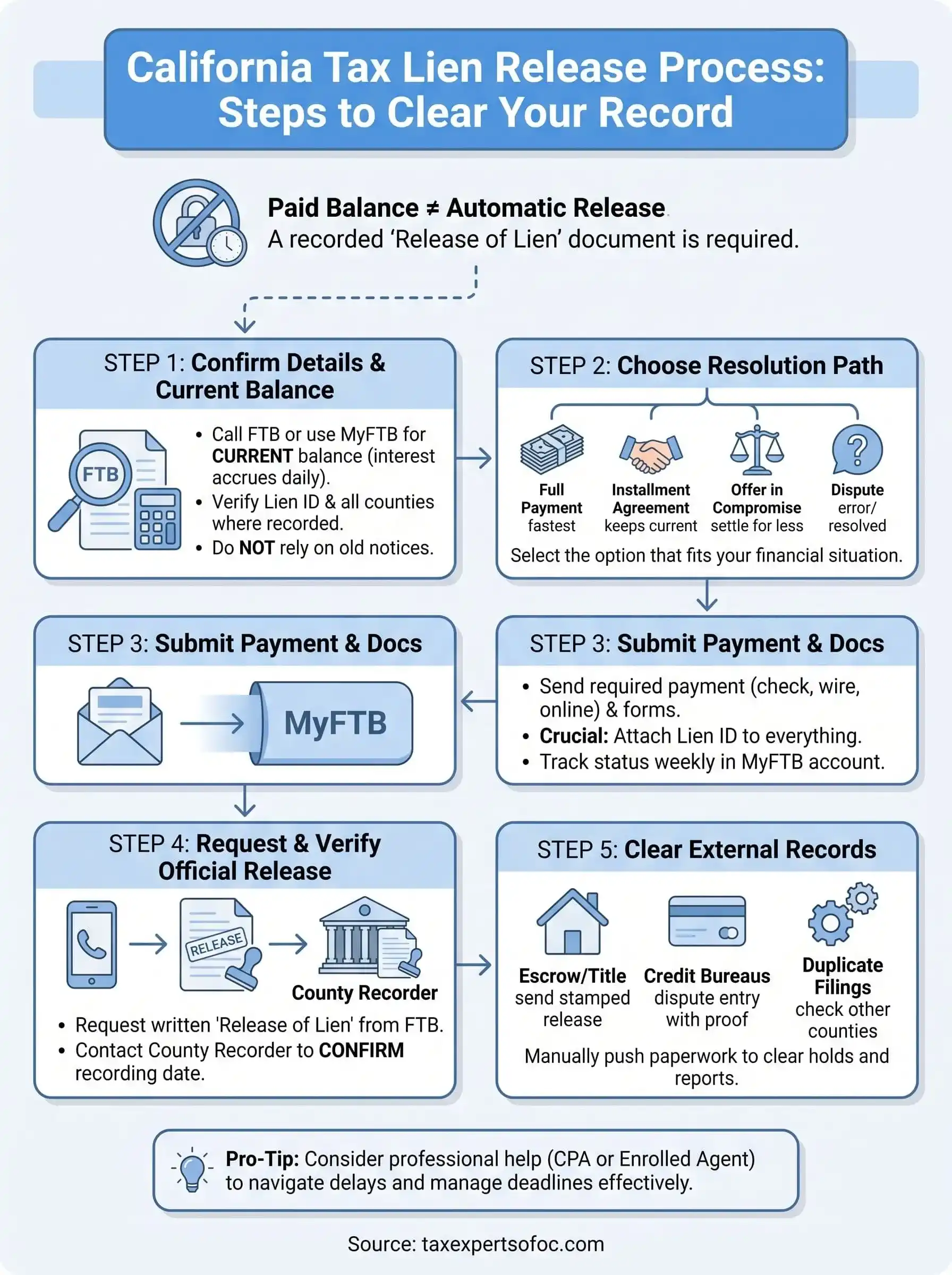
A California tax lien release takes real follow-through, not just a paid balance. You have to confirm your numbers, pick the right resolution path, submit the correct paperwork, request the actual release document, and then chase down escrow officers and credit bureaus until every record matches reality. Skip a step and you risk a stalled closing or a lien that quietly resurfaces years later during a refinance.
Given how many agencies and deadlines are involved, most people benefit from having a professional manage the process alongside them. A CPA or Enrolled Agent who works with FTB liens regularly knows which forms move fastest, which county offices drag their feet, and how to push a delayed release before it costs you a closing date or a credit score.
If you're dealing with an active lien right now, don't wait for it to resolve itself. Schedule a free consultation with Tax Experts of OC and get a clear plan for your release today.