

Owing money to the IRS doesn't mean you have to pay it all at once. If you can't cover your full tax balance by the filing deadline, submitting an IRS payment plan application gives you a structured way to pay over time, and it keeps the IRS from escalating collections against you. The process is more straightforward than most people expect, but choosing the wrong option or making errors on your application can lead to delays, rejections, or unnecessary fees.
You can apply online through the IRS website, submit Form 9465 by mail, or call the IRS directly, each method works better in different situations depending on how much you owe and your filing history. This guide breaks down every step so you know exactly which path fits your circumstances and what to expect after you apply.
At Tax Experts of OC, our CPA and Enrolled Agent help clients across all 50 states negotiate and set up IRS installment agreements, often securing better terms than taxpayers get on their own. If your situation is complex or you've already been denied, we offer a free 30-minute consultation to review your options before you commit to anything.
What to know before you apply
Before you submit an IRS payment plan application, confirm that you're eligible and understand which type of plan fits your balance. Skipping this step leads to rejections that delay your setup and can trigger collection actions in the meantime.
Check your eligibility
The IRS sets clear thresholds for each type of installment agreement. Individual taxpayers can apply online if they owe $50,000 or less in combined tax, penalties, and interest. Business taxpayers can use the online tool if they owe $25,000 or less in payroll taxes. If you owe more, you'll need to apply by mail or phone and provide additional financial documentation.
Your returns also need to be current before the IRS will approve any payment arrangement. File all unfiled returns first, even if you can't pay the balance, because missing returns will result in an automatic denial regardless of how much you owe.
Filing all missing returns before applying is the single most important step you can take to avoid an automatic rejection.
Know the two main plan types
The IRS offers two primary options. A short-term payment plan gives you up to 180 days to pay your full balance and carries no setup fee. A long-term installment agreement, also called a monthly payment plan, lets you spread payments over several years and does carry a setup fee that varies depending on how you apply and how you pay.
| Plan Type | Time Limit | Setup Fee |
|---|---|---|
| Short-term plan | Up to 180 days | None |
| Long-term plan | Up to 72 months | $31 to $130 |
Choosing the right plan upfront saves you money on fees and interest, so confirm your total balance and preferred timeline before you start the application process.
Apply online with the IRS Online Payment Agreement
The IRS Online Payment Agreement (OPA) tool is the fastest way to submit your irs payment plan application, and you can complete the entire process in about 15 minutes without calling or mailing anything. Go to the IRS website and look for the OPA tool under the payments section.
What you need before you start
To access the OPA tool, you must verify your identity through the IRS's ID.me system, so gather your Social Security Number, a valid email address, and a government-issued photo ID before you start. You'll also want your most recent tax return and your current balance, both of which you can pull from your IRS online account.
Steps to complete your application
Your online application walks you through a short series of prompts to configure your plan. Make sure you know your preferred monthly payment amount and start date before you begin.

- Go to the IRS Online Payment Agreement tool
- Sign in or create an account via ID.me
- Select your plan type: short-term or long-term
- Enter your payment amount and preferred due date
- Choose a payment method: direct debit, check, or payroll deduction
- Review and submit
The IRS approves most online applications immediately, so you'll know your plan status before you close the browser.
Apply by mail with Form 9465
If you owe more than $50,000 or prefer not to use the online tool, you can submit your irs payment plan application using Form 9465, the Installment Agreement Request. This method takes two to three weeks to process but is the required route for higher balances and certain business filers.
When to use Form 9465
Use Form 9465 when your total balance exceeds $50,000 or when you need to attach supporting financial documents, such as a financial statement showing your income and expenses.
If you've received an IRS notice, check whether it includes specific mailing instructions, since some notices direct you to a particular IRS office rather than the standard address.
Filing all outstanding returns before mailing Form 9465 is required, the IRS will deny your application otherwise.
How to complete and submit Form 9465
Download Form 9465 from the IRS website and fill in these key fields:
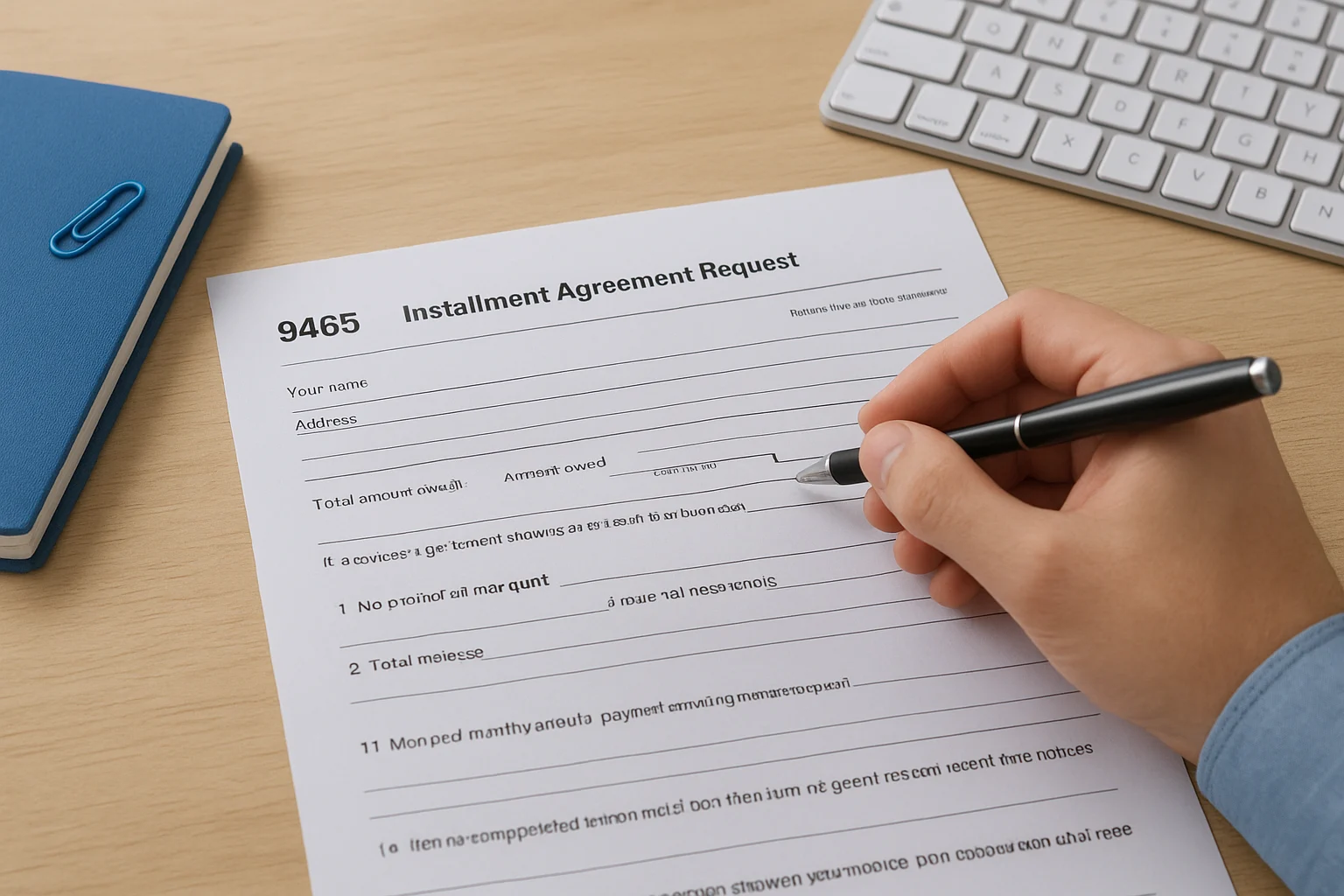
| Field | What to enter |
|---|---|
| Line 1 | Your name, address, and SSN |
| Line 9 | Total amount owed |
| Line 11a | Proposed monthly payment |
| Line 11b | Preferred payment day of the month |
| Line 13 | Payment method |
Mail the completed form to the address shown on your most recent IRS notice, or check the Form 9465 instructions for the correct address based on your state.
Set your payment amount, date, and method
Once your irs payment plan application is submitted, the IRS will ask you to specify how much you'll pay, when payments are due, and how you'll send the money. Getting these details right from the start prevents missed payments and potential plan default.
Choose your monthly payment amount
Your payment must be high enough to pay off your full balance (including penalties and interest) before the plan's maximum term ends. Divide your total balance by 72 months to find the minimum amount that keeps you on track for a long-term plan. The IRS will reject proposals that fall short of that threshold.
Setting your payment slightly above the minimum reduces total interest charges over the life of the plan.
Pick your payment due date
You can select any day between the 1st and 28th of the month as your due date. Choose a day that aligns with your paycheck schedule so funds are available when the payment processes.
Select your payment method
The IRS accepts direct debit, check, money order, and payroll deduction. Direct debit through the Direct Pay system is the most reliable option and also qualifies you for a reduced setup fee on long-term plans.
After you apply: fees, notices, and plan changes
Once your irs payment plan application is approved, you'll receive a notice confirming your plan terms, including your payment amount, due date, and total balance. Read this notice carefully and compare it to what you submitted, because errors on the IRS's side do happen and are easier to fix early.
Understand setup fees
The IRS charges a one-time setup fee based on how you applied and how you pay. Direct debit applications submitted online carry the lowest fee at $31. Applying by phone, mail, or in person without direct debit raises the fee to $130. Low-income taxpayers may qualify for a reduced fee of $43 regardless of application method.
Setting up direct debit gets you the lowest possible fee and removes the risk of a forgotten payment.
Modify or default on your plan
Your financial situation may change after approval, and the IRS does allow modifications. You can request a new payment amount or due date by calling the IRS directly or logging into your IRS online account. Missing a payment triggers a default notice, and if you don't respond quickly, the IRS can reinstate collections, including liens and wage garnishments.

Wrap up and get help if you need it
Submitting an irs payment plan application is manageable when you know your balance, have all returns filed, and choose the right method for your situation. The online tool works best for balances under $50,000, while Form 9465 handles larger amounts or cases that require financial documentation. Either way, setting up direct debit keeps your fees low and your payments automatic.
Most taxpayers can handle a straightforward installment agreement on their own, but complex situations change that math. If you owe more than $50,000, have unfiled returns, or have already been denied, working with a qualified professional often leads to better terms and fewer setbacks. The IRS negotiates differently when a CPA or Enrolled Agent is representing you.
Tax Experts of OC works with clients in all 50 states to set up and manage IRS payment agreements. Book a free 30-minute tax consultation to review your options before you apply.