
Most people treat tax preparation & planning as one job. It is not. Preparation reports what already happened last year. Planning changes what you owe next year. If you hire someone for only the first, you may pay a fair price for a return and still leave thousands on the table.
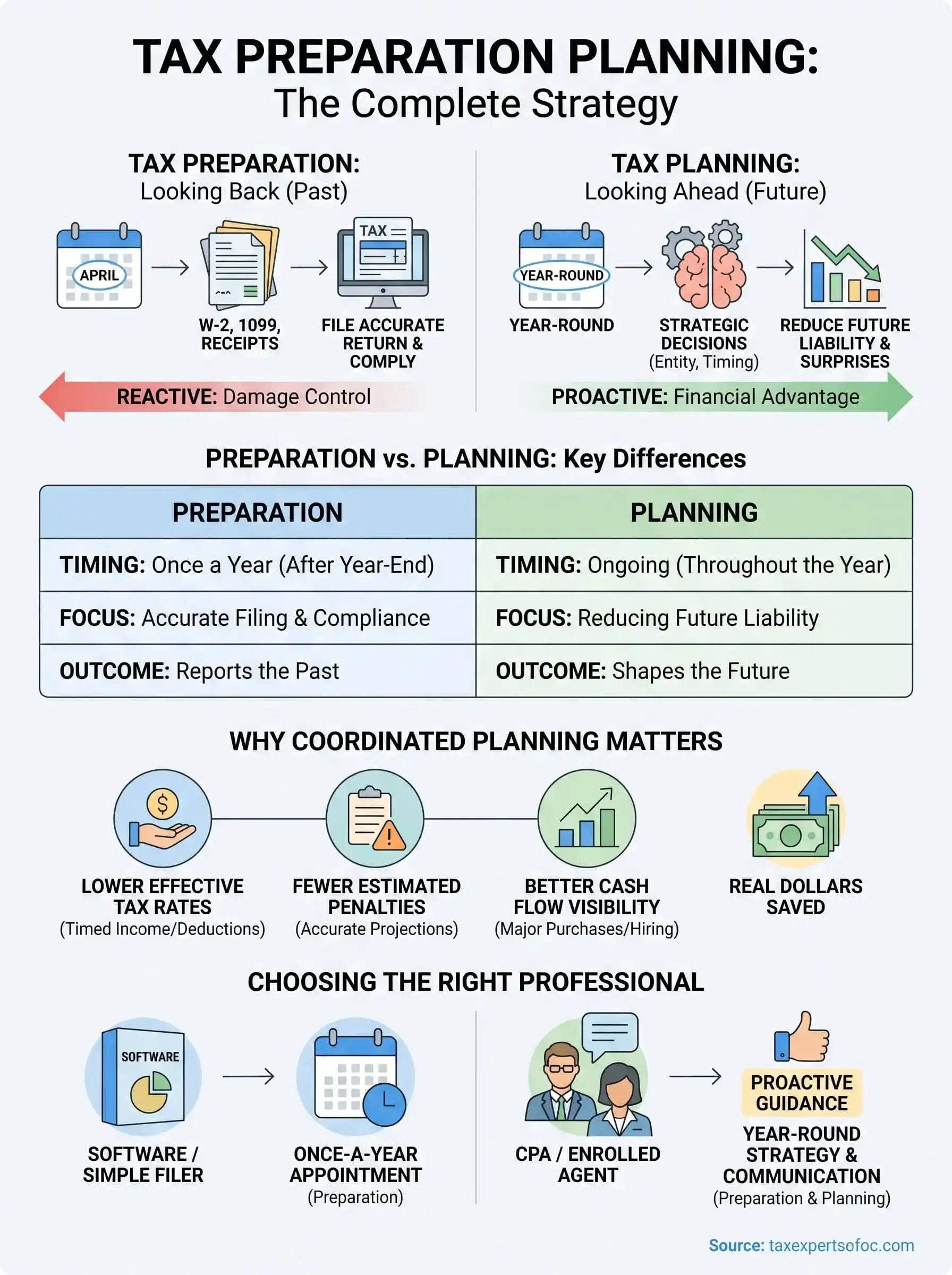
Here is the short answer. Tax preparation looks backward and gets your return filed accurately. Tax planning looks forward and uses entity choice, timing, deductions, and estimated payments to lower your bill. Costs vary widely. A simple individual return can run a few hundred dollars, while business returns and year-round planning cost more because a CPA or Enrolled Agent does real analysis.
At Tax Experts of OC, we handle both for individuals, LLCs, corporations, partnerships, and non-profits across all 50 states. This article explains how the two services differ, what you should expect to pay, and how to compare preparers before you hand over your records. You will also see red flags to avoid, so you can choose with confidence.
Why tax preparation and planning both matter
Tax preparation and planning guard against two different risks. Preparation protects you from filing errors, and planning protects you from overpaying. You need both.
Preparation keeps you compliant
Accurate returns are your legal baseline. One wrong figure can bring an IRS notice, and a late return costs 5% of the unpaid tax per month, up to 25%. Unfiled years turn into back taxes quickly.
Business owners carry more exposure. Payroll filings, partnership returns, and multi-state income each have their own deadlines, so a CPA or Enrolled Agent keeps you from missing one and can represent you if the IRS asks questions.
Planning keeps more of your money
Planning pays off because most savings must be set up before December 31. It is October now, so you still have about three months to act. Once the year closes, a preparer can only report what happened.
Consider a sole proprietor with $120,000 of profit. Self-employment tax takes 15.3% of most net earnings up to the Social Security wage base, so reviewing an S corporation election could change the result. A planner looks at moves like these:
- Entity structure, such as an S corporation election
- Retirement plan contributions
- Timing of income, equipment purchases, and deductions
- Quarterly estimated payments that avoid underpayment penalties
Preparation reports your tax bill, but only planning can shrink it.
How to tell tax planning and tax preparation apart
Compare them side by side
Timing is the quickest test of how planning and preparation differ. Preparation happens after the year ends, and planning happens while it is still open. The table shows the rest.
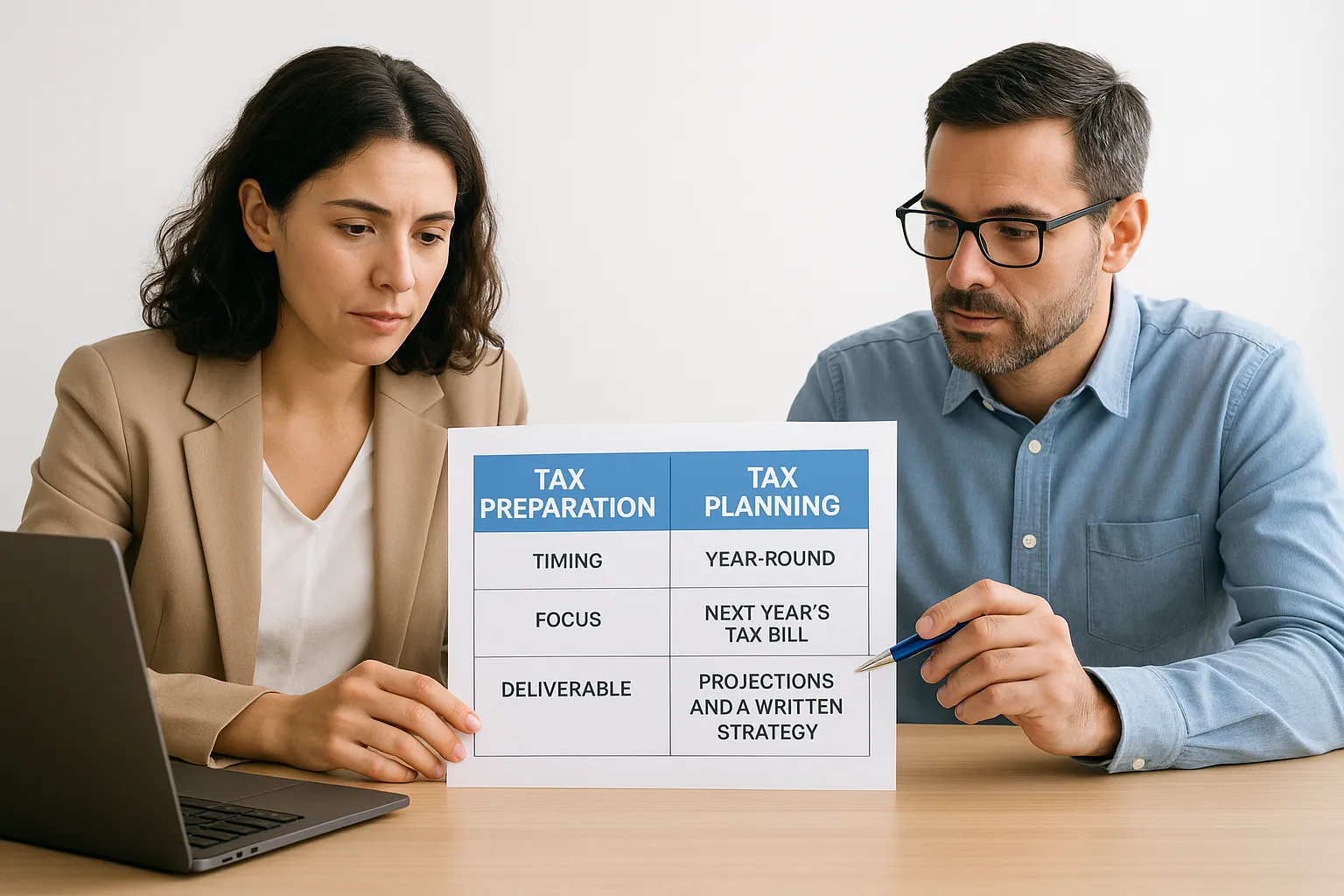
| Tax preparation | Tax planning | |
|---|---|---|
| Timing | January to April, or October on extension | Year-round, before December 31 |
| Focus | Last year's numbers | Next year's tax bill |
| Deliverable | A filed return | Projections and a written strategy |
| Typical pricing | Flat fee per return | Hourly or per engagement |
If your preparer never asks about next year, you are buying preparation only.
Ask three questions before you sign
Any firm selling tax preparation & planning should spell out what each part covers. Ask these three questions up front, because the answers show what you are actually buying:
- Will you project my tax for this year?
- Will you contact me before December 31 with specific moves?
- Do you review entity structure, retirement contributions, and estimated payments?
How much tax preparation and planning cost
Costs for tax preparation & planning depend on complexity, not just the number of forms. You pay more when a CPA or Enrolled Agent does real analysis than when software fills in boxes.
Typical price ranges
These are typical U.S. ranges for tax preparation fees, and your quote will shift with location and the condition of your records.
| Service | Typical cost |
|---|---|
| Simple individual return | $150 to $400 |
| Individual with self-employment or rentals | $400 to $1,000 |
| LLC, S corporation, or partnership return | $800 to $2,500 |
| Tax planning | $200 to $500 per hour, or $500 to $3,000 per engagement |
What changes the price
Messy books, multiple states, and unfiled prior years all raise the fee. Ask for a flat quote in writing before anyone starts work.
Planning usually earns its keep. If a $1,500 review finds $5,000 in savings, you came out ahead, and the savings repeat in later years.
A planning fee is worth paying when it saves more than it costs.
How to choose a tax preparer or planner
Check credentials first
Anyone with a PTIN can prepare a return, but only some pros can represent you before the IRS. CPAs, Enrolled Agents, and tax attorneys have unlimited representation rights. Confirm a CPA through your state board and an Enrolled Agent through the IRS preparer directory.
Hire the person who will sign your return and stand behind it with the IRS.
A good fit for tax preparation & planning meets these checks:
- Holds a verified CPA or EA license
- Signs the return and lists a PTIN
- Answers questions outside tax season
- Gives a flat quote in writing
Walk away from these red flags
Some warning signs are obvious. Fees based on a percentage of your refund and guaranteed refunds both signal trouble. A preparer who refuses to sign your return, or who wants your refund deposited into their own account, should lose your business.
How to get the most from both services year-round
Good tax preparation and planning runs on a yearly rhythm of year-round tax planning, not a spring scramble. A few habits cut your fees and make both services work harder for you.
Follow a simple calendar
Start with a fixed calendar, because each season has one job. Since it is October, the first step is on your desk now.

- October: Ask for a projection. The extension deadline is October 15.
- November and December: Make retirement contributions and equipment purchases before December 31.
- January: Pay the final estimated payment by January 15 and gather your documents.
- April: File, then book your next planning review.
The best tax savings come from a phone call in October, not a return in April.
Keep your records current
Records matter just as much. Clean monthly books let your planner project accurately, and your preparer spends less time fixing errors, which lowers your fee.
Finally, report changes as they happen. A new hire, a home sale, or a move to another state can reshape your plan, so call your advisor first and sign contracts second.
Putting it all together
Tax preparation & planning work as a pair. Preparation keeps you compliant by getting an accurate return filed on time, and planning keeps you from overpaying by acting before the year closes. Hire for only one, and you end up with a clean return and a bigger bill than you needed.
Costs stay manageable when you know what to expect. Get a flat quote in writing, confirm your preparer holds a CPA or Enrolled Agent license, and walk away from anyone who bases fees on your refund.
Because it is October, you still have time to act this year. Ask for a projection now, then make your moves before December 31.
If you want a CPA and Enrolled Agent handling both sides, book a free 30-minute consultation with Tax Experts of OC. We work with clients in all 50 states by phone and email.