
If you're asking yourself "do I need an EIN for my LLC?" the short answer is: it depends on how your LLC is structured and how you plan to operate it. An EIN, your business's federal tax identification number, isn't always legally required, but in many cases, skipping it creates problems you won't see coming until they slow you down.
The IRS has specific rules about which LLCs must obtain an EIN and which ones technically don't have to. Banks, vendors, and state agencies often have their own expectations on top of that. Understanding where your LLC falls means knowing the difference between what's mandatory and what's strongly recommended, two categories that overlap more than most new business owners realize.
At Tax Experts of OC, we help LLC owners across all 50 states get their tax structure right from the start, whether that means filing for an EIN, sorting out entity elections, or cleaning up mistakes made early on. This guide breaks down the actual IRS requirements, walks through the exceptions, and lays out your next steps so you can move forward with a clear answer.
When an LLC must have an EIN
The IRS has clear triggers that make an EIN mandatory for your LLC. If your situation meets any one of them, you don't have a choice in the matter. Knowing these rules is the first step to answering "do I need an EIN for my LLC?" with real confidence, rather than guessing and hoping nothing catches up with you later.
Your LLC has employees
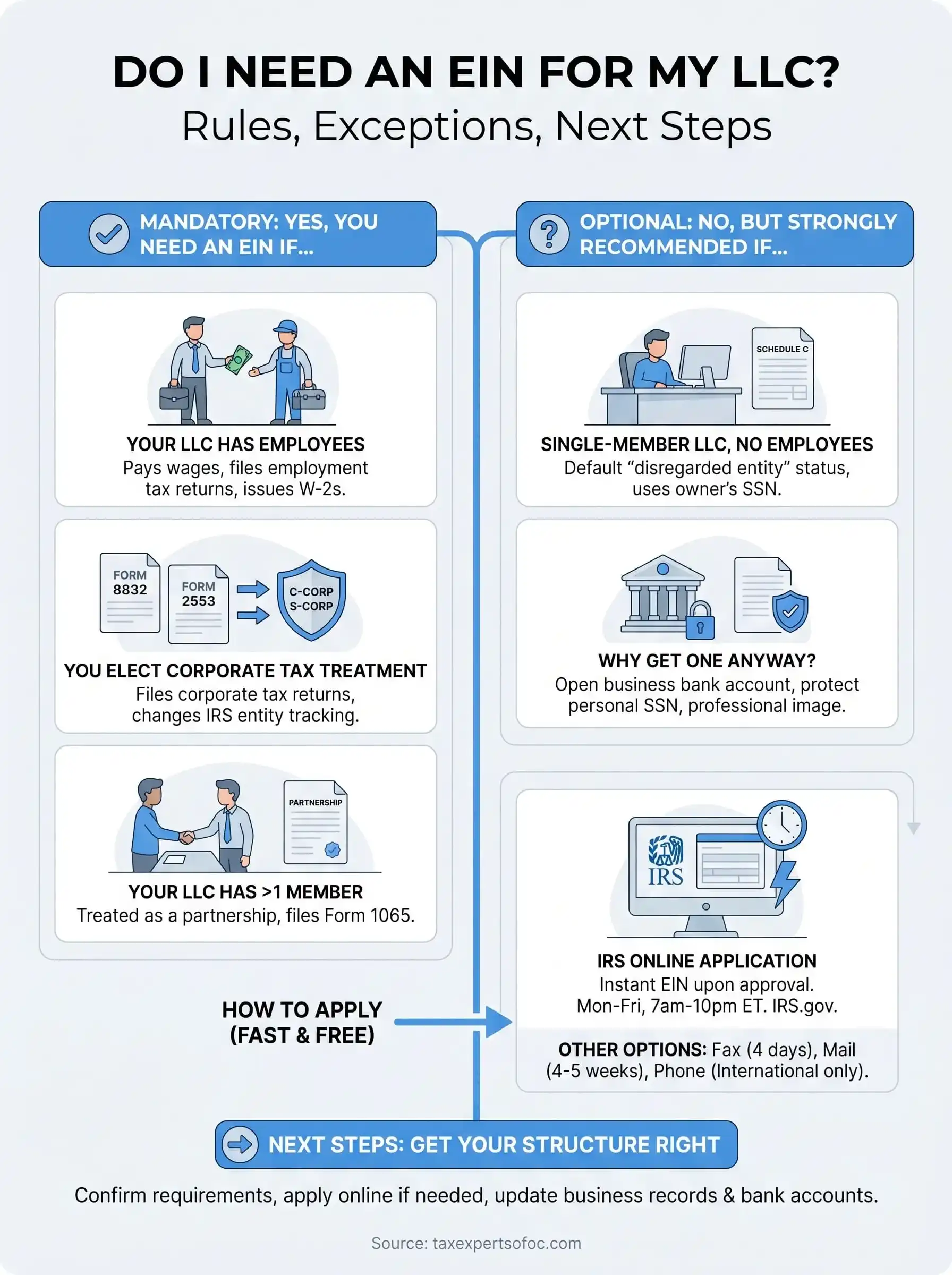
If your LLC pays wages to any employee, the IRS requires you to have an EIN, full stop. This applies even if you only hire one part-time worker. You need the EIN to file employment tax returns, report withholding, and issue W-2s at year end. Federal payroll taxes cannot be reported or remitted without one, so operating with employees and no EIN puts you out of compliance immediately.
Running payroll without an EIN means you cannot legally file your employment tax returns, and the penalties for late or missing filings compound fast.
Your LLC also needs an EIN if it withholds taxes on income payments made to non-resident aliens, even when those individuals are not classified as employees. This situation comes up more often than people expect for LLCs that work with international contractors or foreign partners.
Your LLC elects corporate tax treatment
A single-member LLC is taxed as a disregarded entity by default, but if you file Form 8832 to elect C-corporation treatment or Form 2553 to elect S-corporation treatment, you need an EIN. The corporate election changes how the IRS tracks your entity entirely, and the EIN becomes the required identifier attached to those corporate returns going forward.
Getting the election and the EIN in the wrong order creates real problems. The IRS will not process your corporate tax election without a valid EIN on file, and that delay can disrupt your intended tax treatment for the entire first year of operation.
Your LLC has more than one member
Multi-member LLCs are treated as partnerships for federal tax purposes by default. A partnership must file its own federal return using Form 1065, and that return cannot be filed without an EIN. This requirement applies regardless of whether the LLC has employees or how much revenue it generates in a given year.
Each member then receives a Schedule K-1 from the LLC reporting their allocated share of income, deductions, and losses. That process requires the LLC to carry its own tax identification number, completely separate from any individual member's Social Security Number.
When an LLC may not need an EIN
Not every LLC is required to obtain an EIN right away. The IRS leaves room for a narrow set of circumstances where a single-member LLC can operate using the owner's Social Security Number instead. Understanding where that boundary sits helps you answer the question "do I need an EIN for my LLC?" with more precision rather than defaulting to assumptions.
The single-member LLC with no employees
If your LLC has only one member and no employees, the IRS treats it as a disregarded entity by default. That means the IRS does not consider the LLC a separate taxable entity from you, the owner. You report your business income and expenses on Schedule C, attached to your personal Form 1040, using your own Social Security Number as the identifier.
This disregarded entity status is the only scenario where skipping an EIN is technically permissible under IRS rules, and it only holds as long as your business structure stays simple.
No corporate tax election in place
The exception above holds only when you have not elected corporate tax treatment for your LLC. If you keep the default disregarded entity status and file no Form 8832 or Form 2553, the IRS does not require a separate EIN for the entity itself. Your personal tax ID carries the filing obligations as long as those conditions stay in place.
This also assumes you are not required to file certain excise tax returns or alcohol, tobacco, and firearms returns. If either of those federal filing obligations applies to your business, the IRS requires an EIN regardless of your member count or employee status.
Why many single-member LLCs still get one
Even when the IRS does not require an EIN, most single-member LLC owners apply for one anyway. Practical business needs often push you toward an EIN long before any legal requirement forces your hand. The question "do I need an EIN for my LLC?" frequently has a legal answer of no, but a practical answer of yes.
Opening a business bank account
Most banks will not open a dedicated business checking account without an EIN. While some institutions technically allow a sole proprietor to use a Social Security Number, banks that specifically serve business accounts almost universally ask for an EIN as part of their verification process. Operating your LLC finances through a personal account is one of the fastest ways to blur the liability protection your LLC structure is supposed to provide, so this matters more than most owners initially realize.
Mixing personal and business funds in a single account can undermine the legal separation between you and your LLC, which is the primary reason most people form an LLC in the first place.
Vendors, payment processors, and clients may also ask for your EIN on W-9 forms when you provide services. Without one, you hand over your Social Security Number instead, which creates a real identity theft exposure every time you share it with a new business contact.
Protecting your personal information
Using your Social Security Number as a business identifier puts sensitive personal information in front of a much wider audience than most owners anticipate. An EIN creates a separate identifier that you can use for business tax filings, contractor payments, and vendor applications without exposing the number tied directly to your personal credit and identity records.
How to apply for an EIN
Once you settle the question of "do I need an EIN for my LLC?" and confirm you need one, the application process is free and faster than most people expect. The IRS charges no fee to issue an EIN, and the most efficient path takes under 15 minutes from start to finish. Getting it done quickly protects your ability to open a business bank account, run payroll, and file returns without unnecessary delays.
Apply online through the IRS
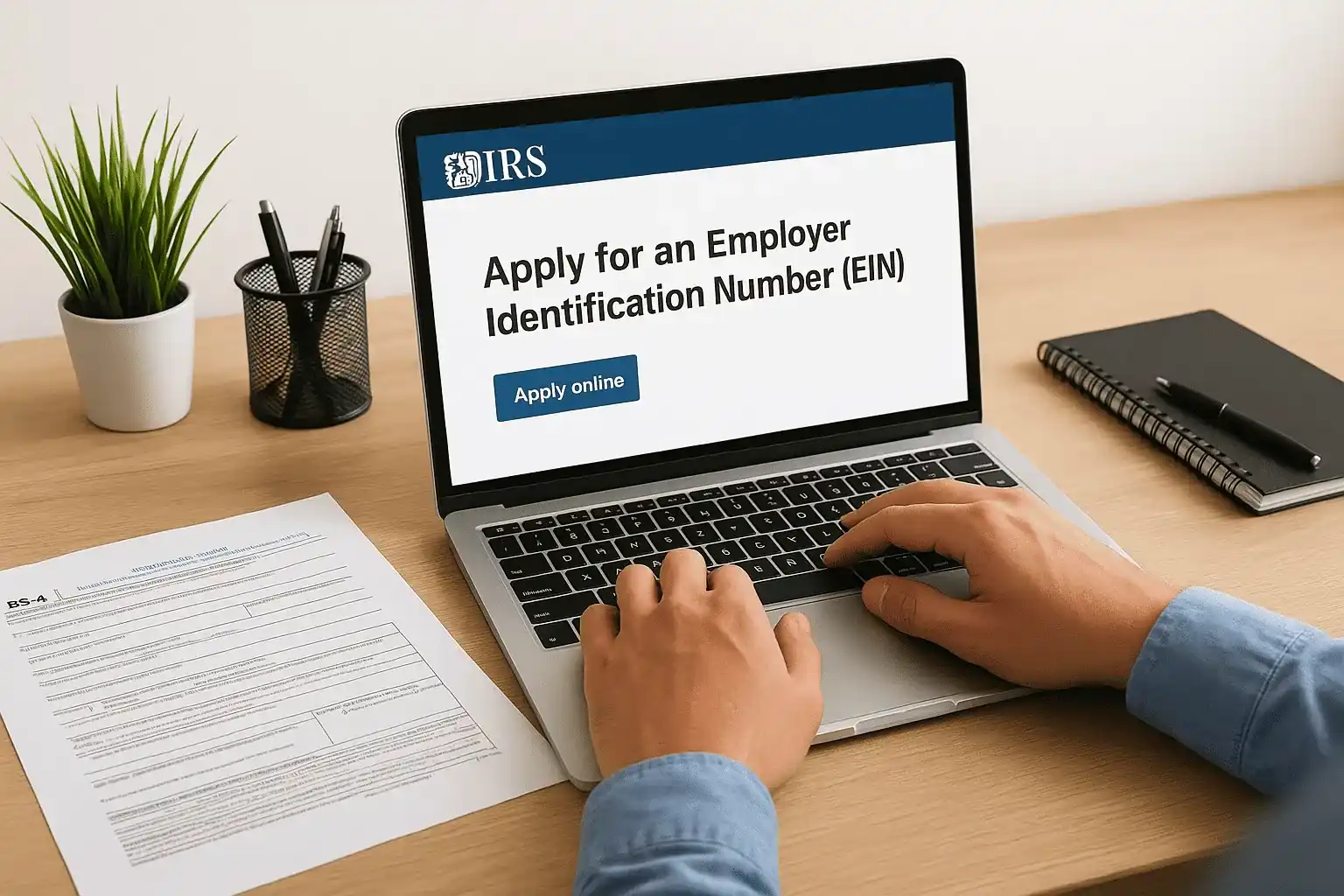
The IRS online EIN application at IRS.gov is your fastest option. The system issues your EIN immediately upon approval, with no waiting period. The tool runs Monday through Friday, 7 a.m. to 10 p.m. Eastern Time, and you must complete the session in one sitting because the system does not save incomplete applications. Before you start, gather your LLC's legal name, state of formation, and the responsible party's Social Security Number or ITIN.
The responsible party must be an individual with direct control over the LLC's funds and assets, not another business entity.
Other ways to apply
If you cannot use the online system, the IRS accepts Form SS-4 by fax or mail. Fax submissions return your EIN within four business days, while mail takes four to five weeks. Factor those timelines into any plans that hinge on having your EIN in place, because tax elections, payroll setup, and bank account applications can all stall if you choose a method that takes longer than your schedule allows.
International applicants with no legal residence or principal place of business in the United States can call the IRS at 267-941-1099 to apply by phone and receive an EIN immediately during that call.
What to do after you receive your EIN
Receiving your EIN is the starting point, not the finish line. Once you have that nine-digit number in hand, several immediate actions will determine whether your LLC operates properly from a tax and compliance standpoint. Skipping these steps after asking "do I need an EIN for my LLC?" and going through the process leaves real gaps in your setup.
Update your business records and accounts
Your first move is to open a dedicated business bank account using your new EIN. Bring your EIN confirmation letter, your LLC's operating agreement, and your state formation documents to the bank. Keeping business and personal finances completely separate is not optional if you want to preserve the liability protection your LLC provides.
The IRS confirmation letter you receive is the official document banks and agencies accept, so save it somewhere permanent rather than treating it as temporary paperwork.
You should also update any W-9 forms on file with clients or vendors who previously collected your Social Security Number. Replacing your personal identifier with your EIN reduces your identity theft exposure going forward.
File the right tax elections on time
If you plan to elect S-corporation or C-corporation tax treatment for your LLC, file the relevant form immediately after receiving your EIN. Form 2553 for an S-election carries a strict deadline tied to your tax year, and missing it forces you to wait another full year. Your EIN must appear on every election form, payroll registration, and state tax account you open, so confirm the number is consistent across all filings from day one.
Next steps
Now that you can answer "do I need an EIN for my LLC?" with confidence, the path forward is straightforward. If your LLC has employees, multiple members, or a corporate tax election in place, apply for your EIN through the IRS online portal today. If you run a single-member LLC with no employees, you still benefit from getting one before you open a bank account or share your tax information with vendors.
Getting your EIN is one piece of a larger compliance picture. Entity elections, payroll setup, and state tax registrations all need to align with how your LLC is actually structured, and small errors at the start tend to compound over time. If you want a professional to review your setup and confirm everything is in order, schedule a free consultation with Tax Experts of OC and get a clear answer from a CPA or Enrolled Agent who knows the rules.