
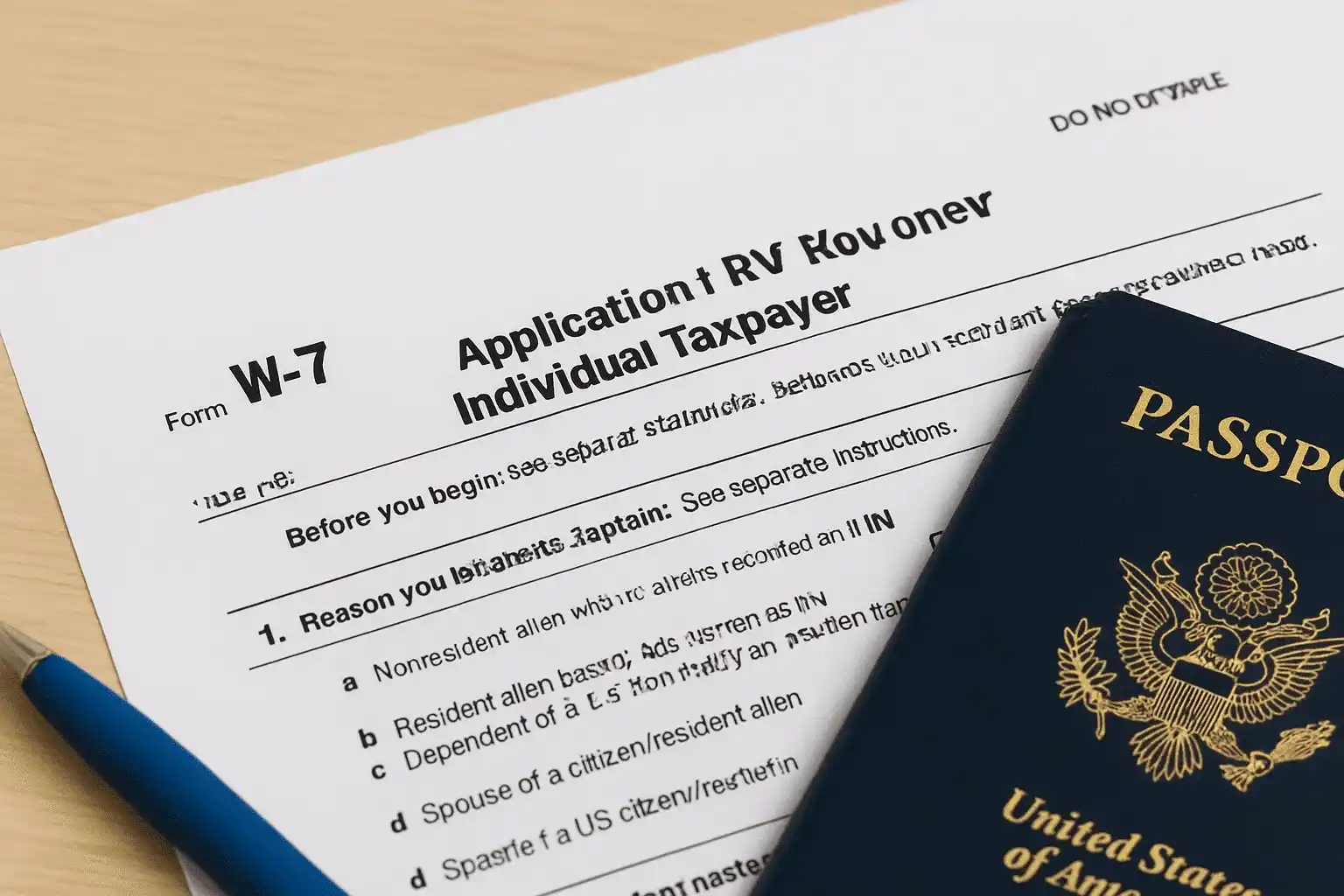
If you need to file a tax return but don't qualify for a Social Security number, the IRS won't process your paperwork until you have an ITIN. That's where form w-7 instructions come in, and getting them wrong is the number one reason applications get rejected or delayed for months. We see this constantly with clients who tried to file on their own, only to receive a confusing IRS notice weeks later asking for more documents.
This guide walks you through exactly what the IRS expects: which supporting documents qualify, how to fill out each line of the form without triggering a rejection, and where to actually send everything. We'll also cover the renewal process for taxpayers whose ITIN has expired, since the requirements differ slightly from a first-time application.
Below, you'll find a straightforward, step-by-step breakdown of the entire process, from gathering your identity documents to choosing between mailing your application, using an IRS Taxpayer Assistance Center, or working with a Certifying Acceptance Agent. If your situation involves back taxes, help with unfiled tax returns, or an existing IRS notice, an ITIN is often just the first piece of a larger puzzle, and that's a spot where professional representation makes a real difference.
What is Form W-7 and who needs to file it
Form W-7 is the IRS document you file to request an Individual Taxpayer Identification Number, or ITIN. It's a nine-digit number that looks like a Social Security number on paper but works differently. The IRS issues ITINs specifically to people who have a US tax filing requirement but aren't eligible for an SSN, whether that's because of immigration status, residency rules, or dependent status. Without this number attached to your return, the IRS has no way to process your paperwork, which means your refund gets stuck, your return gets rejected, or worse, you fall out of compliance without realizing it.
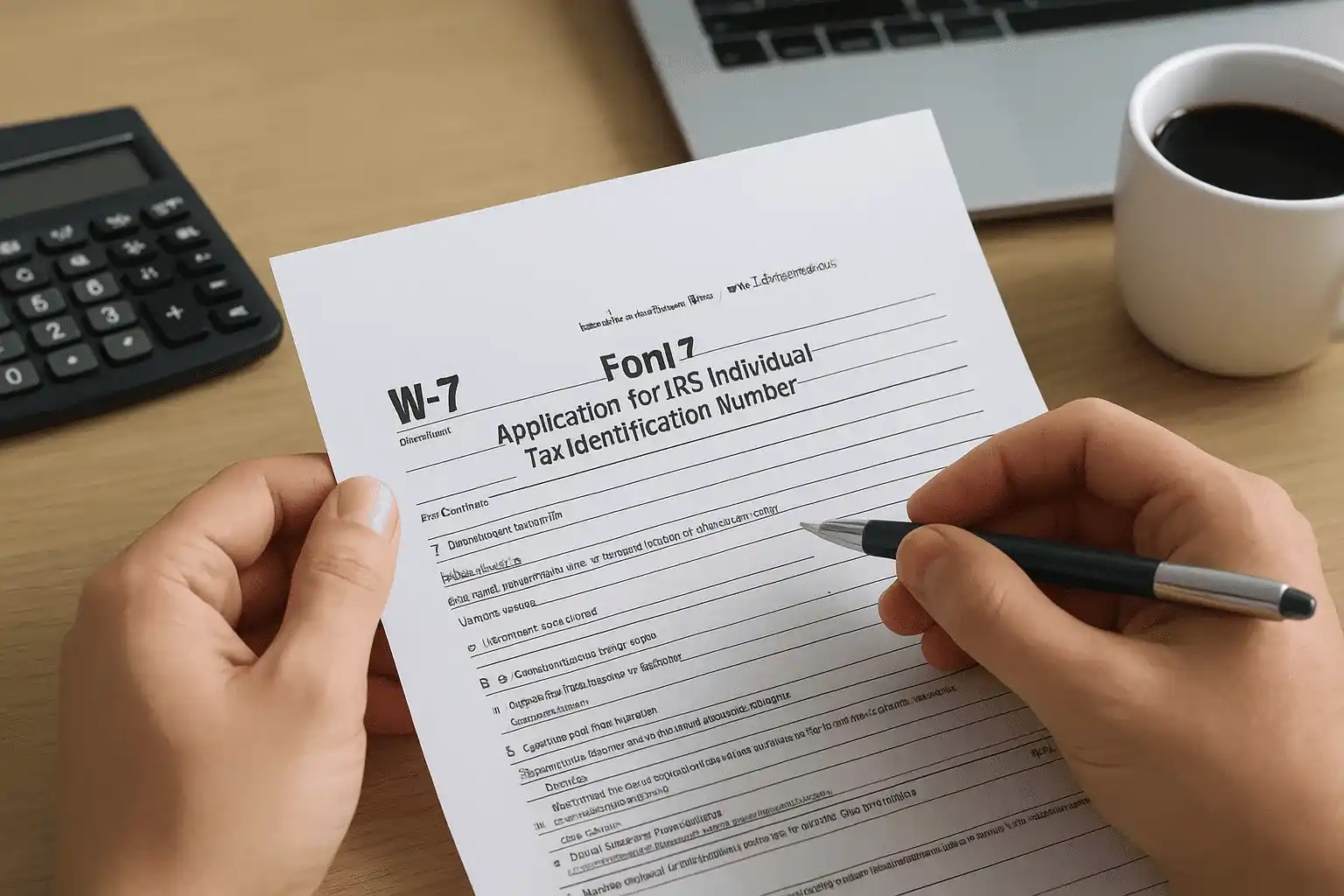
Who actually needs an ITIN
Most people who need to complete form w-7 instructions fall into a handful of predictable categories. Understanding which one applies to you determines what supporting documents you'll need and how you'll fill out the form itself.
- Nonresident aliens who are required to file a US tax return or claim a tax treaty benefit
- Resident aliens who don't qualify for an SSN but still meet the substantial presence test
- Dependents or spouses of a US citizen or resident alien, when claimed on someone else's return
- Dependents or spouses of a nonresident alien visa holder
- Foreign nationals with US-source income who need to file for withholding purposes, such as rental property owners or investors
Each of these situations comes with its own documentation and, in some cases, its own exception category that lets you skip attaching a full tax return. We'll break those exceptions down in a later section, since they trip up more applicants than any other part of the process.
An ITIN doesn't grant work authorization or immigration status. It exists for one reason only: to let the IRS track tax obligations for people who can't get an SSN.
Who doesn't need to file Form W-7
Not everyone who lacks an SSN needs an ITIN. If you already have a Social Security number, even an expired or inactive one, you use that instead. Similarly, if you're only filing to claim a refund of withheld taxes and you already possess a valid ITIN from a prior year, there's no need to reapply. Confusing an ITIN renewal with a fresh application is a common misstep that slows down otherwise straightforward returns.
How ITINs differ from Social Security numbers
Business owners sometimes assume an ITIN can substitute for an Employer Identification Number when hiring or running payroll. It can't. The table below lays out the practical differences so you know which number applies to your situation.
| Feature | ITIN | SSN | EIN |
|---|---|---|---|
| Issued by | IRS | Social Security Administration | IRS |
| Purpose | Tax filing for non-SSN-eligible individuals | Work authorization and benefits | Business tax identification |
| Grants work authorization | No | Yes | No |
| Used on Form W-7 | Yes, this is the application | No | No |
| Expires if unused | Yes, after 3 consecutive years | No | No |
Getting this distinction right matters because the IRS will reject your ITIN application outright if you submit it while already holding a valid SSN, and it treats the two numbers as mutually exclusive on your tax records. If you're a small business owner who also needs an ITIN for a personal filing situation, like a foreign national partner in an LLC, you'll likely be juggling both an EIN for the business and an ITIN for yourself, so it helps to know whether your LLC needs an EIN before you file, since keeping those straight from the start saves a lot of correction paperwork later. Once you've confirmed which category fits your circumstances, the next step is verifying that you meet the IRS's actual eligibility threshold before you start gathering paperwork.
Step 1. Confirm you need an ITIN
Before you touch form w-7 instructions, verify that an ITIN is actually the right tool for your situation. The IRS only issues these numbers to people with a genuine federal tax obligation who cannot get a Social Security number. Skipping this check is why so many applications bounce back weeks later marked incomplete or ineligible, costing you the processing time you were trying to save.
Check the SSN ineligibility test first
Start by ruling out an SSN. The Social Security Administration, not the IRS, decides who qualifies for one, so if you have any legal basis to apply, such as work authorization or a pending immigration petition that grants it, you need to pursue that route instead. You can confirm eligibility rules directly through the Social Security Administration. Applying for an ITIN while eligible for an SSN is one of the fastest ways to get your W-7 form rejected outright.
Match yourself to a filing requirement or an exception
Once SSN eligibility is ruled out, confirm you fall into one of the IRS's recognized categories. Most applicants qualify because they need to attach a federal return, but a smaller group qualifies under an exception that lets them apply without one. Common exception scenarios include:
- Third-party withholding on passive income, like bank interest or royalties
- Mortgage interest reporting tied to a US property
- Real estate transactions requiring ITIN reporting under withholding rules
- Certain student, professor, or researcher visa categories with treaty benefits
If you can't point to a specific tax filing requirement or IRS-recognized exception, you don't need an ITIN yet.
Rule out a duplicate application
Finally, check your own records and your family's before you file. If you or a dependent already received an ITIN in a prior year, even one that's since expired, you renew it rather than submitting a fresh application. Reapplying from scratch creates duplicate taxpayer records that the IRS then has to manually untangle, which can delay your return by months. Search old tax returns, IRS notices, or prior W-7 confirmation letters for an existing number before assuming you need to start over. Once you've confirmed the ITIN applies to you and isn't a duplicate, move on to pulling together the identity and status documents the IRS will actually accept.
Step 2. Gather your supporting documents
Documentation trips up more applicants than any other part of the ITIN application process, mostly because the IRS is strict about what counts as proof of identity and foreign status, so it pays to know which documents you need for tax preparation from the outset. You need at least one document from the approved list below, and it has to be current, meaning not expired, and it has to show your photograph, your name, and your foreign status or date of birth. Skimping here is the fastest way to see your form w-7 instructions paperwork bounced back weeks later.
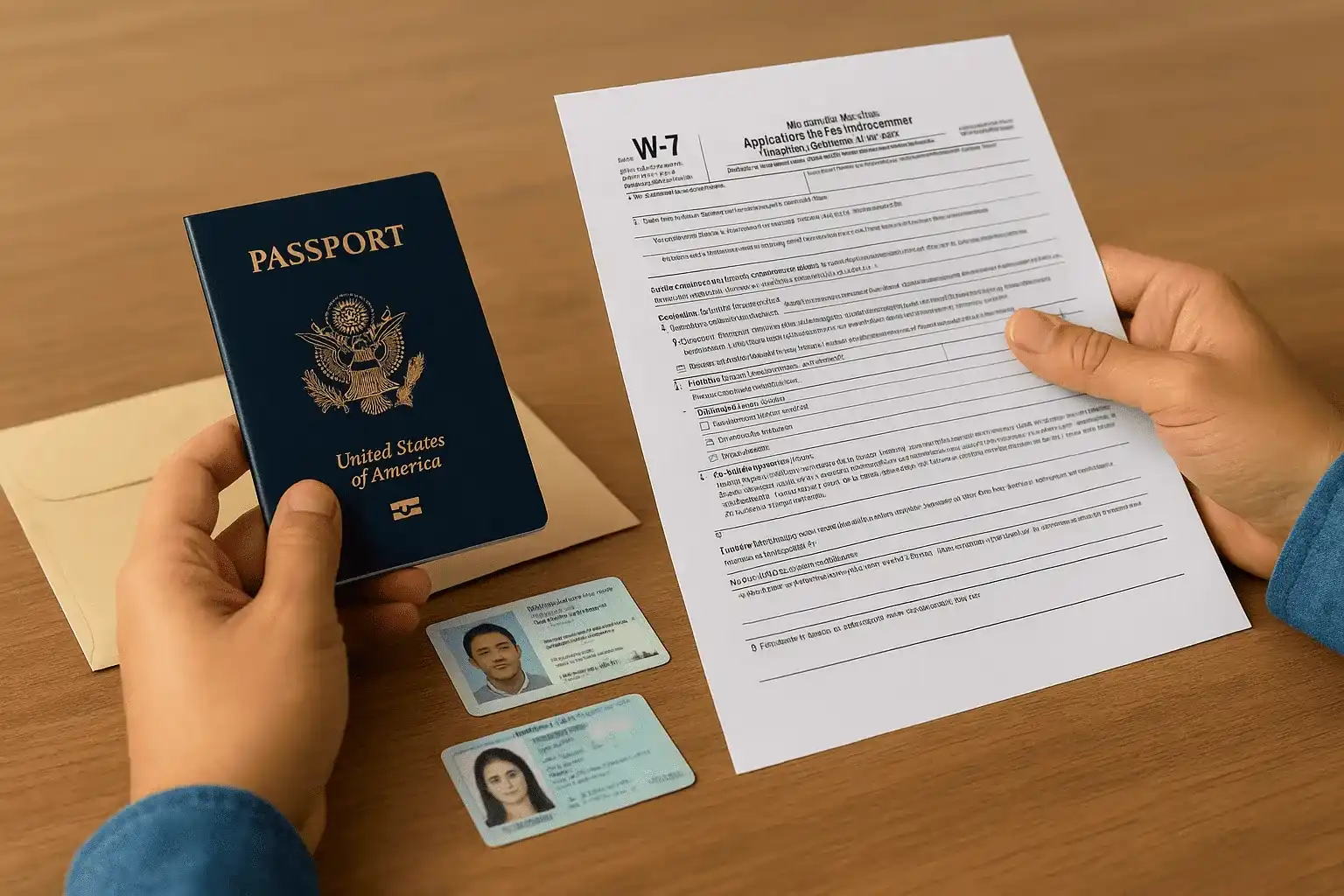
The passport shortcut
A valid passport is the only document the IRS accepts on its own without needing a second form of ID, because it proves both identity and foreign status in one document. If you have one, use it. Anyone submitting anything other than a passport must combine two documents from the approved list to satisfy both requirements separately.
A current passport is the single document that meets every IRS requirement by itself; nothing else on the list does that.
If you don't have a passport
Without a passport, you'll need to pair documents. The table below shows common combinations that work for adult applicants.
| Proves Identity | Proves Foreign Status |
|---|---|
| National identification card | Visa issued by US Department of State |
| US driver's license | Foreign birth certificate |
| US state ID card | Foreign voter's registration card |
| Foreign driver's license | Foreign military ID card |
Check the IRS Form W-7 instructions for the complete, current list, since the IRS periodically adjusts which combinations it accepts.
Documents for dependents
Children and other dependents need their own qualifying documents, and a foreign birth certificate paired with medical or school records often works when a passport isn't available. Dependents under age six sometimes need additional proof of US residency, like a medical record showing a US address, if they're claimed as US residents rather than nonresidents.
Certified copies versus originals
Finally, decide how you'll submit your documents. The IRS accepts original documents, or copies certified by the issuing agency, such as a foreign consulate or passport office. Notarized copies from a US notary generally aren't accepted unless notarized by a foreign consular official abroad. If you'd rather not mail your passport to the IRS, a Certifying Acceptance Agent can verify your documents in person and return them to you immediately, which is often worth the peace of mind alone.
Step 3. Complete Form W-7 line by line
Once your documents are in hand, working through the actual form w-7 instructions line by line goes faster than most applicants expect. The form itself is short, just one page, but each box feeds directly into how the IRS processes your file, so accuracy matters more than speed here.
Reason you're applying (Box b)
Start with Box b, where you check the reason you need an ITIN. This single checkbox determines what supporting documents the IRS expects to see attached, so picking the wrong one is a common cause of rejection.
- Nonresident alien required to obtain an ITIN to claim tax treaty benefit
- Nonresident alien filing a US federal tax return
- US resident alien filing a US federal tax return
- Dependent of a US citizen or resident alien
- Spouse of a US citizen or resident alien
- Dependent or spouse of a nonresident alien visa holder
- Other, with a written explanation
Checking the wrong reason box is one of the quickest ways to get your entire application rejected, even when every document is correct.
Name and mailing address (Lines 1 and 2)
Enter your legal name exactly as it appears on your supporting identity document in Line 1a, not a nickname or an anglicized version. Line 2 asks for your current mailing address, where the IRS will send your ITIN assignment letter, so use an address you'll actually check for the next several months.
Foreign address and birth information (Lines 3 and 4)
Line 3 covers your foreign address if it differs from your mailing address, and you can skip it if they're the same. Line 4 asks for your date of birth and country of birth, formatted month, day, year, matching your identity document precisely.
Additional details (Lines 5 through 6g)
Finally, Line 5 records your country of citizenship, and Lines 6a through 6g cover your foreign tax identification number if you have one, your visa type and number if applicable, and details about the identity document you're submitting as proof. Leaving these blank when they apply to your situation, rather than writing "N/A," often triggers a request for more information rather than an outright denial, which still adds weeks to your timeline.
Step 4. Attach your tax return or exception documents
Most applicants can't submit Form W-7 by itself. The IRS requires you to attach a completed federal tax return to your application unless you qualify for one of the documented exceptions covered in Step 1. This requirement exists because the ITIN and the return are processed together, so the IRS can verify the number is tied to an actual filing obligation rather than issued in isolation.
Attaching your federal return
Paperclip, don't staple, your Form W-7 to the front of your original federal tax return, which you complete by following the Form 1040 line-by-line instructions. Write "ITIN TO BE REQUESTED" in the space on the return where an SSN or ITIN would normally go, since you obviously don't have the number yet. Sign the return as you normally would, and make sure every dependent listed on it matches a corresponding W-7 if they also need an ITIN. Submitting the return without the W-7 attached, or vice versa, is one of the most common reasons the IRS sends everything back unprocessed.
Your Form W-7 and your tax return move through the IRS as one package. Separate them, and neither one gets processed.
Using an exception instead of a return
If you qualify under one of the recognized exceptions, you skip the tax return entirely, but you still need documentation proving the exception applies. Each exception category has its own required paperwork:
| Exception Category | Required Supporting Document |
|---|---|
| Passive income withholding | Letter from bank or financial institution confirming the withholding |
| Mortgage interest reporting | Loan documents or a letter from the mortgage company |
| Real estate transactions | Closing documents showing withholding under IRC Section 1445 |
| Treaty benefit claims for students/researchers | Letter from the sponsoring institution and copy of the visa |
Attach a copy of the letter or contract that supports your exception claim directly to the W-7, and reference the exception number in the space provided on the form.
Double-check before you seal the envelope
Before you send anything, confirm the return is signed, the W-7 is complete, and every supporting document is either an original or a properly certified copy. A quick final review here catches the errors that otherwise surface as an IRS notice two or three months down the line, after you've lost the time you were trying to save by filing correctly the first time. Once your return or exception paperwork is attached and verified, you're ready to move on to signing the application itself.
Step 5. Sign and date your application
Signing Form W-7 seems like the simplest part of the whole process, but the IRS rejects a surprising number of applications over a mismatched or missing signature. The person named on the form must sign it personally if they're 18 or older and mentally competent to do so. A valid signature has to match the name you entered on Line 1a, not a shortened version or a signature style that doesn't align with your identity document.
Who signs for a dependent
When the applicant is a minor or otherwise can't sign for themselves, a parent or court-appointed guardian signs on their behalf. The person signing needs to print their own name below the signature line and indicate their relationship to the applicant, such as "parent" or "legal guardian." For a dependent under age 18, either parent can sign, but the IRS wants that relationship spelled out clearly, not assumed from the shared last name on the form.
A missing relationship notation next to a parent's signature is a small detail that causes a surprisingly large number of rejections.
Using a third-party designee
You can authorize someone else, like a tax preparer or Certifying Acceptance Agent, to receive information about your application by completing the third-party designee section near the signature block, which is narrower than filling out Form 2848 for full representation. This doesn't replace your own signature. It simply lets the IRS discuss processing questions with that person directly instead of routing everything back through you, which can shave real time off a delay if something needs clarifying.
Dating the form correctly
Enter the date you actually sign the form, formatted month, day, year, matching the format used everywhere else on the application. A form signed weeks before you mail it, or one where the date doesn't align with your attached tax return, sometimes prompts the IRS to question whether the paperwork was assembled correctly. Keep the signature and date consistent with when you're genuinely submitting the package, not when you first started filling it out.
If you're unsure whether you or a family member qualifies to sign, or you're managing a W-7 alongside a more complicated filing situation, our tax preparation team can review the whole package before it goes out the door. Once your signature and date are in place, the last piece is deciding exactly where that completed application needs to go.
Step 6. Choose where to submit your application
You have three legitimate ways to get your Form W-7 in front of the IRS, and picking the right one depends on how comfortable you are mailing original identity documents versus paying for in-person verification. Each path processes through the same IRS ITIN Operation in Austin, Texas, but the experience getting there looks very different.
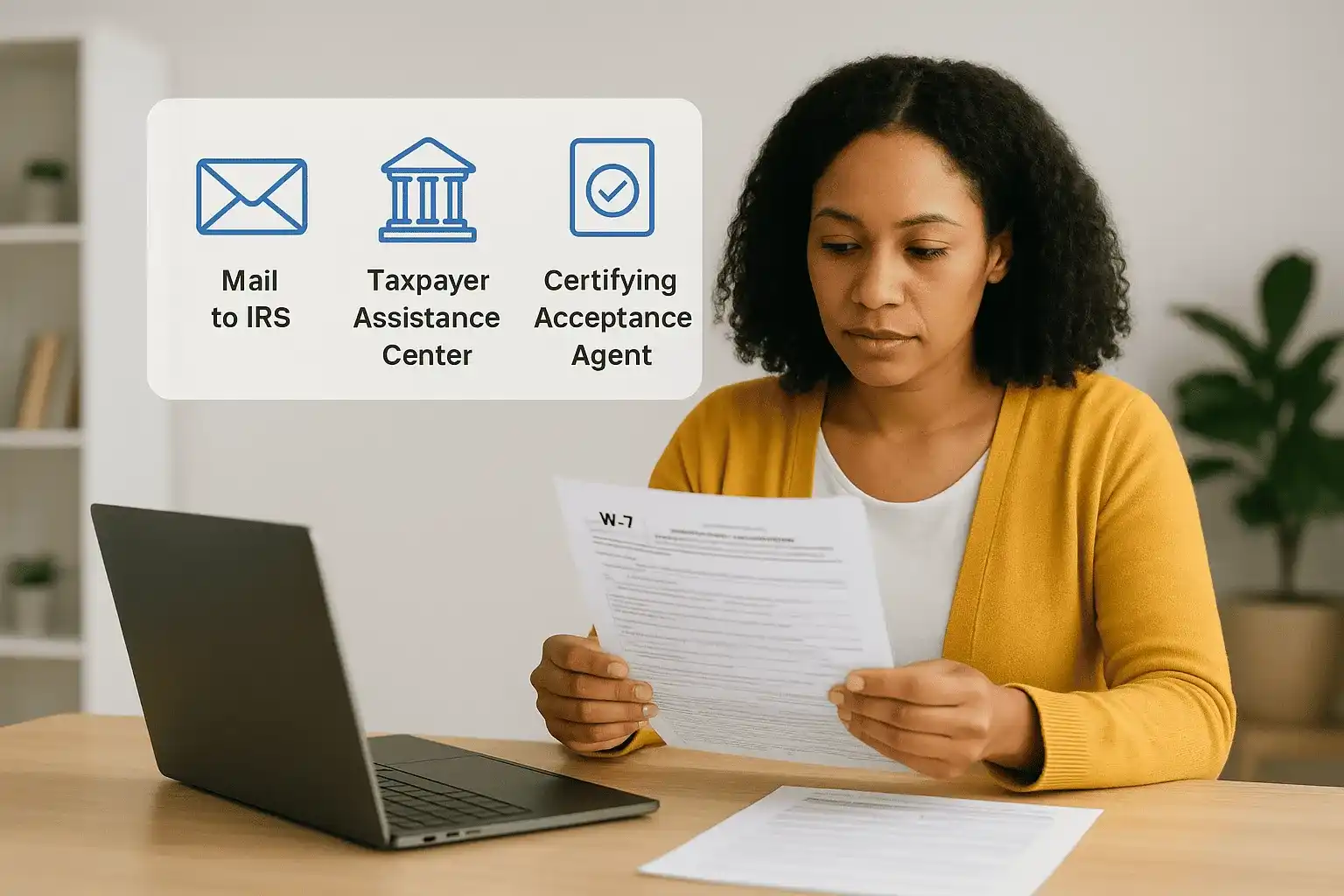
Mailing your application directly
The most common route is mailing your completed Form W-7, tax return, and original or certified documents to the IRS's dedicated ITIN unit. This works fine if you're using certified copies from your passport office or consulate, since you're not risking your only original identification in the mail. If you're sending true originals, though, understand you won't have that document back in hand for several weeks while the IRS processes and returns it.
Mailing originals is the cheapest option, but it also means living without your passport for however long the IRS holds your file.
Using an IRS Taxpayer Assistance Center
Some Taxpayer Assistance Centers offer document review by appointment, letting an IRS employee verify your originals on the spot and hand them right back to you. Not every location provides this service, so you need to call ahead and schedule a TAC visit before showing up. You can find participating locations and current appointment rules through the IRS Taxpayer Assistance Center locator.
Working with a Certifying Acceptance Agent
A Certifying Acceptance Agent, or CAA, is authorized by the IRS to review your original documents, verify them in person, and submit a certificate of accuracy with your application instead of forwarding your originals at all. This is the option most of our clients prefer, since it removes the anxiety of mailing a passport and adds a layer of review that catches errors before the IRS ever sees them.
| Method | Documents Leave Your Hands | Typical Cost | Best For |
|---|---|---|---|
| Mail to IRS | Yes, for weeks | Free | Certified copies only |
| Taxpayer Assistance Center | No | Free | Simple, single applications |
| Certifying Acceptance Agent | No | Fee-based | Originals, complex cases |
If you'd rather not gamble with your passport or your timeline, our tax preparation team can walk you through certified acceptance agent verification alongside your broader filing. Once you've submitted through whichever channel fits your situation, the next task is keeping tabs on where your application stands.
Step 7. Track your ITIN application status
Once your paperwork leaves your hands, patience becomes the hardest part of the form w-7 instructions process. The IRS doesn't offer an online tracking tool for ITIN applications the way it does when you track your federal and state refund, so you're largely waiting until you hear something concrete. Knowing what a normal timeline looks like, and when to actually worry, keeps you from panicking too early or missing a real problem too late.
Standard processing timeline
Expect seven to eleven weeks for a standard application during non-peak season, though that window stretches during tax filing season, roughly January through April, when the ITIN unit is buried in returns. Applications filed from overseas or those flagged for extra review can take longer still. Mark your calendar for ten weeks out from your mailing date before you assume something's gone wrong.
Ten weeks of silence is normal for an ITIN application. Ten weeks past that with no response is when you need to call.
Checking status by phone
After the standard window passes, contact the IRS ITIN hotline directly rather than mailing a follow-up letter, which just adds more paperwork to an already slow queue. Have these ready before you call:
- Your full legal name as it appears on the W-7
- Your mailing address from Line 2
- The date you submitted your application
- A copy of your submitted paperwork, if you kept one
Call the IRS at 800-908-9982 (domestic) or 267-941-1000 (international) to check on a pending application. Representatives can confirm receipt and flag whether your file needs additional documentation.
What to do if you haven't heard back
Sometimes silence means the IRS mailed a notice that got lost, delayed, or sent to an old address, so verify Line 2 was accurate before assuming the worst. If the hotline confirms your application is still processing, you generally just wait it out. If they can't locate your file at all, or the return you attached was rejected for a reason unrelated to the ITIN, that's when working with a Certifying Acceptance Agent or someone who handles IRS notices on your behalf pays off, since resubmitting incorrectly a second time restarts the whole clock. Our tax preparation team regularly handles these follow-up calls for clients who'd rather not spend an afternoon on hold with the IRS.
Step 8. Renew an expired ITIN
Unlike your first application, renewing an expired ITIN doesn't always require attaching a tax return, which surprises a lot of people who assume the whole process starts from zero. The IRS built the renewal path to be lighter than the original form w-7 instructions, but only if you follow the specific renewal rules instead of treating it like a brand-new filing.
Know when your ITIN needs renewal
Your ITIN expires under one of two conditions: it wasn't used on a federal tax return for three consecutive years, or it falls under one of the IRS's rolling expiration groups tied to the middle digits of the number. Zero in on whether you actually need to renew before you file anything. Check any recent IRS notice you've received, since the agency typically mails a CP48 or similar letter flagging an ITIN nearing expiration.
Renewing before your ITIN expires keeps your next return moving instead of stalling in the IRS's review queue.
Complete the renewal application
Fill out Form W-7 exactly as you would for a first-time application, but check the box marked "Renew an Existing ITIN" instead of selecting a new-application reason. List your current ITIN in the space provided so the IRS matches it to your existing record rather than creating a duplicate file. Attach fresh supporting identity documents just as before; an old, expired passport copy from your original application won't satisfy the current requirement.
Renewing for family members together
If your spouse or dependents also hold ITINs tied to the same return, the IRS lets you renew the whole family's numbers in one submission rather than mailing separate packages. This matters most for households claimed together on a joint return, since a mismatch between an active ITIN and an expired one can hold up processing for everyone listed. Group the applications, but complete a separate W-7 for each person.
Upcoming filing needs decide your timeline here. Don't wait until you're ready to file next year's return to start the renewal, since the standard processing window still applies and an expired number attached to a return you're actively trying to submit just creates the same delay you're trying to avoid. If your household has multiple ITINs on different expiration schedules, our tax preparation team can coordinate the renewals so nothing lapses at an inconvenient moment.
Common mistakes that delay ITIN approval
Most rejected ITIN applications share the same handful of root causes, and none of them involve anything exotic. Reviewing thousands of these files, the same avoidable errors show up again and again, usually because applicants rush the paperwork or assume a small inconsistency won't matter. It always matters. The IRS processes these applications by machine first, and any mismatch between your form and your documents gets flagged before a human ever looks at your situation.
Name and document mismatches
Submitting a name on Form W-7 that doesn't exactly match your passport or national ID is the single most common rejection trigger we see. A missing middle name, a hyphenated surname entered differently, or a nickname substituted for a legal name all cause the same problem. Compare every character on Line 1a against your identity document before you mail anything.
A one-letter difference between your form and your passport is enough to send your entire application back.
Incomplete or wrong exception documentation
Applicants who qualify for an exception often attach the wrong supporting letter, or none at all, because they misjudge which category actually fits their income source. Others check an exception box on Form W-7 but still forget to reference the exception number, leaving the IRS to guess at their eligibility. Verify your exception category against the table in Step 4 before assuming you can skip the tax return.
Sending the wrong document type
Here's a quick checklist to run through before you seal the envelope:
- Confirm your passport or paired documents are current, not expired
- Use certified copies from the issuing agency, not a US notary stamp
- Match your date of birth format across every line of the form
Filing to the wrong address or missing the return
Finally, plenty of otherwise perfect applications stall because they were mailed to a standard IRS processing center instead of the dedicated ITIN unit in Austin, or because the attached return was missing a signature. Treat your W-7 and your tax return as one inseparable package, and double check the mailing address specified in the current IRS Form W-7 instructions rather than relying on an old address you remember from a prior year.
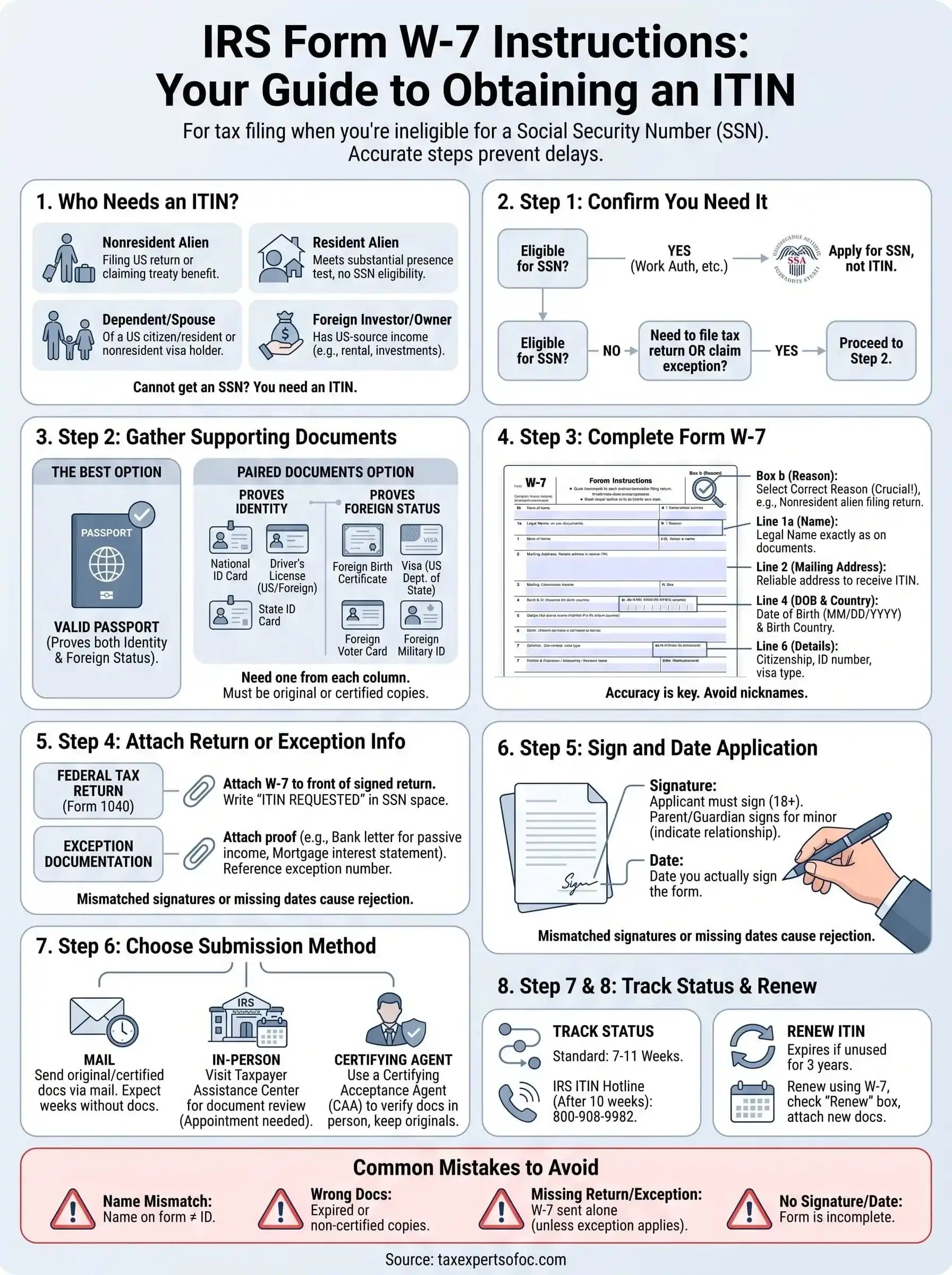
Getting your ITIN application right the first time
Following accurate form w-7 instructions the first time saves you months, not just paperwork. Every step here, from confirming eligibility to choosing your submission method, exists because the IRS processes these applications by machine before any human reviews your situation. One mismatched name or missing exception letter sends the whole package back to the end of the line.
Getting an ITIN rarely happens in isolation. It usually connects to a return you need filed, back taxes you're trying to resolve, or a business structure that needs a foreign partner properly documented. Handling the form correctly matters, but so does the bigger filing picture around it.
If you'd rather not risk a rejection notice three months from now, or you're juggling an ITIN alongside unfiled returns or an IRS notice, ask our team at Tax Experts of OC about CPA-led tax filing help in a free consultation before you mail anything.