
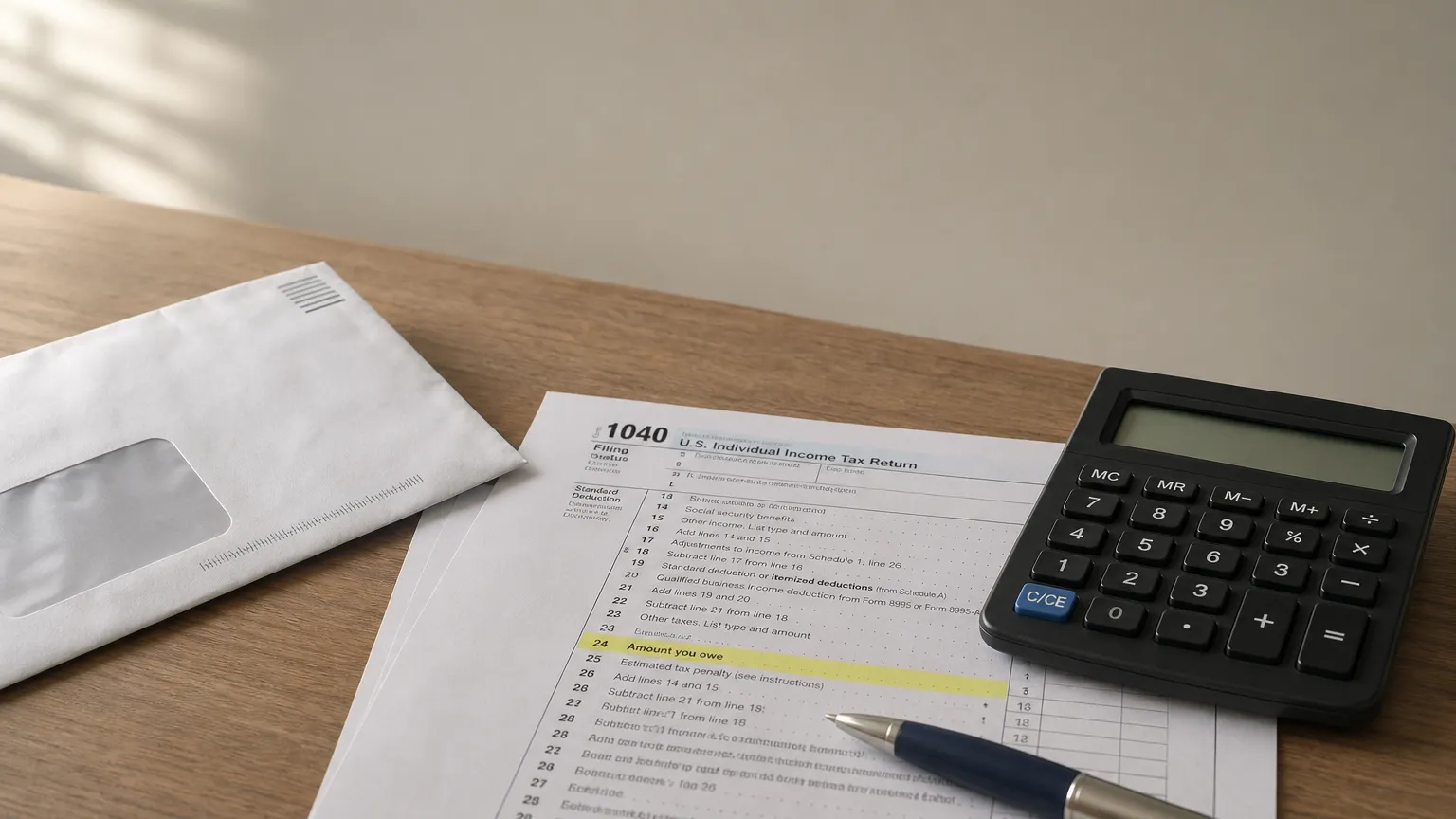
An IRS CP22A notice is a letter telling you the IRS changed your Form 1040 and that the change left you with a balance due. It is a bill, not an audit. You can pay it, set up a payment plan, or dispute it, and you should act before the response date printed on the notice.
The IRS usually sends this notice after an adjustment to a return you already filed. The letter lists the tax year, the changes made, and the new amount you owe. The deadline matters because paying promptly can limit extra interest, and ignoring the notice moves you toward more serious collection letters.
This guide explains why the notice arrives, how to check the changes against your own records, how to pay, and how to push back when the numbers look wrong. At Tax Experts of OC, a CPA and an Enrolled Agent help people across the country work through IRS notices like this one.
Why the IRS sent you a CP22A notice
The IRS sent a CP22A because it made changes to your individual income tax return, and those changes created a balance you did not pay. The notice is the IRS's way of showing the adjustment and asking for payment.
What the notice tells you
The letter is a summary of a change already made on your account. It shows the tax year affected, a description of what changed, and the new total you owe. It also gives a payment deadline and a phone number for questions. Most CP22A notices carry small to mid-sized balances, and the sample notice the IRS publishes shows a balance of just $24.60.

Common reasons the IRS changes a return
The notice states the specific reason, so read that part first. In general, the cause is one of these:
- You filed an amended return on Form 1040-X that increased your tax.
- You asked for a change or sent documents that the IRS used to adjust your return.
- The IRS corrected your return after reviewing information tied to your account.
If you don't remember asking for any change, treat that as a flag to verify the details rather than simply pay.
What a CP22A is not
A CP22A is not an audit. It does not mean the IRS is questioning your whole return, and it is not a final demand before collection. Later notices such as the CP503 reminder and the CP504 notice of intent to levy come after unpaid balances go unanswered. Other notice numbers, including CP220, are separate notices with their own instructions, so match the number in the upper right corner of your letter before you follow any advice.
A CP22A is a bill for a change already made, and you have a short window to pay it or challenge it.
How to check the changes on your CP22A
Check the changes by comparing the notice line by line with your own copy of the return and any paperwork you sent the IRS. Do this before you pay anything.
Read the parts of the notice
Each block of the letter answers a different question:
| Section of the notice | What to look for |
|---|---|
| Notice date and response deadline | The date that starts your payment window |
| Tax year | Whether it matches the return you expect |
| Explanation of changes | Which lines changed and by how much |
| Amount you owe | Tax change, plus any penalties and interest |
| Payment coupon | The stub to send with a mailed check |
Compare it against your records
Work through these steps with your return open:
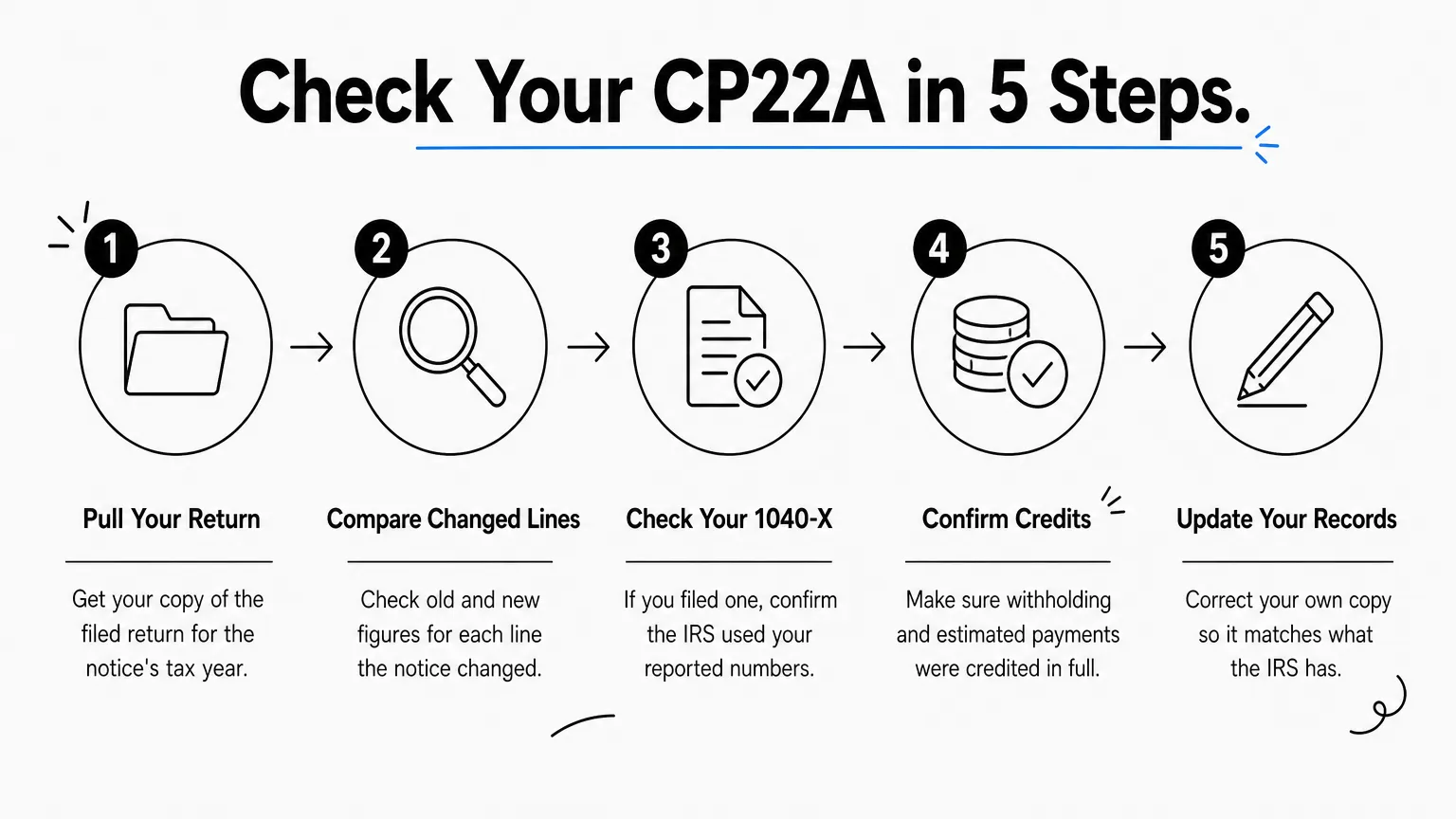
- Pull your copy of the filed return for the tax year named on the notice.
- Find each line the notice says changed and compare the old and new figures.
- If you filed a 1040-X, check that the IRS used the same numbers you reported.
- Confirm that your withholding and estimated payments were credited in full.
- Correct your own copy of the return so your records match what the IRS now has.
You can also see your balance and payment history in your IRS Online Account. Confirm the letter is real by checking that it came by mail. The IRS does not start contact with a CP notice by email, text, or social media message.
Never pay a CP22A until you have matched every changed line to your own records.
How to pay an IRS CP22A balance
Pay the full amount shown on the notice by the response date, using a method that records the payment against the right tax year. The IRS generally charges no additional interest on the billed amount if you pay within 21 days of the notice date, or within 10 business days when the balance is $100,000 or more.
What waiting costs
Take a $1,800 balance. The failure-to-pay penalty runs at 0.5% of the unpaid tax per month, so about $9 per month, and interest compounds daily on top of that. Paying within the window avoids further interest on the billed amount. Leaving it unpaid costs more each month and brings the escalating notices.
Ways to pay
| Method | What to know |
|---|---|
| IRS Direct Pay | Free transfer from a checking or savings account |
| IRS Online Account | Pay and view your balance in one place |
| Debit or credit card | Works through approved processors, which charge a fee |
| EFTPS | Requires enrollment before you can use it |
| Check or money order | Mail it with the payment coupon from the notice |
If you can't pay in full
Pay what you can now and ask for a payment plan, which you can request online through the IRS or by calling the number on your notice. A short-term plan gives extra time to pay in full, and a longer installment agreement spreads payments over months. Do not simply wait. If cash is tight, a professional can help you pick the plan that fits and handle the negotiation. Tax Experts of OC offers flexible payment options for qualified clients.
The cheapest response to a valid CP22A is paying inside the window, and the second cheapest is a payment plan.
How to dispute an IRS CP22A notice
If you believe the IRS changed your return incorrectly, respond before the date on the notice, either by calling the number listed or by mailing a written explanation with supporting documents. Silence is read as agreement.
Steps to take
- Write down exactly which changed lines you dispute and why.
- Gather proof, such as your filed return, the 1040-X, W-2s, 1099s, and any earlier IRS letters.
- Call the number on the notice, or mail a signed explanation to the address shown, with photocopies only.
- Keep a copy of everything and send mail with tracking.
- Watch for the IRS reply, and respond again if it asks for more.
The phone number on the sample notice is the IRS individual line, 800-829-1040. Use the number printed on your own letter first.
When to bring in a professional
Get help if the changes involve several tax years, a large balance, or paperwork you can't locate. A CPA or Enrolled Agent can review the notice, speak with the IRS for you under a power of attorney (Form 2848), and negotiate if you truly owe. Tax Experts of OC offers a free 30-minute consultation and works with clients in all 50 states by phone and email.
If the numbers are wrong, a documented reply before the deadline is your strongest move.
Your next move on a CP22A
A CP22A means the IRS adjusted your Form 1040 and you owe the difference. Verify the changes against your own return, then pay, set up a plan, or dispute in writing, all before the response date. Acting early limits interest and keeps the matter from escalating to collection notices.
If the notice confuses you or the balance is more than you can handle, you don't have to manage it alone. You can talk to a CPA or Enrolled Agent at Tax Experts of OC about your notice and your options.