
Owing the IRS money is stressful, and the notices only make it worse. The good news is that IRS debt tax relief is real. The bad news is that a lot of companies selling it are not. Before you pay anyone, you need to know what the IRS actually offers and whether you qualify.
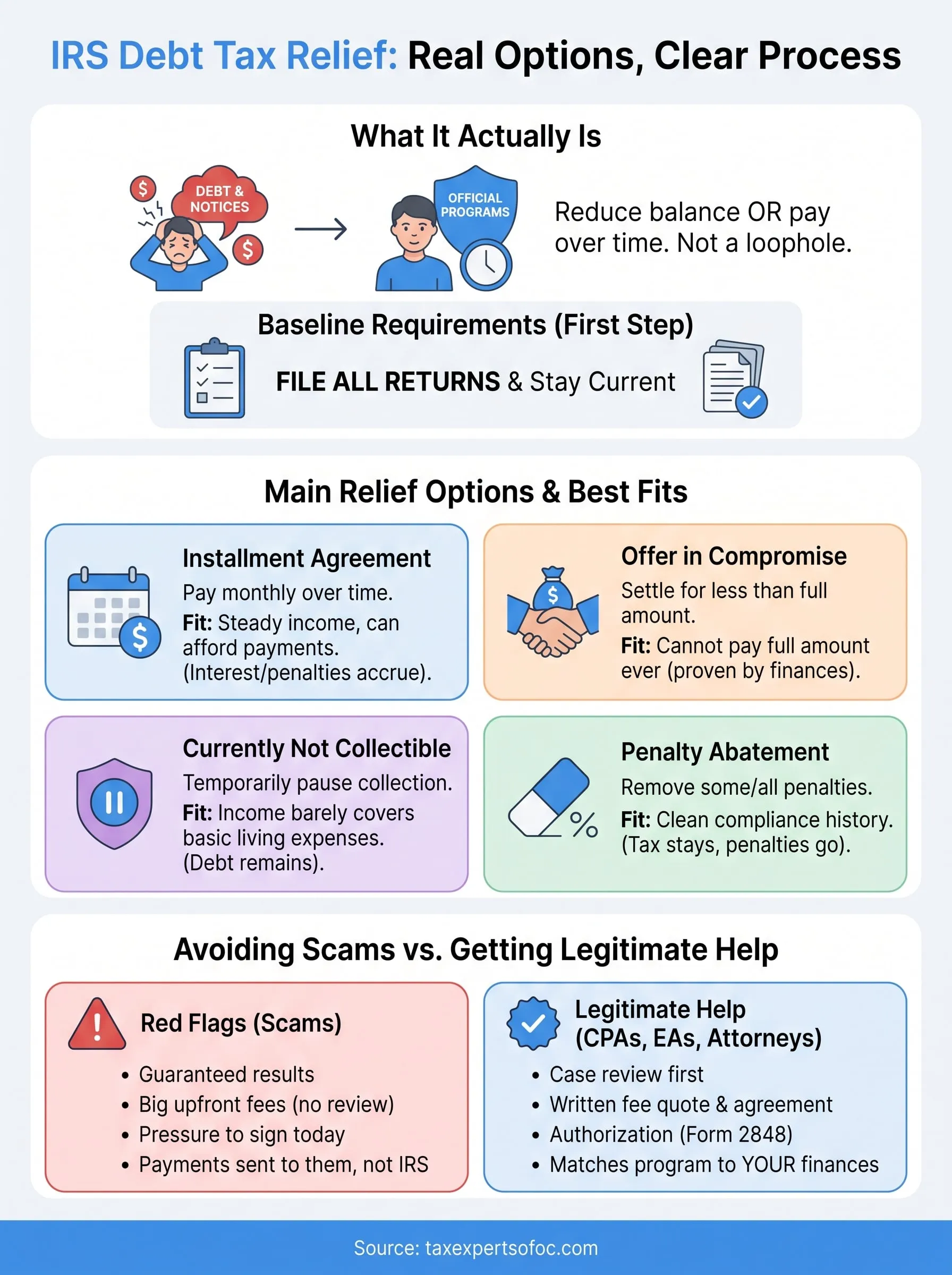
Here is the short answer. IRS tax relief means official programs that reduce your balance or let you pay it over time. The main options are installment agreements, offers in compromise, penalty abatement, and Currently Not Collectible status. Which one fits depends on your income, assets, and how much you owe. Most people do not qualify for a settlement for pennies on the dollar, and anyone who promises one on the first call is a red flag.
This article explains how each program works, who qualifies in 2026, and how to apply. It also shows you how to spot tax relief scams. At Tax Experts of OC, our CPA and Enrolled Agent handle IRS cases every day, so you will get the same practical guidance we give clients.
Why IRS debt tax relief matters if you owe back taxes
What unpaid back taxes cost you
Back taxes grow every day you ignore them. The IRS charges a failure-to-pay penalty of 0.5% per month, capped at 25% of the unpaid tax, plus interest that compounds daily. If you also filed late, the failure-to-file penalty adds 5% per month on top, also capped at 25%. A $20,000 bill can become $25,000 or more in a year or two without you paying a cent toward it.
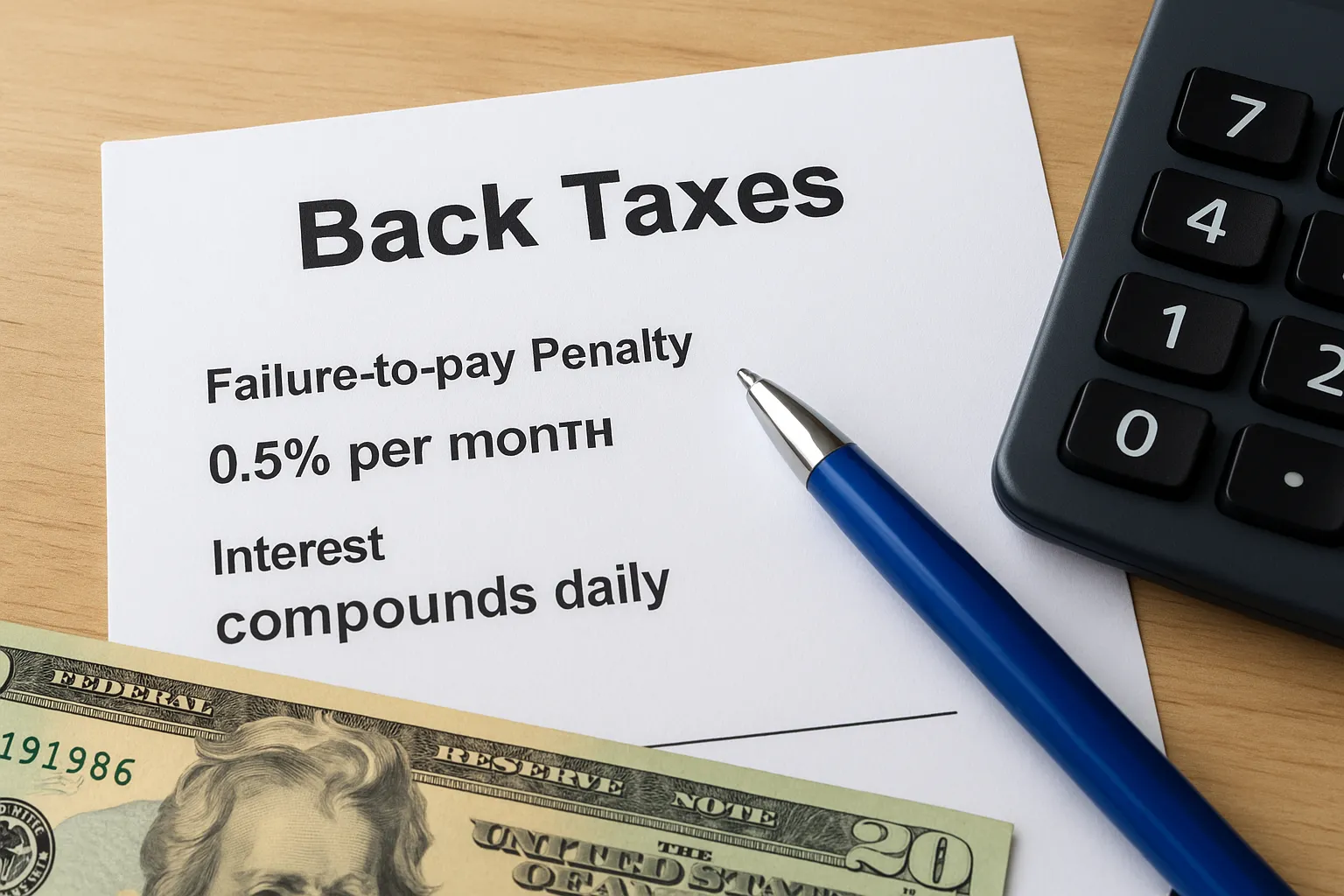
Collection then escalates in stages. After a series of notices, the IRS can file a federal tax lien, levy your bank account, or garnish your wages. The final notice of intent to levy gives you 30 days to request a hearing. Miss that window and your options narrow fast.
Ignoring IRS back taxes never makes them smaller, only more expensive.
What relief actually changes
If you need help with IRS back taxes, the right program does one or more of three things. Each one fits a different financial situation.
- Gives you time. An installment agreement spreads the balance over monthly payments, usually up to the 10-year collection window.
- Lowers what you owe. An offer in compromise settles for less than the full amount. Penalty abatement removes some or all penalties.
- Pauses collection. Currently Not Collectible status stops enforcement when paying would leave you unable to cover basic living expenses.
Protection starts the moment you engage with the IRS. A pending installment request or offer generally suspends most levy action while the IRS reviews it. Calling early also keeps your choices wide, because some programs require your tax returns to be filed and current before the IRS will even consider you.
One more point. IRS tax relief debt programs are not loopholes. They are written into the Internal Revenue Code, and the IRS runs them every day. You are not asking for a favor. You are using a process Congress built for taxpayers in your position.
How to qualify for IRS tax relief and apply
The rules every program shares
Every program starts with the same baseline requirements. The IRS will not review your request until you have filed all required returns and are current on this year's withholding or estimated payments. You also cannot be in an open bankruptcy case.
No filed returns, no IRS relief, so file first.
If you have unfiled years, fix those before anything else. Then check your numbers against the program you want. Installment agreements are the easiest to get. Offers in compromise and Currently Not Collectible status depend on your income, expenses, and assets.
How to apply, step by step
Applying takes a few clear steps, and the paperwork is where most people stumble.

- Gather your records. Pull your IRS notices, recent pay stubs, bank statements, and a list of monthly expenses.
- Choose the program. If you owe $50,000 or less, you can request an installment agreement through the IRS Online Payment Agreement tool. An offer in compromise requires Form 656, a financial statement, an application fee, and a first payment.
- Submit and keep paying. Stay current on new taxes while the IRS reviews your case.
If you need IRS help paying back taxes and the forms feel risky, a CPA or Enrolled Agent can file and negotiate for you. One wrong figure on a financial statement can sink an offer.
Which IRS relief option fits your situation
Match the program to your finances
Choosing among IRS debt tax relief programs starts with one question: can you pay the full balance over time? If you can, you want a payment plan. If you cannot, the table below shows where to look next.
| Option | Best fit | Catch |
|---|---|---|
| Installment agreement | Steady income, can pay monthly | Interest and penalties keep accruing |
| Offer in compromise | Income and assets too low to ever pay in full | IRS weighs your entire financial picture |
| Currently Not Collectible | Income barely covers basic needs | Debt remains and interest still grows |
| Penalty abatement | Clean compliance history | Removes penalties, not the tax itself |
How to decide in practice
Start with your monthly cash flow. If money is left after rent, food, and insurance, an installment agreement is usually the realistic answer for IRS tax debt help. An offer in compromise only works when the IRS calculates that you could never pay the full amount before the collection window closes.
The IRS settles for less only when your finances prove you cannot pay more.
Many people qualify for more than one option. A first-time penalty abatement, for example, can shrink the bill before you set up a payment plan. If you need help with back taxes owed to the IRS and cannot tell which route fits, a CPA or Enrolled Agent can run the numbers before you file anything, which protects you from a rejected offer.
How to spot tax relief scams and get legitimate help
Red flags that signal a scam
Scam firms target scared taxpayers, and they follow a pattern. Walk away from any company that promises guaranteed results or quotes a settlement before it has seen your finances. Also be wary of these signs:
- Large upfront fees with no written agreement
- Pressure to sign today or claims of a "special IRS program"
- Requests to send your payments to them instead of the IRS
A legitimate tax professional never guarantees an outcome before reviewing your finances.
How to verify a tax professional
Verification takes about five minutes. Only CPAs, Enrolled Agents, and tax attorneys have unlimited rights to represent you before the IRS. Confirm credentials through the state board or the IRS guidance on choosing a tax professional.
Real IRS help for back taxes owed starts with a case review, a written fee quote, and a signed Form 2848, which authorizes the representative to speak with the IRS for you. Ask who will actually work your file. At Tax Experts of OC, you deal directly with the CPA or Enrolled Agent, not a call center. Good firms also tell you plainly when you qualify for a simple payment plan you could set up yourself.
Your next step with IRS back taxes
IRS debt tax relief comes down to a few real programs: payment plans, offers in compromise, penalty abatement, and Currently Not Collectible status. Filing every return and matching the program to your actual finances matter more than any sales pitch. Most people who owe qualify for something, even if it is not a settlement.
Acting early is the part you control. Each month you wait adds penalties and interest, and a final notice of intent to levy starts a 30-day clock. Verify anyone who offers tax help for IRS back taxes, and never pay for a guarantee.
If you want a professional to review your numbers first, book a free 30-minute consultation with the tax resolution services team at Tax Experts of OC. You will talk directly with a CPA or Enrolled Agent, get a written fee quote, and learn which option fits before you commit to anything.