
You typed "tax planning near me" into Google because something triggered it. Maybe you got an IRS notice, maybe your business income jumped and your old software stopped cutting it, or maybe you just want a professional looking at your numbers before December instead of scrambling every April. Whatever the reason, a quick search dumps a list of names at you with no way to tell who actually knows what they're doing.
Here's the direct answer: the right CPA for tax planning is someone who reviews your full financial picture, not just last year's return, and who you can actually reach when questions come up. Location matters less than you think. A firm that handles multi-state filings and offers virtual consultations can serve you just as well, or better, than an office five minutes from your house, especially if you're also searching for a cpa for back taxes near me and need someone who deals with IRS collections regularly.
This article walks through what tax planning actually involves, the credentials worth checking before you hire anyone, and the questions that separate a real strategist from someone who just files paperwork.
Why tax planning matters more than filing alone
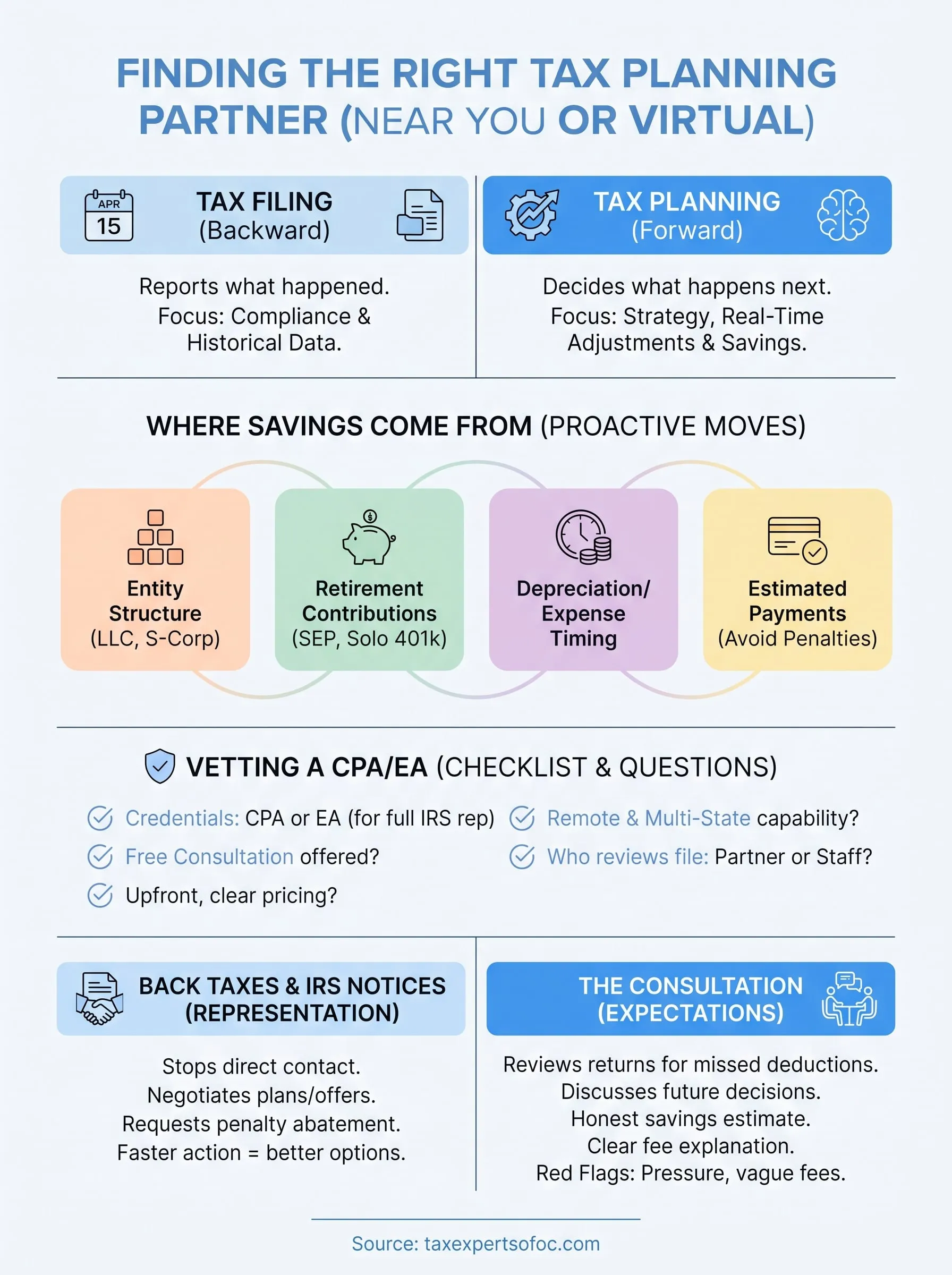
Most people confuse tax filing with tax planning, and that mix-up costs them money every year, even though how tax planning differs from tax preparation is easy enough to spot once you look. Filing is what happens after the fact: you gather your documents, report what already occurred, and hope you didn't miss a deduction. Tax planning is different. It happens throughout the year, before decisions get locked in, so you can actually change the outcome instead of just reporting it.
Filing looks backward, planning looks forward
A preparer working off software during tax season can only work with what already happened. A strategist looks at your income, entity structure, and upcoming decisions in real time, then adjusts before the window closes. Timing a business purchase in December instead of January, choosing S-corp status before payroll starts, or shifting retirement contributions before year-end are all moves that disappear once the calendar flips.
Filing tells the IRS what happened. Planning decides what happens next.
Where the savings actually come from
The difference shows up in real dollars, not theory. A good planner looks at entity structure, retirement contributions, depreciation timing, and estimated payments as a connected system rather than separate line items. Here's what that typically covers:

- Entity structure: Is an LLC, S-corp, or partnership actually saving you self-employment tax?
- Retirement contributions: Are you maximizing a SEP-IRA or Solo 401(k) before deadlines pass?
- Depreciation and expense timing: Should equipment purchases happen this year or next?
- Estimated tax payments: Are you avoiding IRS underpayment penalties, which the IRS outlines here?
Business owners feel this gap the most, since a jump in revenue without a corresponding shift in strategic tax planning often means a bigger liability than expected, sometimes discovered only when the return is already due. Individuals with multiple income sources, rental property, or investment gains run into the same problem on a smaller scale. Waiting until January to think about taxes means most of your options for the prior year are already gone. That's the real cost of treating a CPA as someone you see once a year instead of a partner you check in with quarterly, which is why planning taxes throughout the year changes the result.
How to find and vet a CPA near you
Searching "tax planning near me" only gets you a list of names. It doesn't tell you who's licensed, who's overloaded with clients, or who actually returns calls after tax season ends. You have to do the filtering yourself, and that starts with credentials, not proximity, especially when you're picking a CPA who handles IRS problems rather than routine returns.
Check credentials before anything else
A real strategist carries a CPA or Enrolled Agent license, both of which allow full representation before the IRS if things go wrong later. General "tax preparers" without either credential can file a return, but they can't stand in for you during an audit or negotiate on your behalf. Confirm the license is active, ask how long they've held it, and find out whether they specialize in your situation, whether that's a small business, rental income, or back taxes.
A license lets someone file your return. Only the right one lets them fight for you if the IRS comes knocking.
Questions worth asking before you sign anything
Run through this list on your first call:
- Do you offer a free consultation before I commit to anything?
- Is your pricing upfront, or will I get surprise fees later?
- Can you handle multi-state filings if my income crosses state lines?
- Do you work with clients remotely, or only in person?
- Who on your team actually reviews my file, a CPA or support staff?
A firm like Tax Experts of OC answers all five without hesitation, which is exactly the bar you should hold every candidate to.
Getting help with back taxes and IRS notices
An IRS notice in your mailbox triggers panic, and that panic often leads to the wrong move: ignoring it, or panicking and paying whatever number is printed on the letter without checking if it's accurate. Neither response protects you. The right move is contacting a professional who handles IRS collections regularly, someone you'd find by searching cpa for back taxes near me rather than a general preparer who's never negotiated a settlement.
What representation actually looks like
Once you hire a CPA or Enrolled Agent, they can communicate with the IRS directly on your behalf, which means the letters and phone calls stop landing on your desk, and that's exactly what IRS representation covers during audits and notices. That representation typically covers:
- Reviewing the notice to confirm the IRS's numbers are actually correct
- Filing any missing returns that triggered the notice in the first place
- Negotiating IRS payment plans or offers in compromise when the debt is too large to pay outright
- Requesting penalty abatement when you qualify, which the IRS explains here
- Stopping wage garnishments or bank levies before they drain your account
The IRS moves fast once collections start. Waiting to hire help only shrinks your options.
Why timing matters here more than anywhere else
Unfiled returns and unpaid balances grow through penalties and interest every month you wait, so speed changes the outcome more in back tax cases than in almost any other tax situation. Getting a professional involved within days of a notice, not weeks, often means the difference between a manageable payment plan and a levy you can't reverse.
What to expect from a tax planning consultation
Booking that first meeting shouldn't feel like a gamble. A real consultation gives you a clear picture of your finances and a plan, not just a sales pitch for services you don't need yet. Most firms worth hiring, including Tax Experts of OC, offer a free consultation specifically so you can evaluate fit before spending a dollar.
What actually happens during the call
Expect the tax planning advisor to ask about your income sources, entity structure, and any pending IRS issues before offering opinions. A good session usually covers:
- A review of your last one or two tax returns for missed deductions
- Questions about upcoming decisions, like buying property or hiring employees
- An honest estimate of what strategic tax planning could save you
- A straightforward explanation of fees before any commitment
If the consultation ends without a concrete next step, you haven't found the right CPA yet.
Red flags to watch for
Walk away if the person on the call pressures you to sign before answering your questions, or if they can't explain their pricing in plain terms. Similarly, vague answers about multi-state filings or IRS representation usually mean limited experience with anything beyond basic returns. You're not just hiring someone to crunch numbers once a year. You're vetting a partner who should be comfortable discussing your finances in detail from the very first call.
Finding a tax partner you can trust
A good search for tax planning near me should end with a person, not a list. You want someone who reviews your full picture, answers questions plainly, and sticks around after April 15th instead of disappearing until next season. Credentials matter, but so does the feeling that this person actually has your back when the IRS sends a letter or your business hits a growth spurt nobody planned for.
Skip the guesswork. If you're comparing candidates, weigh in-person convenience against real expertise, and remember that a CPA or Enrolled Agent working remotely often beats a local generalist who's never handled back taxes or multi-state filings. Whether you're planning ahead or already dealing with a notice, the firm you choose should treat your finances like an ongoing relationship. Tax Experts of OC offers exactly that through its CPA tax planning services in Orange County, starting with a free 30-minute consultation to see if it's the right fit.