
Typing best cpa near me into Google usually gets you a wall of five-star listings that all look the same. You still don't know who actually handles IRS notices, who just files simple returns, or who ghosts clients after tax season ends. That gap between a shiny Google rating and real expertise is exactly what trips people up.
The truth is, a good local search isn't really about proximity. It's about matching your specific problem, whether that's back taxes, a multi-state business, or an audit letter, to someone with the right credentials and licensing. A CPA or Enrolled Agent who can represent you before the IRS is a different animal from a seasonal preparer, and picking a CPA who handles IRS cases upfront saves you months of frustration and wasted consultation calls.
This guide walks you through the exact steps to vet a CPA before you hand over your financial records: checking license status, comparing specializations, reading past client outcomes, and asking the questions that separate a true expert from a generalist. We'll also cover why remote consultations now beat a strictly local search, since firms like ours serve clients in all 50 states with the same direct CPA access you'd expect from an office down the street.
What to know before you start your search
Before you open a browser tab, understand what you're actually shopping for. A best CPA near me search mixes together three very different types of professionals: Certified Public Accountants, Enrolled Agents, and unenrolled tax preparers who work seasonally out of strip malls. Only the first two can legally represent you in front of the IRS if a notice, audit, or collections case shows up, which is the heart of what IRS representation actually means. An unenrolled preparer can fill out your return, but they can't sit across from a revenue officer on your behalf. Knowing this distinction before you start calling firms saves you from signing with someone who can't finish the job if things get complicated.
| Credential | Can represent you before the IRS | Typical background | Best fit for |
|---|---|---|---|
| CPA | Yes | State-licensed accountant, passed the CPA exam | Tax planning, business filings, complex returns |
| Enrolled Agent | Yes | Federally licensed by the IRS, passed the EA exam | Audits, back taxes, IRS negotiations |
| Unenrolled preparer | No | Varies, minimal licensing requirements | Simple, single-year individual returns |
If your problem involves the IRS directly, only a CPA or Enrolled Agent can stand in the room with you.
Define your problem before you search
Running a generic search wastes your time because the results don't sort by specialty. Someone dealing with wage garnishment needs a completely different skill set than a small business owner who just wants clean quarterly books from the right bookkeeper for their business. Write down your actual situation in one sentence: unfiled returns going back four years, an LLC that just crossed into a second state, or an audit letter that arrived last week. That sentence becomes your filter. When you call a firm, you're not asking
Step 1. Build a list of candidates near you
Start with more than a single search bar. A basic Google search for best cpa near me rewards ad spend and review volume, not actual competence with your tax situation. Pull your first round of candidates from at least three different sources so you're not relying on one algorithm's opinion of who's good.

Where to look beyond Google
Cast a wider net using sources that filter for actual qualifications rather than marketing budget:
- State Board of Accountancy directory: every state maintains a public list of licensed CPAs you can search by name or firm.
- IRS Directory of Federal Tax Return Preparers: lists credentialed preparers, including CPAs and Enrolled Agents, who've passed IRS suitability checks. You can search it directly on irs.gov.
- Referrals from your attorney or financial advisor: professionals who work adjacent to tax issues usually know which local firms actually deliver.
- State CPA society membership lists: these organizations vet members and often list specialties like nonprofit accounting or multi-state filings.
A directory search filters for licensing before you ever pick up the phone, which a Google search never does.
Widen your search past your zip code
Narrowing your search to a five-mile radius shrinks your options for no good reason. Most work handled by tax resolution companies serving clients nationwide, along with everyday bookkeeping, now happens over secure document portals and video calls, not in-person meetings. A firm two states away with a CPA and Enrolled Agent on staff can represent you before the IRS just as effectively as an office you can walk into, and often with better rates because they're not paying downtown lease costs. Tax Experts of OC, for example, is one of many virtual tax preparation services that let you file remotely, handling clients across all 50 states while keeping the same direct access to a CPA that you'd expect from a local accountant near me search.
Target five to seven names for your initial list. Fewer than that and you won't have anything to compare; more than that and you'll burn hours on redundant calls. Write each name down with the source you found them through, since that context matters when you start checking credentials in the next step. A referral from your attorney carries different weight than a name pulled from an ad, and you'll want to remember which is which.
Step 2. Verify credentials and licensing
Once you've got five to seven names, the vetting starts. Anyone can print "CPA" on a business card, so you need to confirm the license actually exists and is active. This step takes fifteen minutes per candidate and eliminates the firms that would waste your time later.
A license you haven't verified is just a claim, not a credential.
Check the license status directly
Go straight to the source instead of trusting a website's "About" page. Every state's Board of Accountancy runs a free public lookup where you enter a name and get back license status, issue date, and any disciplinary history. For a broader check across states, CPAverify.org pulls data from participating state boards into a single search. If you're vetting an Enrolled Agent instead, the IRS enrolled agent status is confirmed through the same suitability checks referenced in the IRS Directory of Federal Tax Return Preparers.
Look for red flags in the record
Run through this checklist before you schedule a single call:
- License is active, not expired or lapsed
- No disciplinary actions on file with the state board
- PTIN (Preparer Tax Identification Number) is current, since the IRS requires this for anyone paid to prepare returns
- CAF number exists if you need someone to represent you before the IRS, since this identifies them as your authorized representative once you've signed a power of attorney
- State-specific licensing covers your situation if you're dealing with a multi-state business or trust
Skipping any of these steps means you're gambling on someone's word instead of a public record.
Match credentials to your specific problem
Matching the license type to your actual issue matters more than most people realize. If you're staring down back taxes or an audit, an Enrolled Agent's federal licensing gives them the same authority to act on your behalf before the IRS as a CPA, often at a lower rate. If you need financial statement audits, business valuations, or complex entity structuring, you want the CPA license specifically, since EAs don't cover that scope. Nothing about this step requires an in-person visit. Firms offering virtual consultations, including ours, can email you license verification and PTIN documentation before you ever get on a call, which speeds up your shortlist considerably.
Step 3. Ask the right questions before you commit
Once a candidate's license checks out, the real vetting starts. Most people treat the first call as a formality, but this conversation is where you separate someone who's handled your exact problem from someone who's guessing. Tax Experts of OC offers a 30-minute free consultation specifically so you can run through these questions before any money changes hands, and any firm worth hiring should offer something similar.
Questions that reveal real experience
Generic small talk wastes your consultation slot. Ask questions that force a specific answer instead of a rehearsed pitch:
- How many cases like mine have you closed in the last year? A vague answer means limited experience with your specific issue.
- Who actually works my file, you or a junior staffer? Direct CPA access matters more than firm size.
- What's your process for an IRS notice or audit letter? Listen for a concrete sequence, not a general reassurance.
- Can you name a similar outcome you've achieved? Specifics build trust; vague success stories don't.
- Do you handle multi-state or business filings if my situation grows? Your needs next year might not match today, and finding an accountant for small business taxes early saves a second search later.
The answer that matters isn't what they promise, it's whether they can describe your exact situation without you explaining it twice.
Questions about communication and turnaround
Beyond technical skill, ask how the relationship actually works day to day. Find out whether you'll get a direct phone number or get routed through a general inbox every time you have a question. Push for a realistic timeline: an unfiled-returns case moves at a different pace than a straightforward personal filing, and a firm that promises everything resolved in a week is either inexperienced or overselling. If you're searching from outside a major metro area, confirm whether they run virtual consultations the same way they'd handle an in-person client, since a tax accountant near me search shouldn't limit you to whoever happens to have an office nearby.
Watch how they respond under pressure, too. Bring up a mildly complicated hypothetical, like a missed filing deadline or a lien threat, and see if they walk you through it calmly or brush past it. A firm that treats a free consultation like a sales pitch instead of a real conversation will likely treat your case the same way once you've signed on, the same pattern behind those unsolicited tax debt relief calls.
Step 4. Compare fees and make your final choice
Now you've got a shortlist of licensed candidates who answered your questions well. The last filter is cost, and this is where a lot of people get burned by vague quotes. Ask every firm on your list for a written estimate before you sign anything, and treat a firm that won't put a number in writing as a warning sign, not a quirk.
How CPAs actually charge
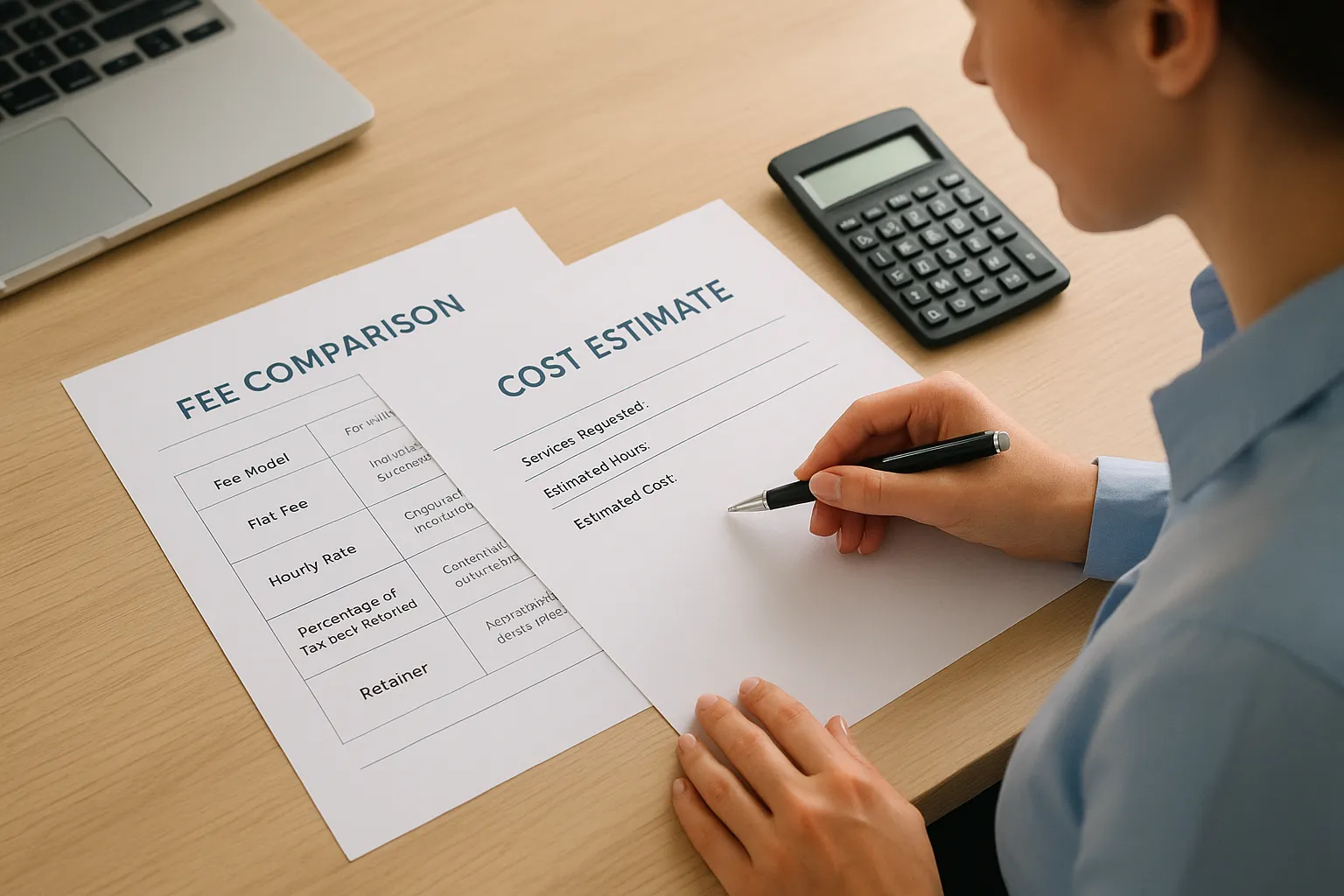
Fee structures vary more than people expect, so it helps to know the average tax preparation fees by return type before comparing which model you're being quoted. Most firms use one of the structures below, and knowing which one fits your situation helps you spot a lowball quote that balloons later.
| Fee model | Common use case | What to watch for |
|---|---|---|
| Flat fee | Individual returns, business incorporation | Confirm what's excluded, like extra state filings |
| Hourly rate | Ongoing bookkeeping, complex negotiations | Ask for an estimated total hour range upfront |
| Percentage of tax debt resolved | IRS resolution cases | Get the percentage and cap in writing |
| Retainer | Outsourced CFO or monthly accounting | Clarify what's included each billing cycle |
The cheapest quote rarely stays cheap once the scope of your case becomes clear.
Questions to ask before you agree to a price
Getting a number isn't enough. Push for detail with these follow-ups:
- What's included in this flat fee, and what triggers an additional charge?
- Is there a payment plan, or an affordable tax preparation option, if I'm dealing with financial hardship right now?
- Do you charge for follow-up calls after the engagement starts?
- What happens if my case takes longer than the estimate you gave me?
Transparent firms answer these without hesitation. Vague answers here usually mean vague invoices later.
Weigh price against access
Understand that the lowest bid isn't always the best value. A firm charging slightly more for direct CPA access, rather than routing you to a rotating staff of preparers, often saves you money over the life of your case because fewer mistakes mean fewer amended filings. Tax Experts of OC offers upfront pricing and flexible payment options specifically for clients facing financial hardship, which you can review during your free consultation before committing to anything. Once you've compared fees against the experience and access each firm offers, the decision usually becomes obvious.
Choosing a CPA you can trust
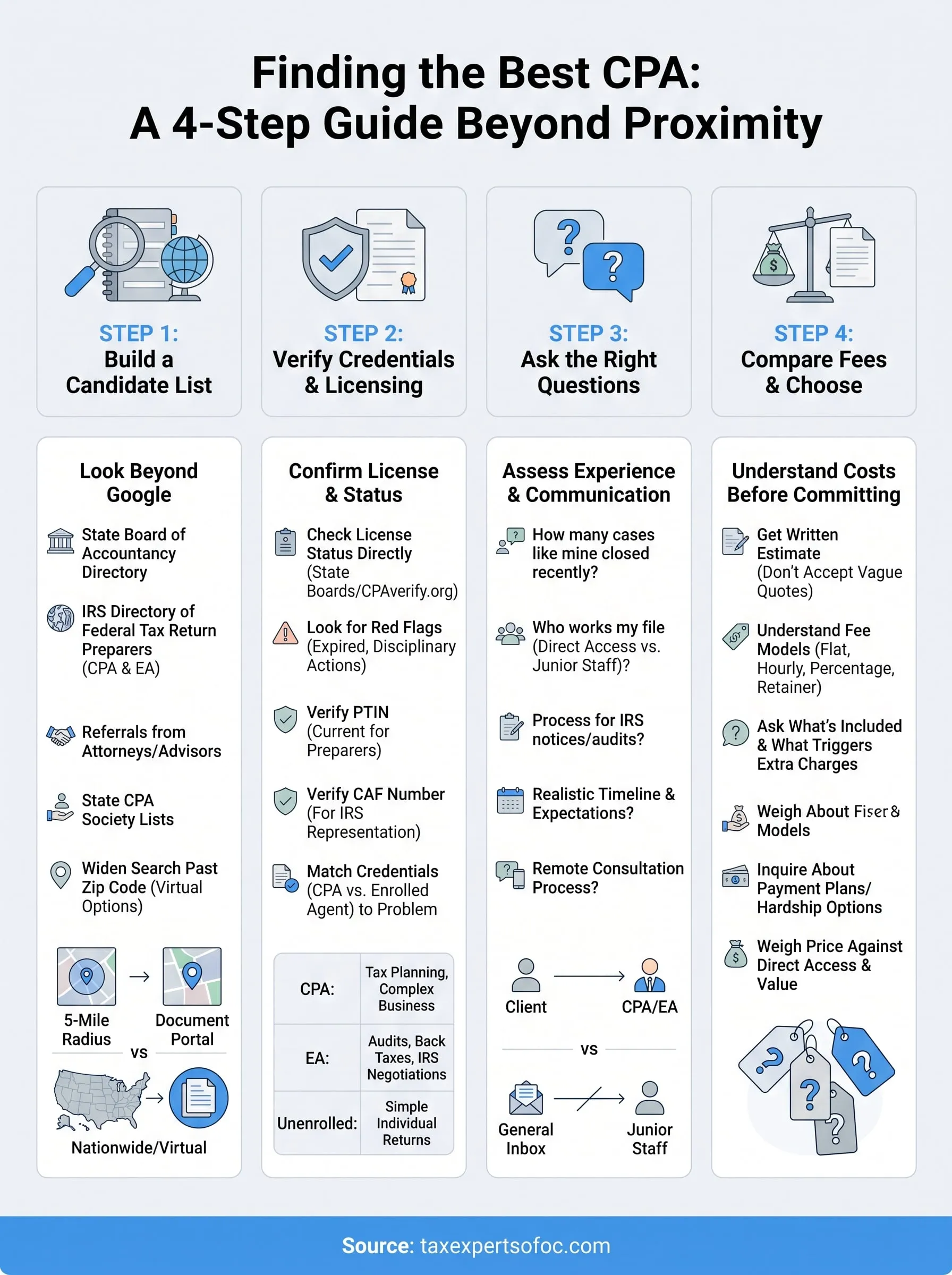
Finding the best CPA near you was never really about geography. It's about matching your specific tax problem to a credentialed professional who can back up their claims with a verifiable license, a clear process, and a fee structure you understand before you sign anything. Run through the four steps here and you'll walk into any consultation already knowing more than most callers do.
Stop treating distance as the deciding factor. A CPA or Enrolled Agent who answers your questions directly and offers transparent pricing beats a nearby office that routes you through junior staff and vague estimates. If you're dealing with back taxes, an audit letter, or a business that's outgrown DIY bookkeeping, get in touch with Tax Experts of OC for a free 30-minute consultation and get direct answers from a CPA or Enrolled Agent, wherever you're calling from.