
Unfiled tax returns don't age well. The longer you wait, the more penalties and interest pile up, and the IRS doesn't forget. If you need to get help filing back taxes, the good news is you have options, whether that means working with a tax professional, using an IRS assistance program, or tackling the process yourself with the right guidance.
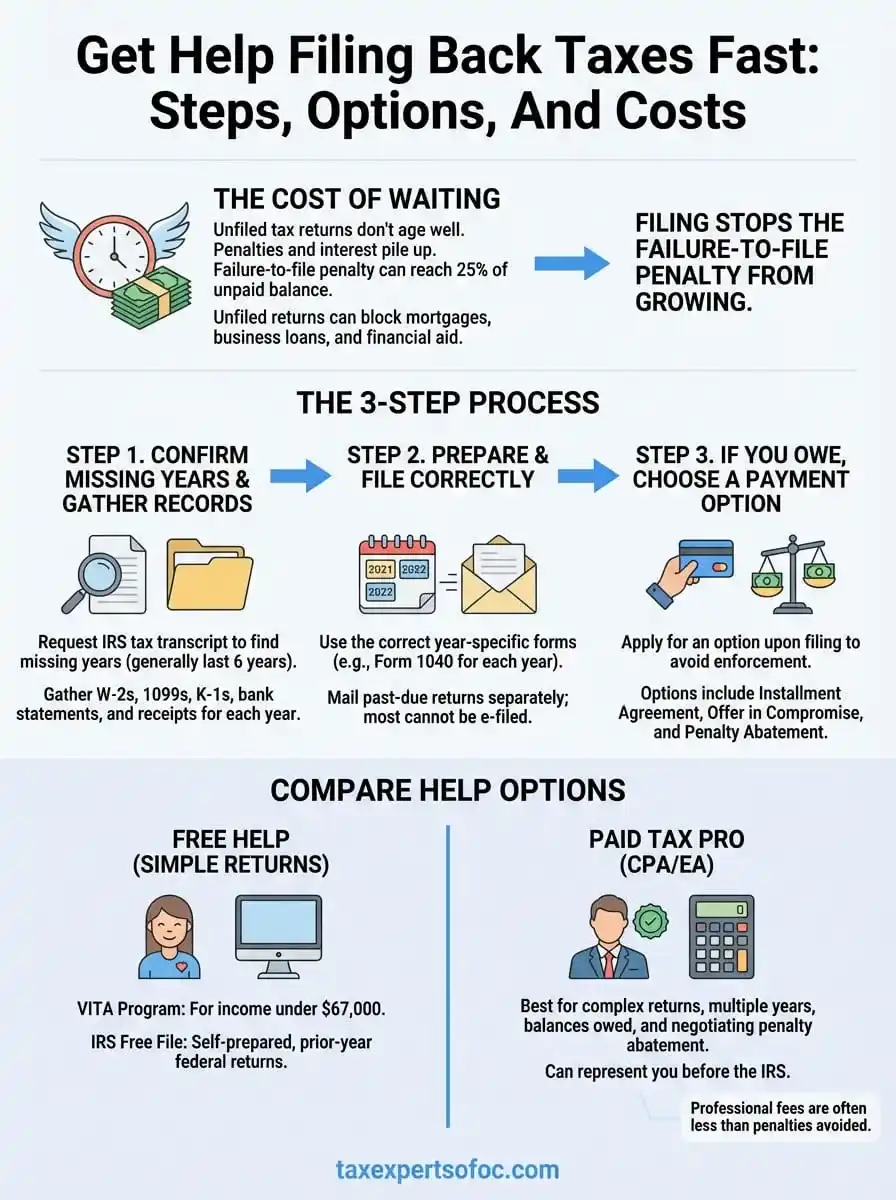
The bad news? Every month you delay costs you money. The IRS failure-to-file penalty alone can reach 25% of your unpaid tax balance, and that's before interest kicks in. But filing, even years late, almost always puts you in a better position than doing nothing.
At Tax Experts of OC, our CPAs and Enrolled Agents help people across all 50 states resolve exactly this kind of problem. We've put together this guide to walk you through the steps, costs, and resources available so you can get caught up and move forward.
Know what back taxes are and why to file now
Back taxes are unfiled or unpaid tax returns from prior years. If you missed filing for 2022, 2021, or any earlier year, those count as back taxes. The IRS tracks every year you were required to file, and they will contact you if you don't eventually.
What counts as back taxes
Any return you were legally required to submit but didn't file on time qualifies as a past-due return. This includes federal income tax returns, state returns, and self-employment tax filings. If you filed but didn't pay the full amount owed, that unpaid balance also becomes back taxes. Common situations include:
- W-2 employees who skipped filing during a difficult year
- Self-employed individuals who underreported or didn't file at all
- Business owners with unfiled payroll or corporate returns
- People who moved states and missed a state filing requirement
The real cost of waiting
The penalties stack quickly. The failure-to-file penalty is 5% of your unpaid tax per month, capped at 25%. On top of that, the failure-to-pay penalty adds another 0.5% per month, and interest compounds daily at the federal short-term rate plus 3%. If you owe $10,000 and haven't filed for two years, your balance could realistically exceed $13,000 before you pay anything.
Filing late, even without paying the full balance, stops the failure-to-file penalty from growing and puts you back in control of the situation.
Beyond the financial hit, unfiled returns can block you from getting a mortgage, a business loan, or federal financial aid. If you need to get help filing back taxes, acting now limits your total exposure and keeps more resolution options open with the IRS.
Step 1. Confirm which years you missed and gather records
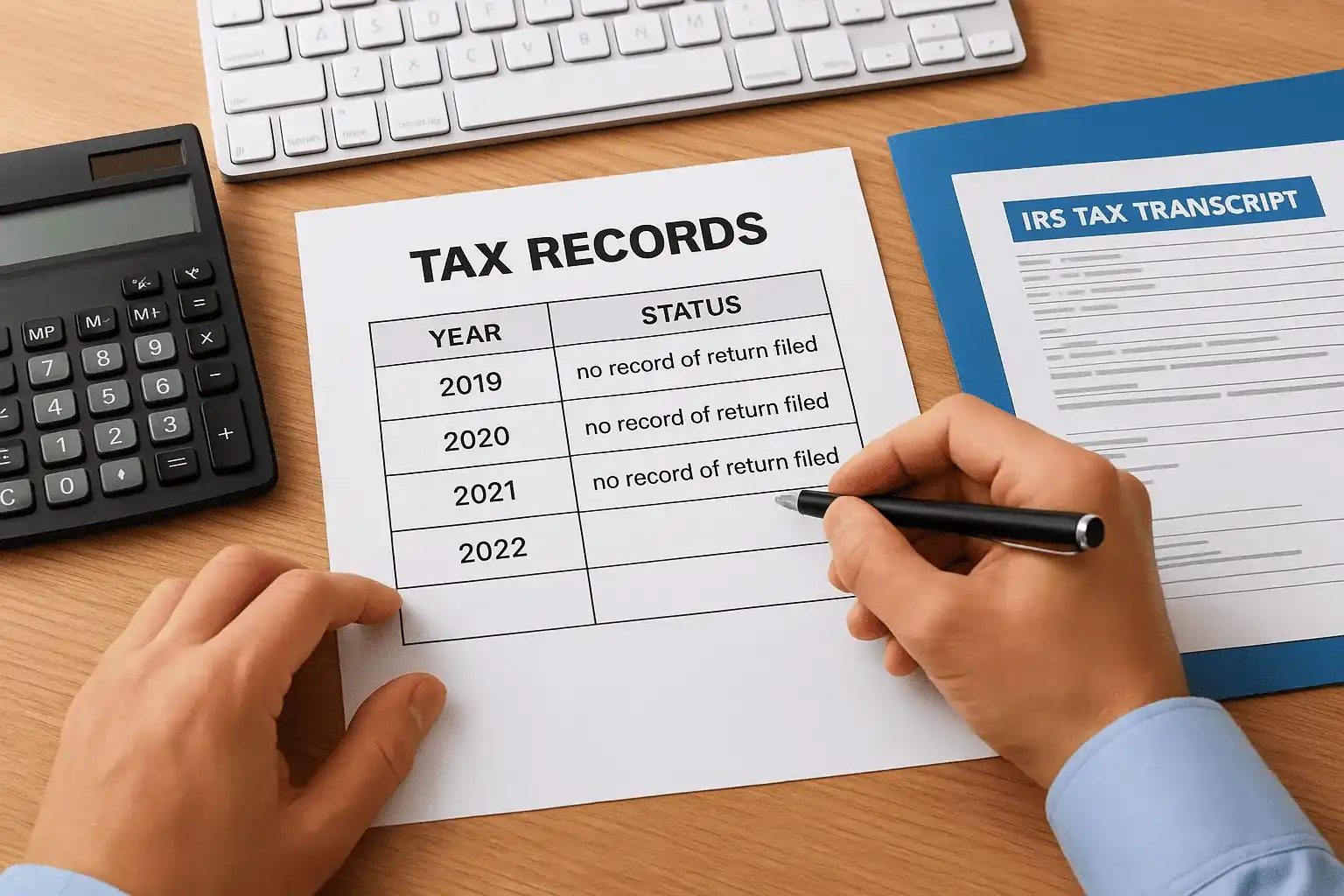
Before you can get help filing back taxes, you need a clear picture of which years are missing. Start by requesting your IRS tax transcript, which shows every return the IRS has on file for you. You can get it free at IRS.gov.
Find your missing years
Your transcript will show a "no record of return filed" notation for any year you skipped. The IRS generally expects at least the last six years of returns to consider you in good standing, so prioritize those first. If your balance is larger than expected, the IRS may review years beyond that window.
Filing the most recent six years gets you back into compliance for most IRS purposes and stops additional failure-to-file penalties from accumulating.
Gather the documents you need
Once you know which years to file, collect the records for each missing year. You can request wage and income transcripts directly from the IRS if you no longer have your originals. Here's what to pull together for each year:
- W-2s, 1099s, and K-1s for all income sources
- Bank statements showing deposits or business revenue
- Receipts for deductible expenses
- Any prior-year returns you filed as a reference
Employers and financial institutions are required to retain records for several years, so contact them directly if a document is missing.
Step 2. Prepare and file each past-due return the right way
Once you have your records, you need to file each year on the correct forms for that specific tax year. The IRS does not accept current-year forms for past-due returns, so using the wrong version will delay processing or get your return rejected outright.
Use the correct forms for each year
Each tax year has its own version of Form 1040, and you must use the version that matches the year you are filing. You can find prior-year forms and instructions at IRS.gov. Here is a quick reference for common filings:
| Filing type | Form to use |
|---|---|
| Individual income tax | Form 1040 (year-specific) |
| Self-employment income | Schedule C + Schedule SE |
| Business (S-Corp) | Form 1120-S |
| Partnership | Form 1065 |
Mail or submit your returns correctly
Past-due returns cannot be e-filed through most tax software once the filing window closes, so you will likely need to mail paper returns to the IRS address listed in the instructions for that year. Send each year as a separate package with a clear label. If you need to get help filing back taxes for multiple years, a tax professional can prepare and submit all returns as a batch.
Never combine multiple years into one envelope without clearly separating and labeling each return.
Step 3. If you owe, choose a payment option and avoid enforcement
Filing your past-due returns exposes your actual balance, and if you owe, the IRS expects you to address it. You can negotiate directly with the IRS for a payment arrangement rather than waiting for them to escalate to garnishments or bank levies.
Filing, even without paying in full right away, stops the failure-to-file penalty and keeps more resolution options open with the IRS.
IRS payment options available to you
The IRS offers several structured ways to resolve what you owe. Your best option depends on your total balance and your current ability to pay. Here is a quick overview:
| Option | Best for |
|---|---|
| Installment Agreement | Balances you can pay over time |
| Offer in Compromise | Balances you cannot pay in full |
| Currently Not Collectible | Severe financial hardship |
| Penalty Abatement | First-time or reasonable cause filing |
How to stay ahead of collection
Apply for a payment option as soon as you file rather than waiting for an IRS notice. The IRS generally pauses enforcement activity while a payment arrangement is pending. If you need to get help filing back taxes and clearing a balance, a qualified Enrolled Agent or CPA can negotiate directly with the IRS and prevent enforced collection from disrupting your paycheck or bank accounts.
Decide between free help and a tax pro and compare costs
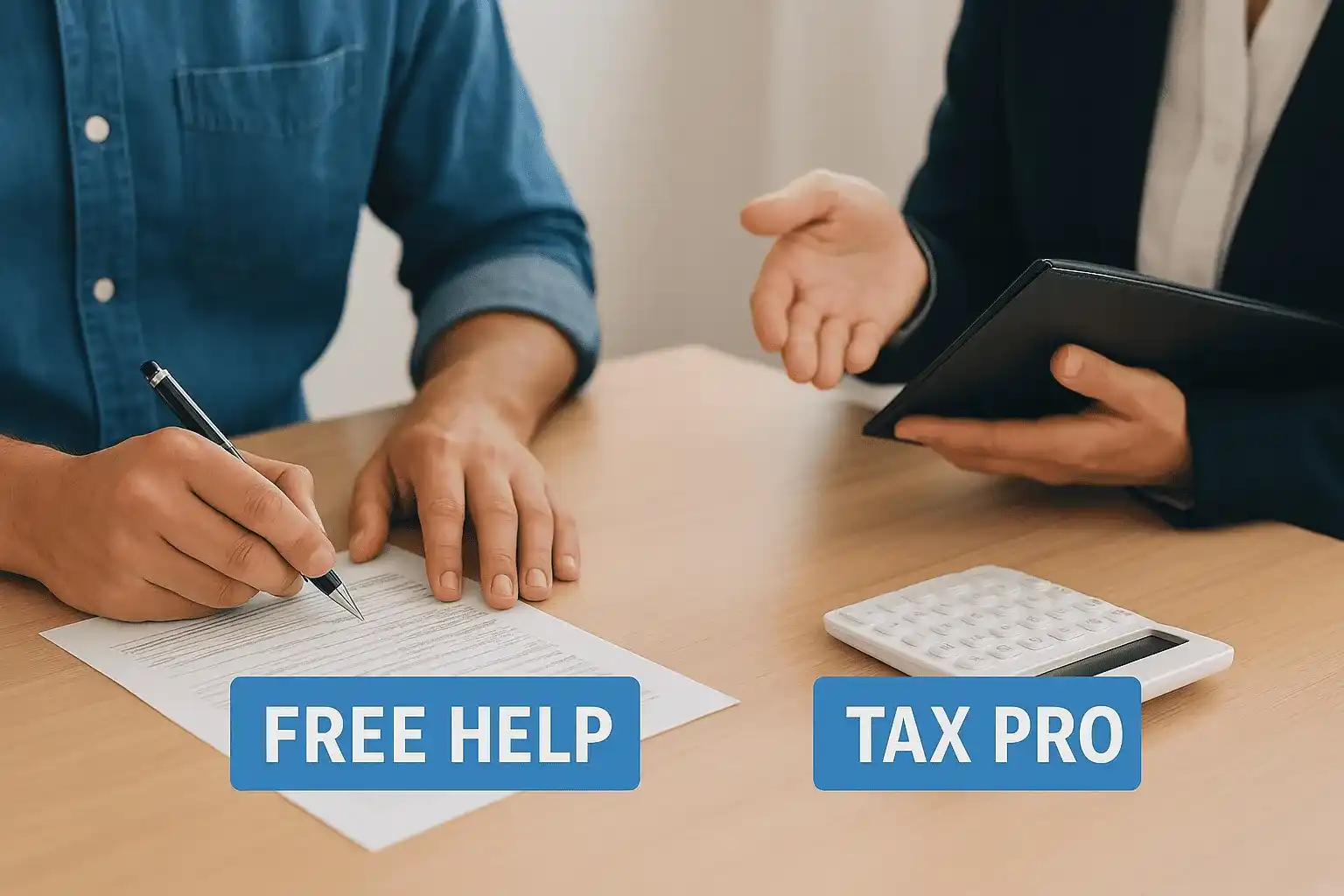
Your choice between free resources and a paid professional comes down to how many years you missed and how complex your finances are. Simple W-2 filers who missed one or two years can often handle the process themselves. Once you add self-employment income, multiple states, or a growing balance, the math shifts quickly toward professional help.
Free options worth knowing
The IRS Volunteer Income Tax Assistance (VITA) program offers free tax prep for people who earn $67,000 or less annually. VITA volunteers can help prepare prior-year returns at participating sites. Here is a quick comparison of your main options:
| Option | Cost | Best for |
|---|---|---|
| IRS VITA program | Free | Simple returns, income under $67,000 |
| IRS Free File | Free | Self-prepared, prior-year federal returns |
| CPA or Enrolled Agent | $200-$500+ per year filed | Complex returns, multiple years, balances owed |
When a tax pro makes sense
If you need to get help filing back taxes for several years, owe a significant balance, or face IRS enforcement, a licensed CPA or Enrolled Agent is worth the cost. They can negotiate payment plans, request penalty abatement, and represent you directly before the IRS.
The fee a professional charges is often far less than the penalties they help you avoid.
Next steps
You now have a clear path forward. Start by pulling your IRS tax transcript to confirm which years you missed, then gather your income records for each one. File each return on the correct year-specific form, mail them separately, and apply for a payment option right away if you owe a balance. Taking these steps in order limits penalties and keeps the IRS from escalating to enforced collection.
Your situation will determine whether free resources cover your needs or whether you need professional help. Simple, single-year filers can often get help filing back taxes through VITA or IRS Free File. If you're dealing with multiple unfiled years, self-employment income, or a growing balance with the IRS, working with a licensed professional protects you far more than going it alone.
Tax Experts of OC serves clients across all 50 states. Schedule your free 30-minute consultation and get a clear plan to resolve your back taxes today.